Frequently Asked Questions
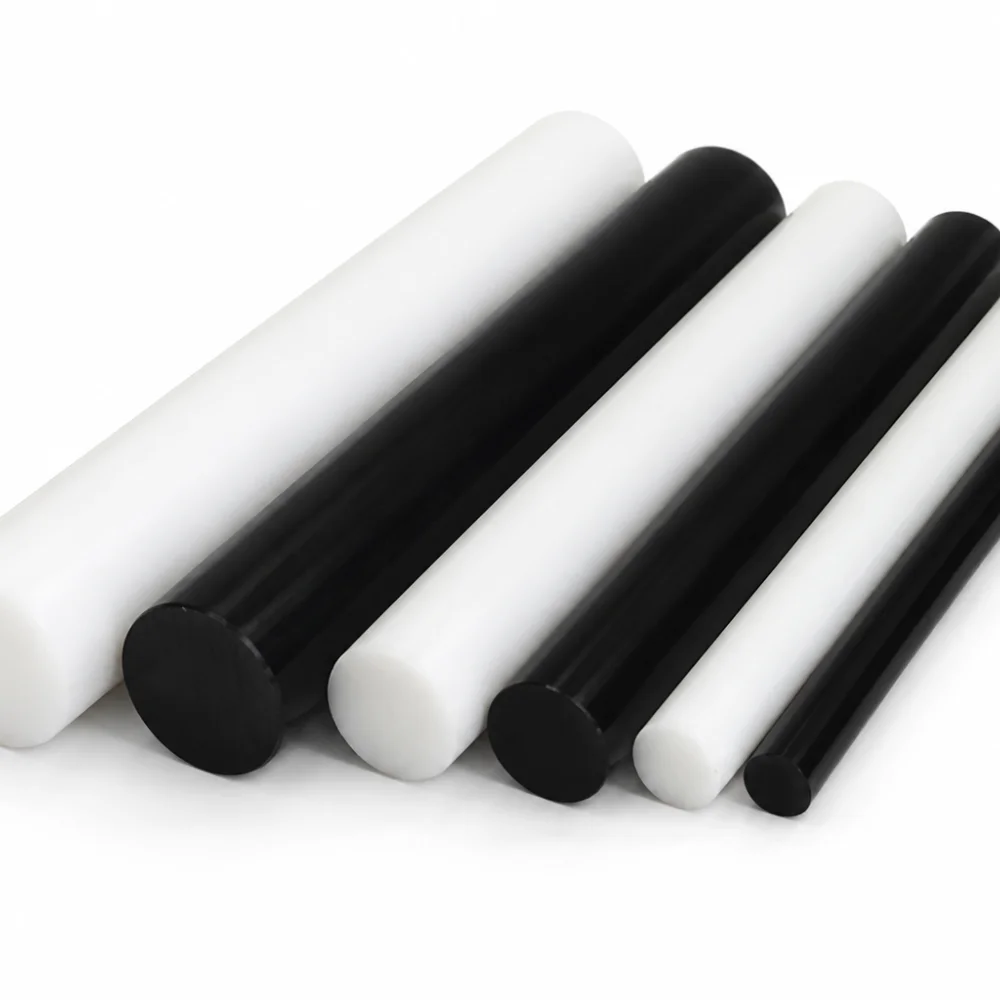
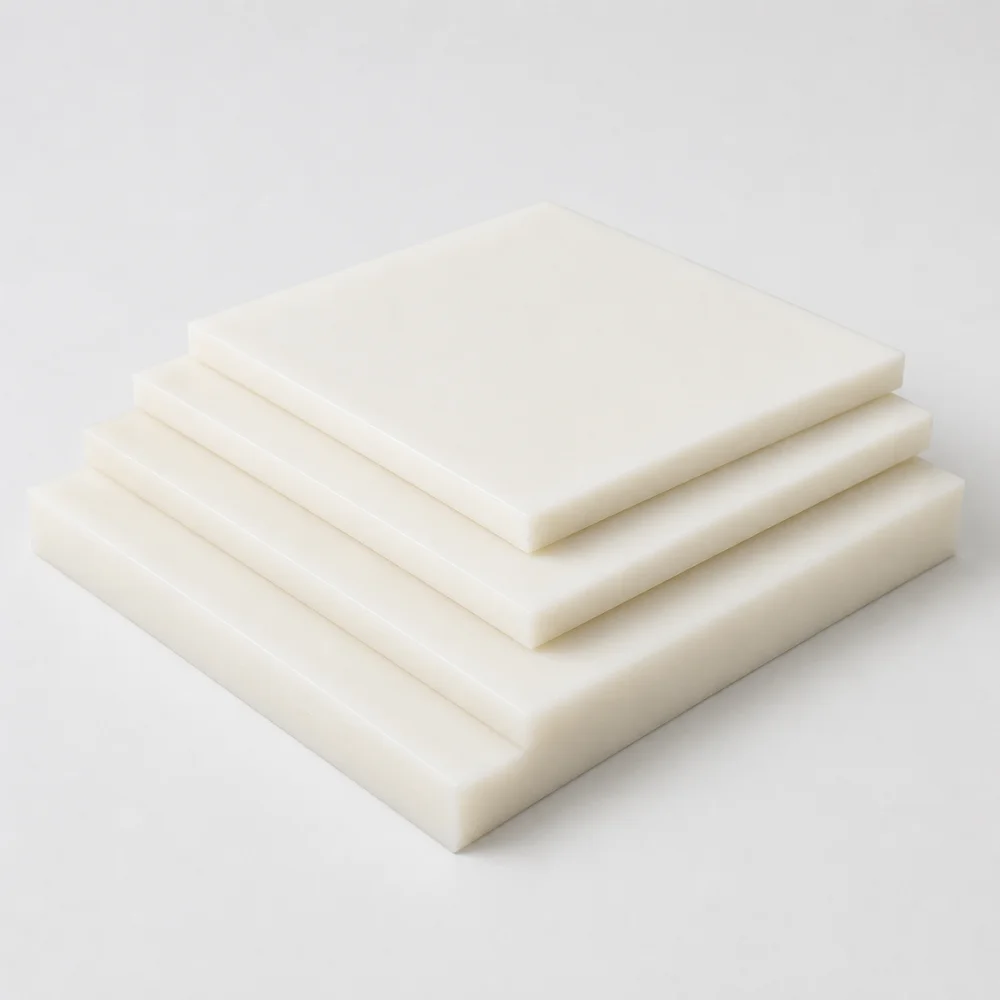
Acetal is the commonly used name for polyoxymethylene, abbreviated as POM. It is a semi-crystalline engineering thermoplastic recognised for its high strength, stiffness, dimensional stability, low friction and excellent machinability.
These properties make Acetal particularly suitable for precision components and moving parts that must retain their shape under repeated mechanical loading. German manufacturers Ensinger and Röchling Industrial manufacture POM in sheet, rod, tube and finished-component forms.
Acetal has a molecular structure based principally on repeating –CH₂–O– units.
The two main material families are:
- POM-C copolymer: Generally produced by copolymerising trioxane with a small quantity of another monomer. It normally offers excellent chemical resistance, dimensional stability and resistance to hot water.
- POM-H homopolymer: Produced by polymerising formaldehyde. It usually has slightly higher crystallinity, stiffness, hardness and mechanical strength.
BASF Ultraform is an example of a German-manufactured copolymeric POM resin. Once manufactured, POM resin is melted and processed by extrusion or injection moulding to produce sheets, rods, tubes, profiles and moulded components.
| Property | POM-C copolymer | POM-H homopolymer |
| Dimensional stability | Excellent | Excellent |
| Chemical and hot-water resistance | Generally better | More application-dependent |
| Stiffness and hardness | High | Usually slightly higher |
| Wear and sliding performance | Excellent | Excellent |
| Machinability | Excellent | Excellent |
| Typical selection | General engineering and chemical-service parts | Highly loaded precision and wear parts |
The correct choice depends on operating temperature, chemical exposure, load, tolerances and required certification.
Acetal’s distinguishing feature is its combination of:
- High stiffness and mechanical strength
- Excellent dimensional stability
- Low moisture absorption
- Low friction and good sliding performance
- Excellent resistance to wear and fatigue
- Low creep under sustained loading
- Ability to be CNC-machined to close tolerances
- Good electrical insulation
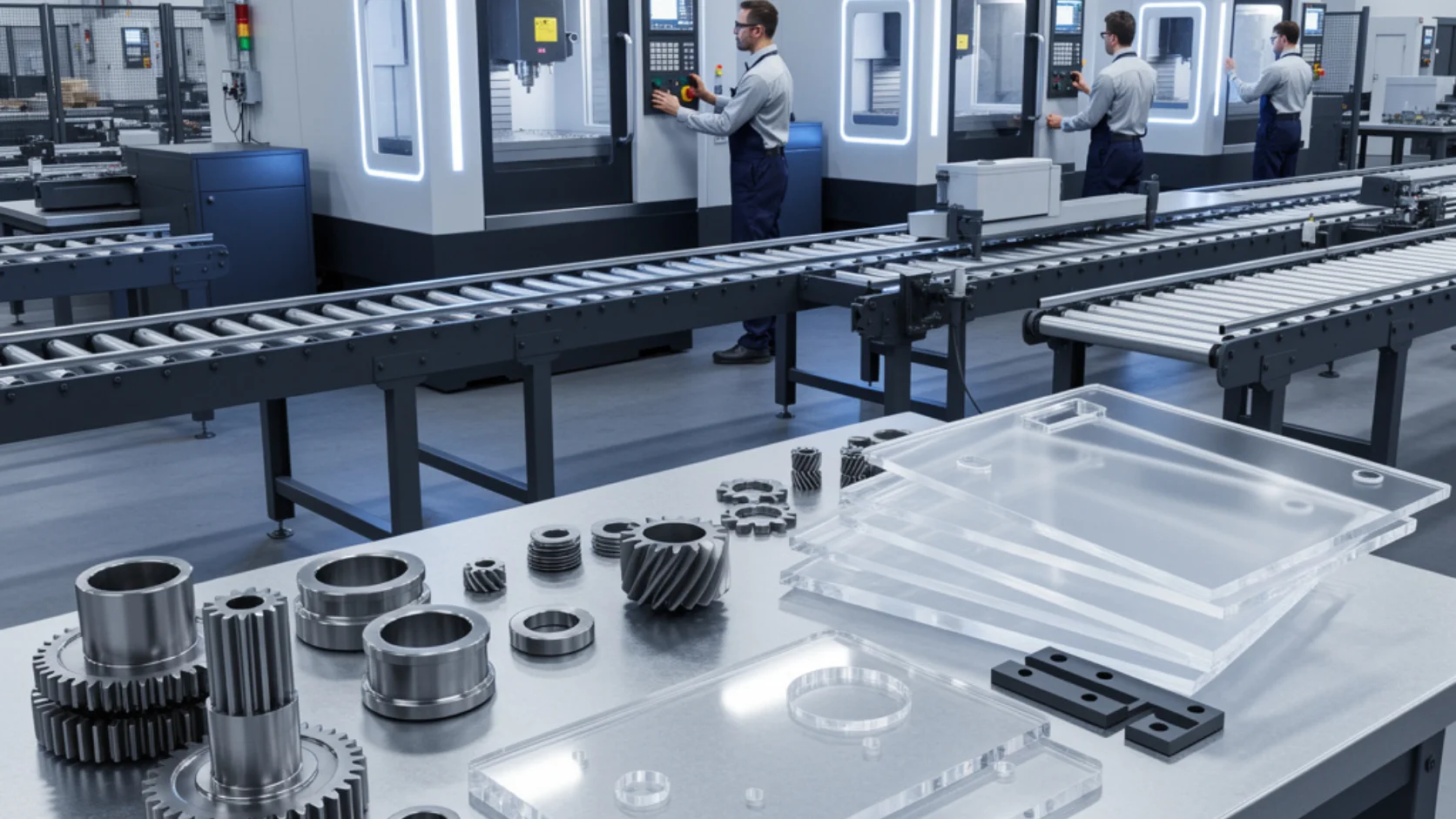
This combination makes Acetal one of the most widely selected engineering plastics for precision gears, bearings, rollers, guides and other moving components.
Acetal is exceptionally easy to machine. It can be CNC-milled, turned, drilled, routed, tapped and reamed, producing accurate dimensions and a high-quality surface finish.
Sharp tools, suitable cutting speeds, secure but controlled clamping and effective chip removal should be used. Heat accumulation must be avoided, particularly when machining thick or highly constrained components. Ensinger’s POM machining guidance identifies dimensional stability and mechanical strength as major reasons for Acetal’s excellent machinability.
However, Acetal is not as easy to fabricate by bending, welding or adhesive bonding as materials such as acrylic, PVC or HDPE.
Acetal can flex elastically, but cold bending is not recommended for producing permanent bends. Cold forming may produce substantial spring-back, internal stress, distortion or cracking, particularly around tight bend radii.
For a permanent angled component, CNC machining from thicker material, injection moulding or assembling separately machined parts normally produces a more reliable result.
Controlled hot forming may be possible for certain designs, but Acetal sheet is not normally considered a preferred thermoforming material.
Because POM is highly crystalline, it has a relatively narrow temperature-processing window and can experience shrinkage, warping and spring-back during heating and cooling. Excessive heating must be avoided because POM can decompose and release hazardous fumes, including formaldehyde.
Where hot bending is unavoidable, specialist temperature-controlled equipment, ventilation, suitable tooling and production trials are required. Machining or moulding the required shape is normally the preferred method.
Acetal is considered difficult to bond because it has a low-energy, chemically resistant surface. Conventional acrylic solvent cement will not bond it successfully.
Some specialist adhesive systems may work when combined with professional surface preparation and a suitable primer, but every joint should be tested under its intended load, temperature and chemical environment. Ensinger’s TECAFORM AH information specifically identifies POM-C as difficult to bond.
For structural assemblies, mechanical fasteners, designed snap-fits, press-fits or an appropriately engineered welding process are generally more dependable.
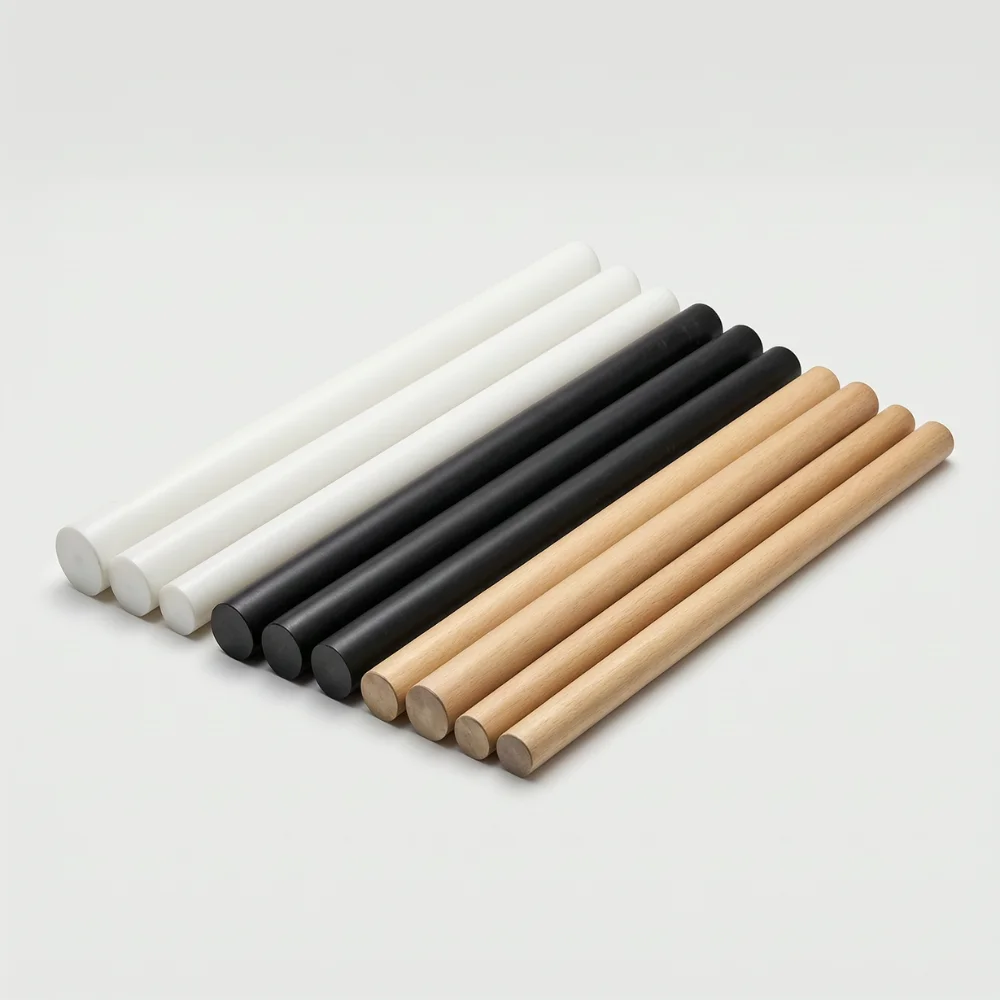
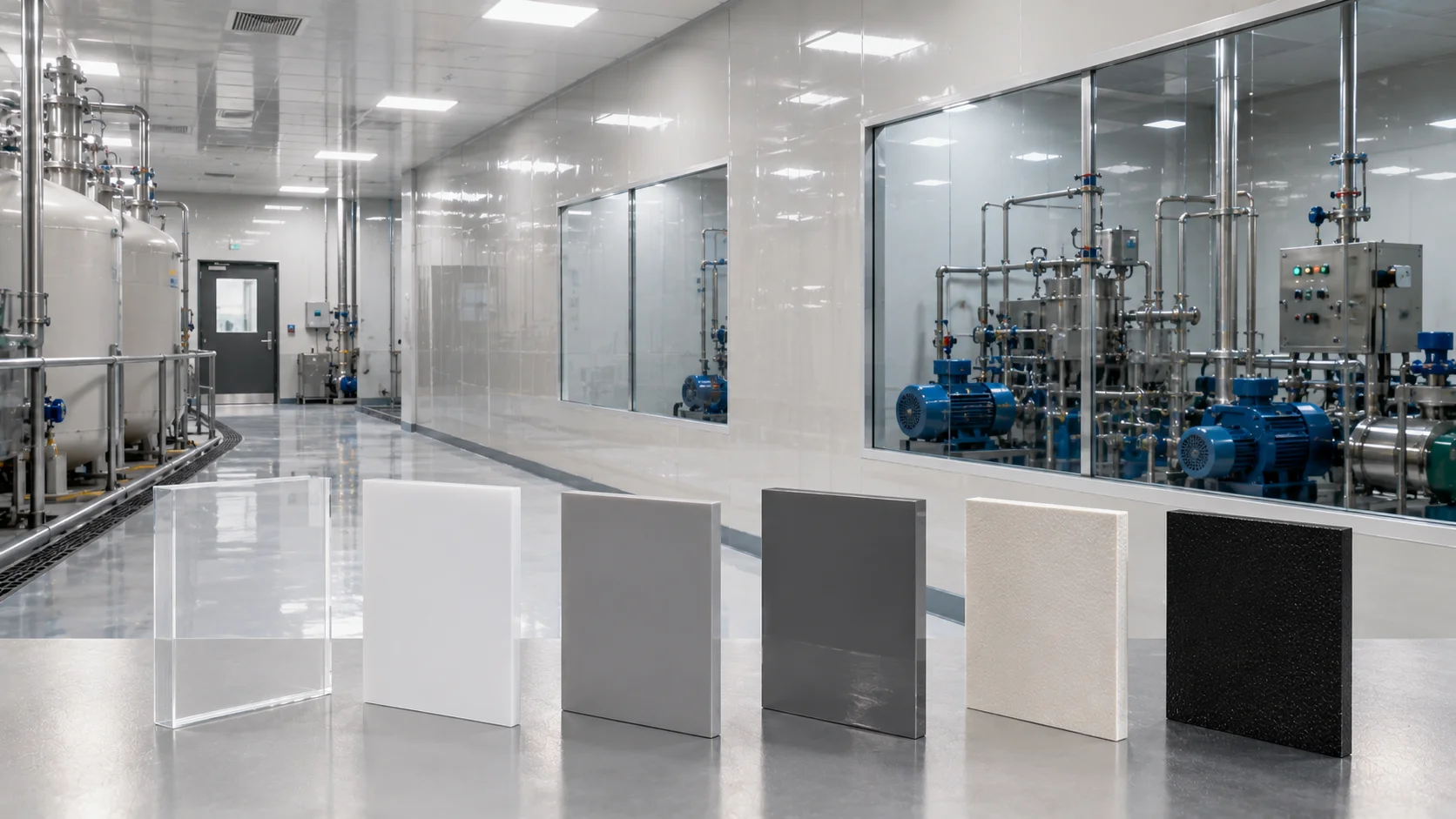
Yes. Natural or off-white and black are the most commonly stocked colours, but Acetal can also be supplied in colours such as:
- Blue
- Red
- Orange
- Green
- Grey
- Silver
- Other project-specific colours
Special grades may also include food-detectable blue, metal-detectable, antistatic, electrically dissipative or conductive formulations. German manufacturer ranges demonstrate the availability of multiple POM colours, including those listed in Ensinger’s product-handling information.
Non-standard colours are subject to resin grade, product format, pigment availability, production volume, minimum order quantity and manufacturing lead time. A colour sample or colour-reference approval may be required before production.
Acetal is one of the more dimensionally stable general engineering plastics. Its low moisture absorption means that its dimensions are less affected by humidity than materials such as nylon.
Its stiffness and resistance to creep also help machined parts retain their shape and tolerances under sustained loading. This makes Acetal suitable for gears, bearing housings, rollers, measuring components and precision jigs.
Acetal still expands and contracts with temperature more than metal. Operating temperature, machining stress, component thickness and tolerance requirements must therefore be considered during design.
Typical unfilled POM-C materials combine strength, stiffness, toughness, fatigue resistance and wear performance.
Representative German manufacturer data for a standard unfilled POM-C grade includes:
- Density: approximately 1.41 g/cm³
- Tensile yield strength: approximately 67 MPa
- Tensile modulus: approximately 2.8 GPa
- Shore hardness: approximately D81–D82
- Melting temperature: approximately 165–166°C
- Typical long-term service temperature: up to approximately 100°C, depending on grade and operating conditions
These are representative values rather than guaranteed specifications. Actual properties depend on the manufacturer, grade, colour, additives, thickness and test method. See the technical data for Röchling SUSTARIN C natural and Ensinger TECAFORM AH black.
POM-C has good resistance to many oils, greases, fuels and industrial chemicals. Its low water absorption and resistance to hydrolysis also make selected POM-C grades suitable for wet environments.
However, Acetal is not universally chemical-resistant. Strong acids, strong alkalis, oxidising agents and certain halogenated chemicals can attack the material. Suitability must be checked against the actual chemical concentration, temperature, pressure and exposure time.
Food, drinking-water, medical or pharmaceutical applications must use a specifically certified grade rather than standard industrial Acetal.
Standard unfilled Acetal is combustible and should not be described as flame-retardant. Typical standard POM-C data sheets report a UL 94 HB horizontal-burning classification at the tested thickness.
Once ignited, Acetal can continue burning after the ignition source is removed. Fire or severe overheating can generate carbon monoxide, formaldehyde and other decomposition products. Open flames and uncontrolled hot work should therefore be avoided, and suitable extraction must be used during any high-temperature processing.
A fire rating only applies to the particular grade, thickness and test report supplied by the manufacturer.
Standard unfilled Acetal is a good electrical insulator because of its high electrical resistance, good dielectric strength and low moisture absorption.
Typical POM-C manufacturer data includes:
- Surface or volume resistivity of approximately 10¹³–10¹⁴ Ω
- Dielectric strength of approximately 38–40 kV/mm
- Comparative tracking index of up to approximately 600 V
Standard Acetal is not automatically ESD-safe and may retain static electricity. Antistatic, static-dissipative and conductive POM grades are available for electronics, automation and explosion-sensitive applications. The required resistance range should be specified when requesting a quotation.
Acetal can replace HDPE when greater stiffness, dimensional accuracy and resistance to creep are required.
| Requirement | Acetal/POM | HDPE |
| Precision-machined tolerances | Excellent | More movement and creep |
| Stiffness and hardness | Significantly higher | Softer and more flexible |
| Gears and loaded moving parts | Usually preferred | Suitable mainly for lighter loads |
| Machined threads and fine details | Better retention | Can deform under load |
| Welding and large fabricated tanks | More difficult | Usually preferred |
| Weight and material cost | Denser and normally more expensive | Lighter and generally economical |
Acetal is therefore often selected to replace HDPE in precision rollers, gears, bushings, guides and machine components where HDPE is too soft or dimensionally unstable.
It is not a universal replacement. HDPE may remain preferable for welded tanks, liners, large fabrications, highly corrosive environments and applications where lower weight or cost is the priority.
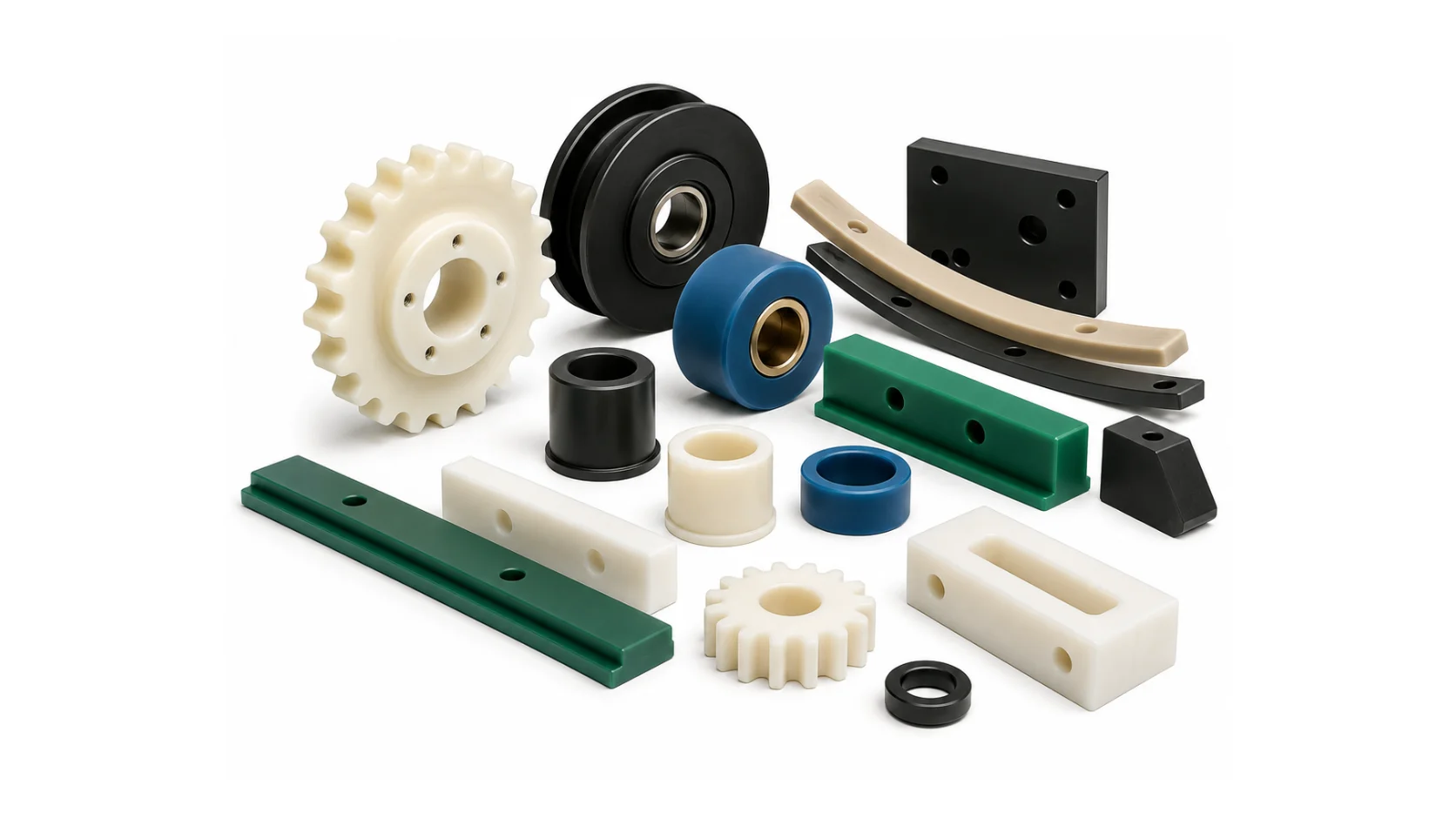
Common Acetal applications include:
- Precision gears, sprockets, cams and pulleys
- Bearings, bushes and thrust washers
- Conveyor rollers, slats, guides and star wheels
- Wear strips and low-friction slide components
- Valve seats, pump parts and sealing rings
- Clips, latches, handles and snap-fit components
- Electrical insulators and connector components
- Automotive and appliance mechanisms
- CNC-machined jigs, fixtures and locating components
- Packaging and materials-handling machinery
- Food-processing components manufactured from certified grades
- Medical and laboratory components manufactured from approved grades
Yes. Logos, instructions, identification numbers and graphics can be printed on Acetal, but specialist preparation is normally required.
Because Acetal has a chemically resistant, low-energy surface, ordinary printing inks may have poor adhesion and can scratch or peel away. Reliable printing may require:
- A compatible one- or two-component ink
- Pad printing or screen printing
- A suitable primer or adhesion promoter
- Professional plasma, corona or controlled flame surface treatment
- Testing for abrasion, chemicals, cleaning and outdoor exposure
UV digital printing may also be possible with a compatible primer and pre-treatment, but a sample print should always be tested first. Laser marking or engraving can provide a more durable alternative, particularly for serial numbers, scales and permanent identification.
For food-contact, medical or chemically exposed components, both the ink and printing process must meet the relevant compliance requirements.
Yes. We can supply Acetal in standard or custom sizes, including:
- Full sheets and rods
- Cut-to-size sheet blanks
- Rods cut to specific lengths
- Tubes and hollow bars
- CNC-machined finished components
- Special colours, grades and factory-produced dimensions
For standard stocked material, a single cut piece or small quantity may be available. Special colours, non-standard thicknesses, custom diameters and specialist grades will normally have a manufacturer’s minimum order quantity and an extended production lead time.
Custom-extruded or moulded products may also require tooling and a minimum production run. To confirm availability, MOQ, pricing and lead time, please provide the required Acetal grade, colour, dimensions, tolerances, quantity and certification requirements.
If the required Acetal product is not displayed on our website, please contact the Altius Polymers customer-service team. With more than 15 years of plastics-industry experience, we can help identify and source the right material for your application.