Frequently Asked Questions
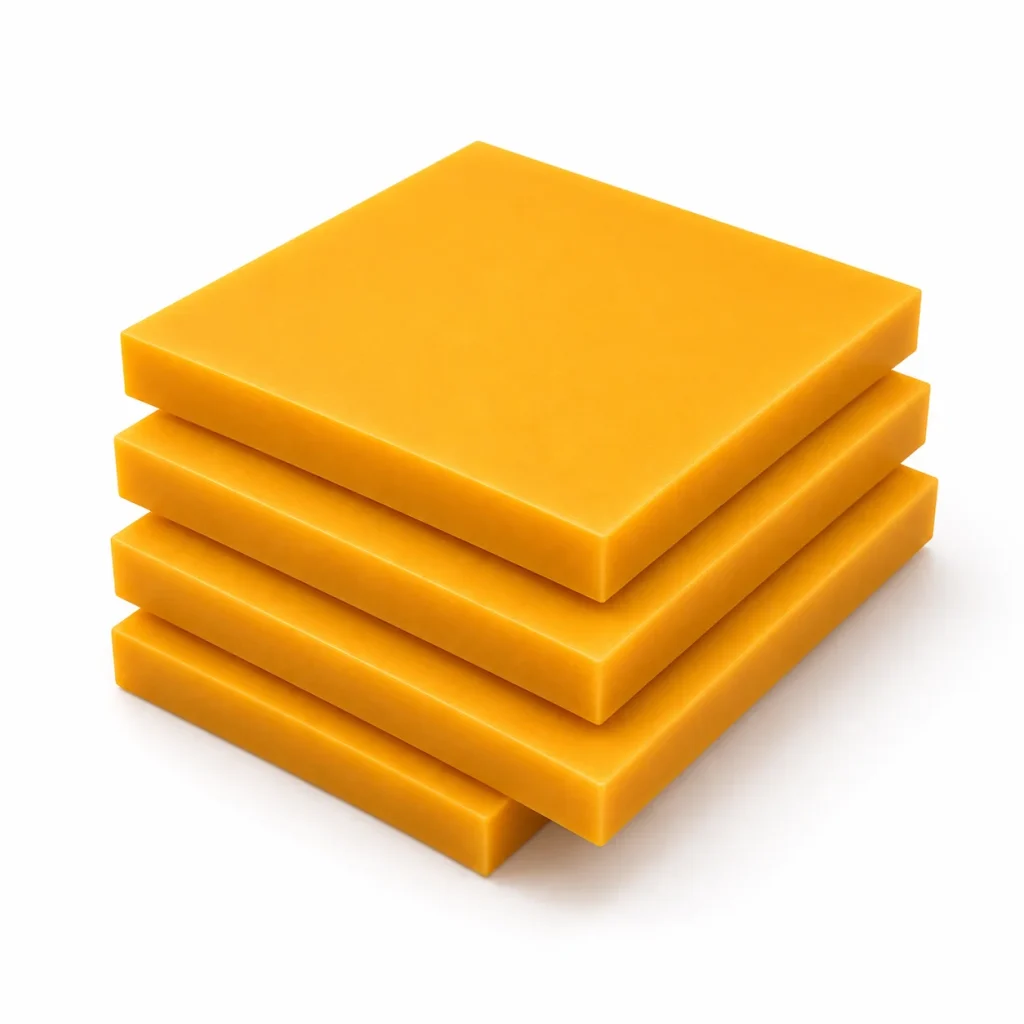
Cast Nylon is a high-molecular-weight polyamide manufactured by casting the polymer directly into a mould. It is commonly identified as PA6G or PA6C.
Compared with extruded Nylon 6, cast nylon can be produced in much larger sections and near-net shapes, usually with lower internal stress.
Liquid caprolactam, catalysts and activators are introduced into a heated mould. Polymerisation takes place inside the mould, converting the raw material directly into solid PA6 cast nylon.
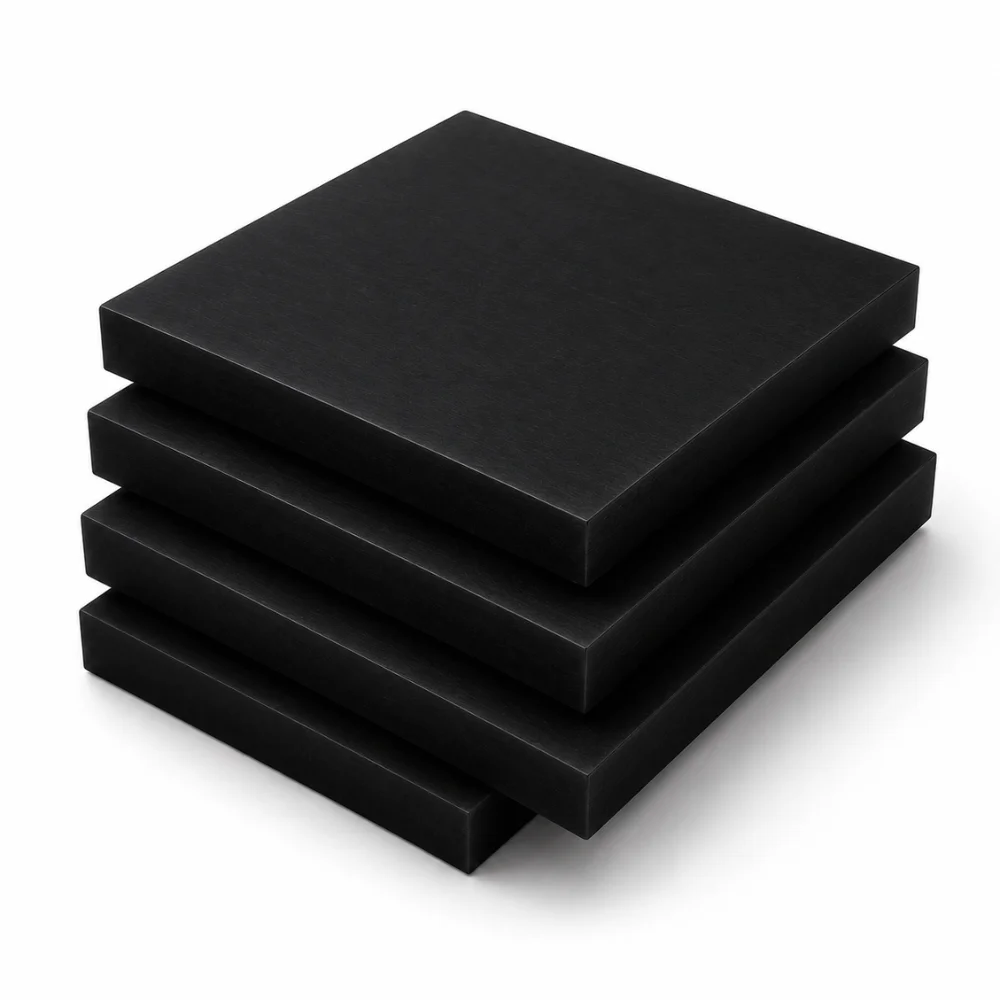
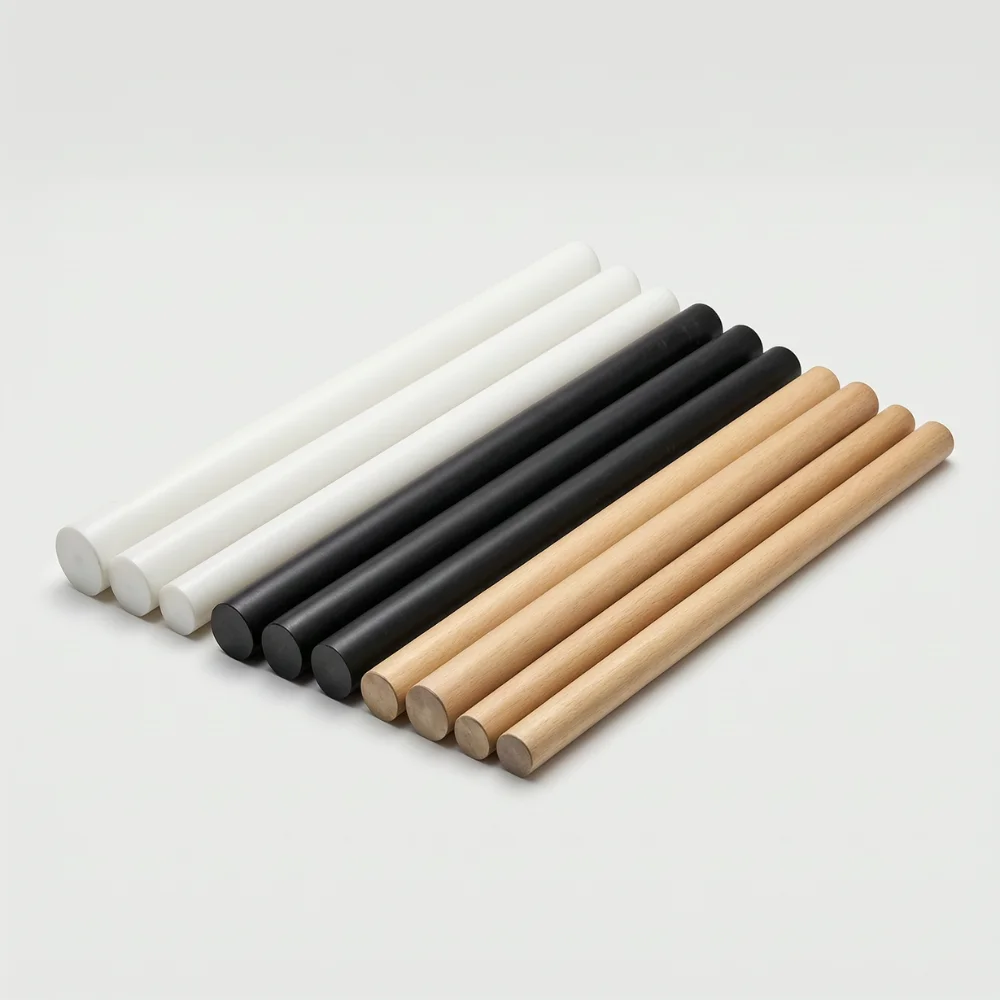
This process enables the production of large sheets, rods, tubes, rings, blocks and specially cast shapes that may be impractical to manufacture by extrusion. Röchling describes PA6G as being produced by anionic polymerisation directly in the mould.
Cast Nylon provides:
- High mechanical strength and toughness
- Excellent abrasion and wear resistance
- Good impact and fatigue resistance
- Good vibration and noise damping
- Low friction against many mating surfaces
- Capacity to carry substantial bearing loads
- Large stock shapes and near-net cast components
- Good machinability
Its main limitation is moisture absorption, which can change dimensions and mechanical properties.
Common applications include:
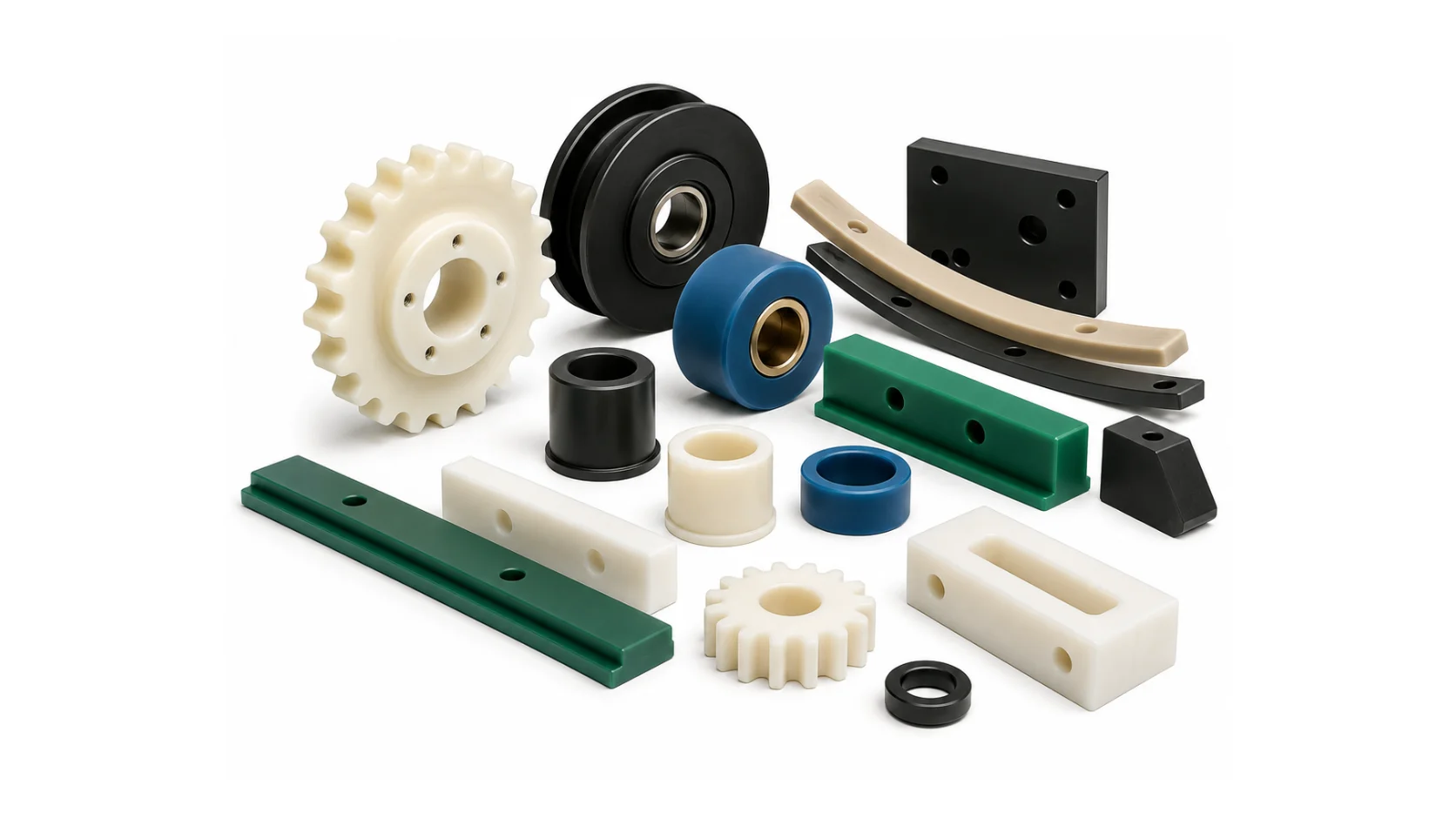
- Sheaves and pulleys
- Gears and sprockets
- Rollers and castors
- Bushes and bearings
- Crane and lifting components
- Wear pads and slide plates
- Conveyor components
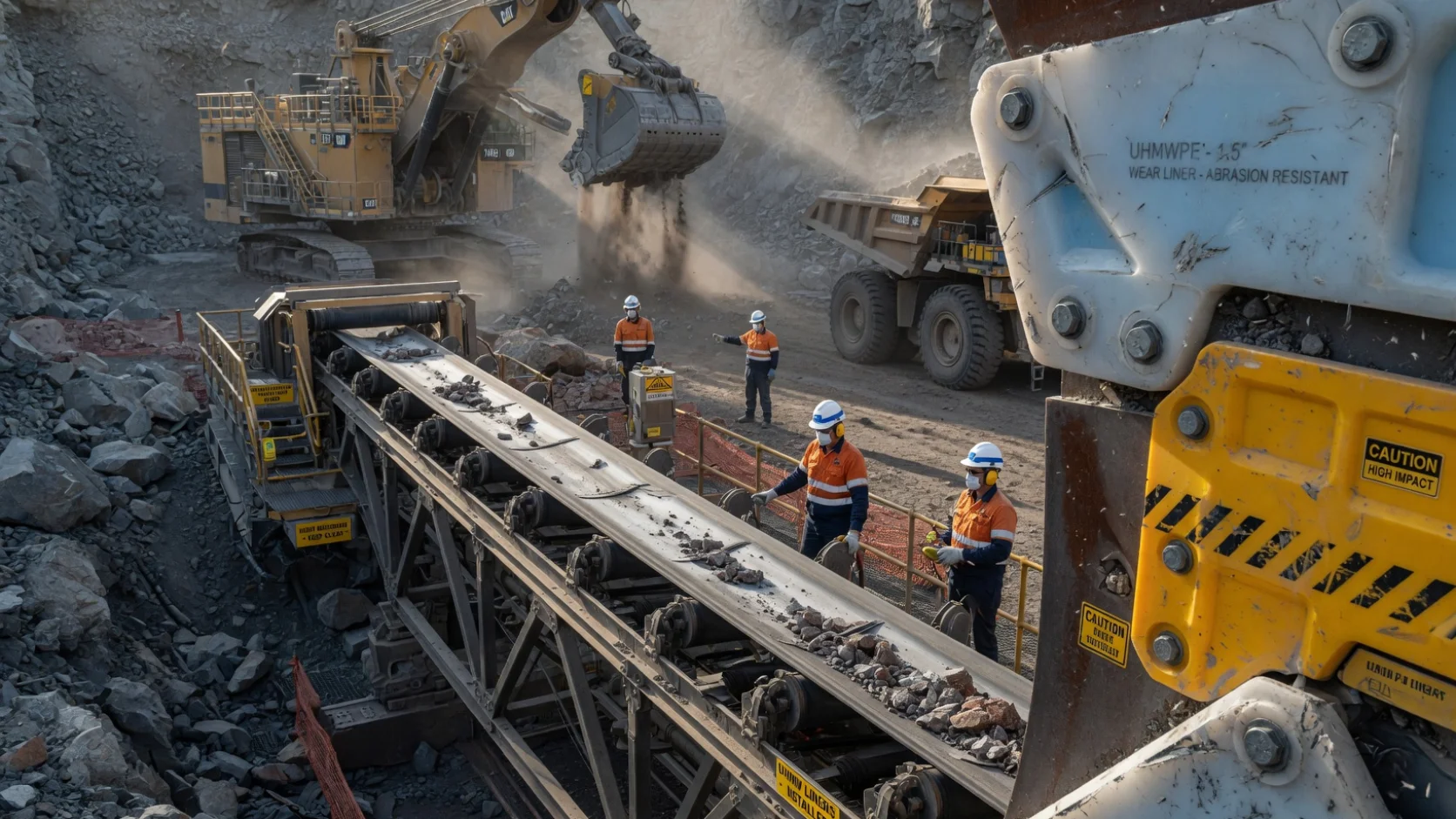
- Mining and materials-handling equipment
- Marine and offshore components
- Large replacement parts previously made from metal
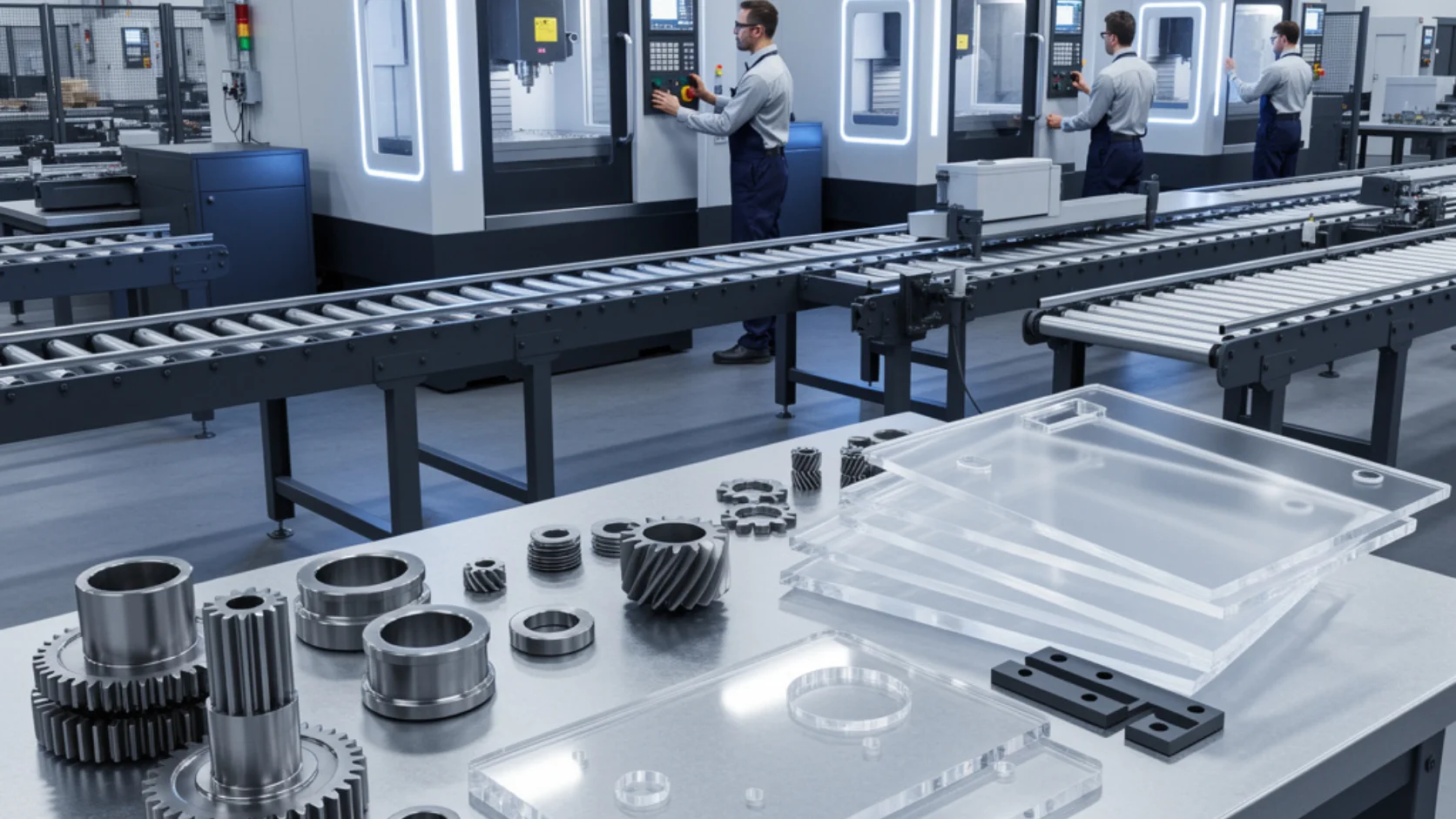
Yes. Cast nylon machines well using sharp tools and suitable cutting conditions. Its toughness and large available section sizes make it suitable for substantial CNC-machined components.
Moisture condition and service environment must be considered when specifying close tolerances. Large or heavily machined components may require intermediate stress relief.
Cast nylon is not normally bent. Thick sections should be machined or cast close to the required shape rather than hot or cold formed.
Specialist welding and adhesive bonding are possible, but joint design, moisture conditioning and surface preparation are important. Mechanical fastening is frequently the more reliable solution.
Yes. Cast nylon can be printed using nylon-compatible inks after thorough cleaning and drying. Surface treatment or a suitable primer may improve adhesion.
Because nylon absorbs moisture, a print trial under the expected operating conditions is recommended.
- Dimensional stability: Moderate. Moisture absorption can cause measurable dimensional growth and reduce stiffness.
- Mechanical: Depending on grade and conditioning, representative tensile yield strength is approximately 64–89 MPa and modulus approximately 2,700–3,600 MPa.
- Chemical: Good resistance to oils, greases, fuels and many alkalis. Strong acids, oxidising chemicals and prolonged hot-water exposure require caution.
- Fire: Standard cast nylon is combustible. Typical ratings range from UL 94 HB to V-2 depending on grade and thickness; flame-retardant grades must be specified separately.
- Electrical: Dry nylon is a good electrical insulator, but moisture absorption reduces electrical resistance.
- Temperature: Typical continuous service capability is around 100–110°C, depending on grade, load and environment.
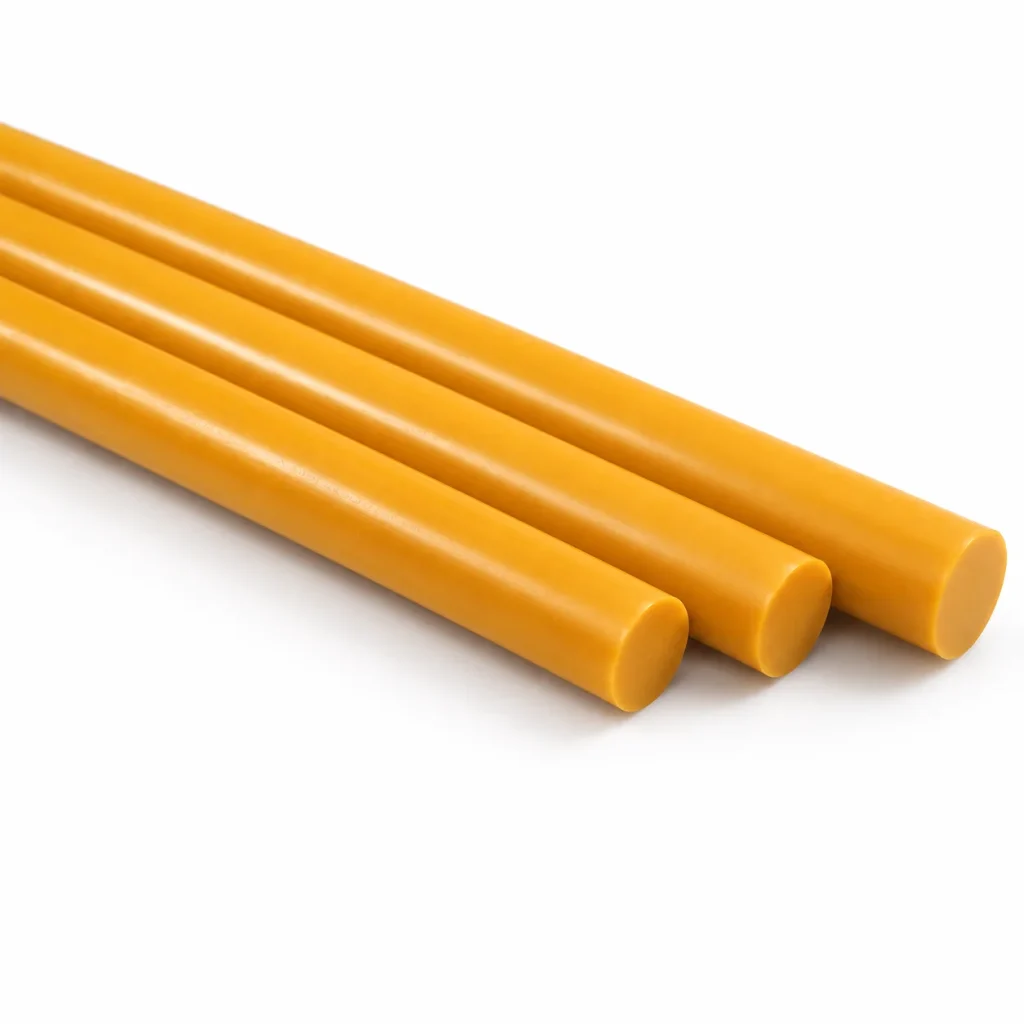
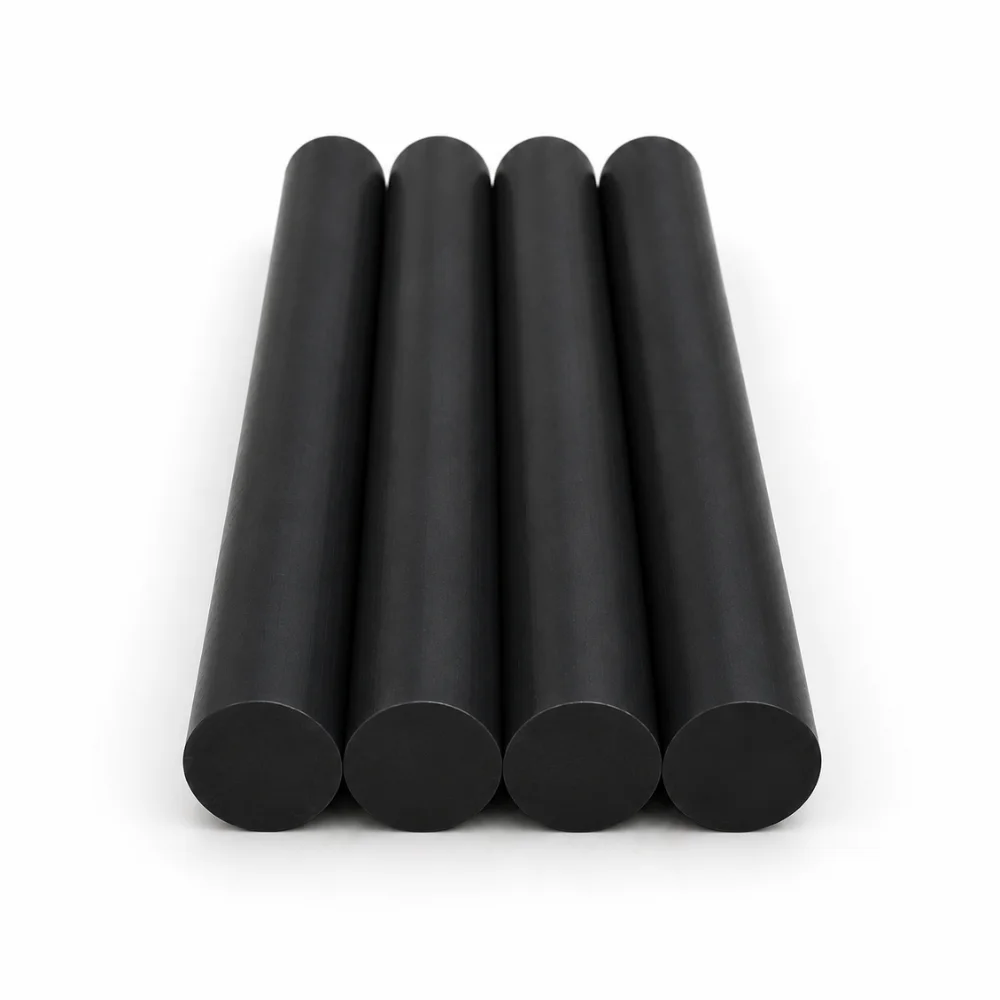
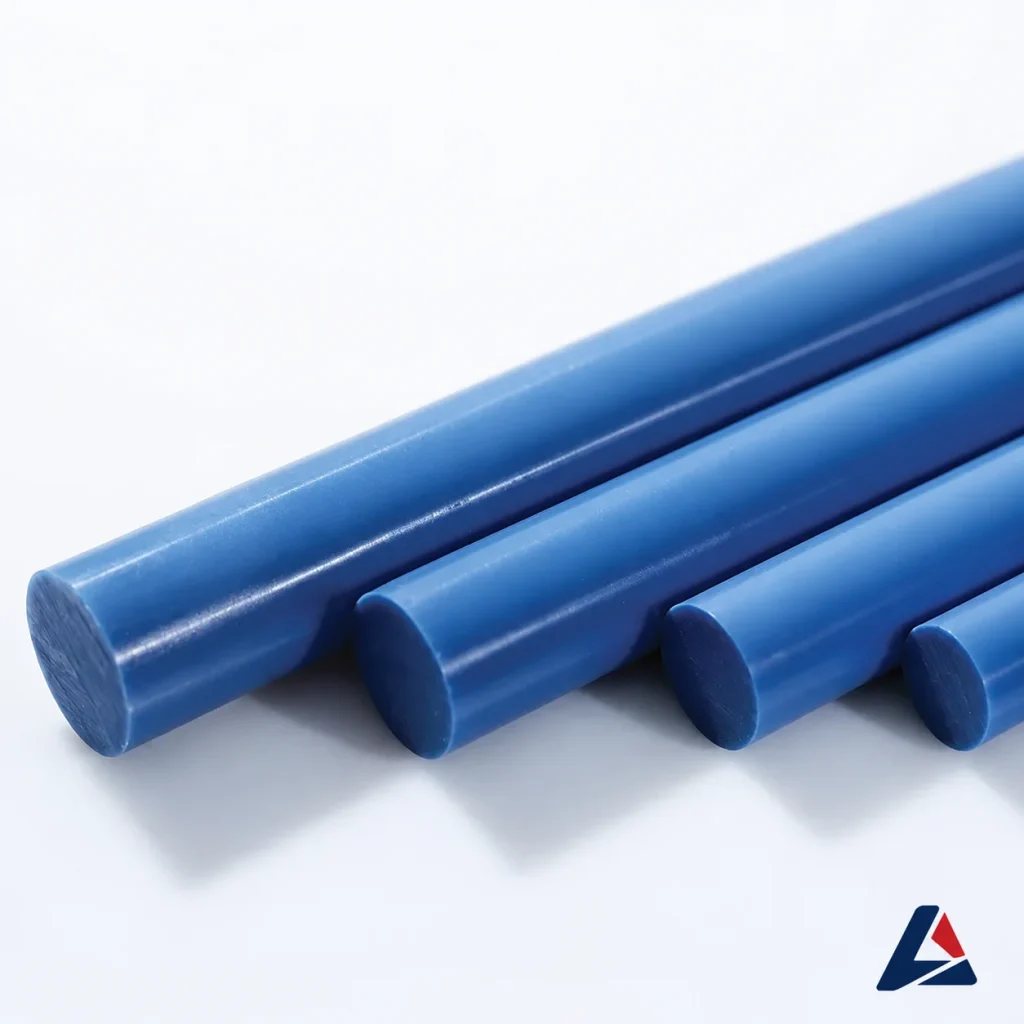
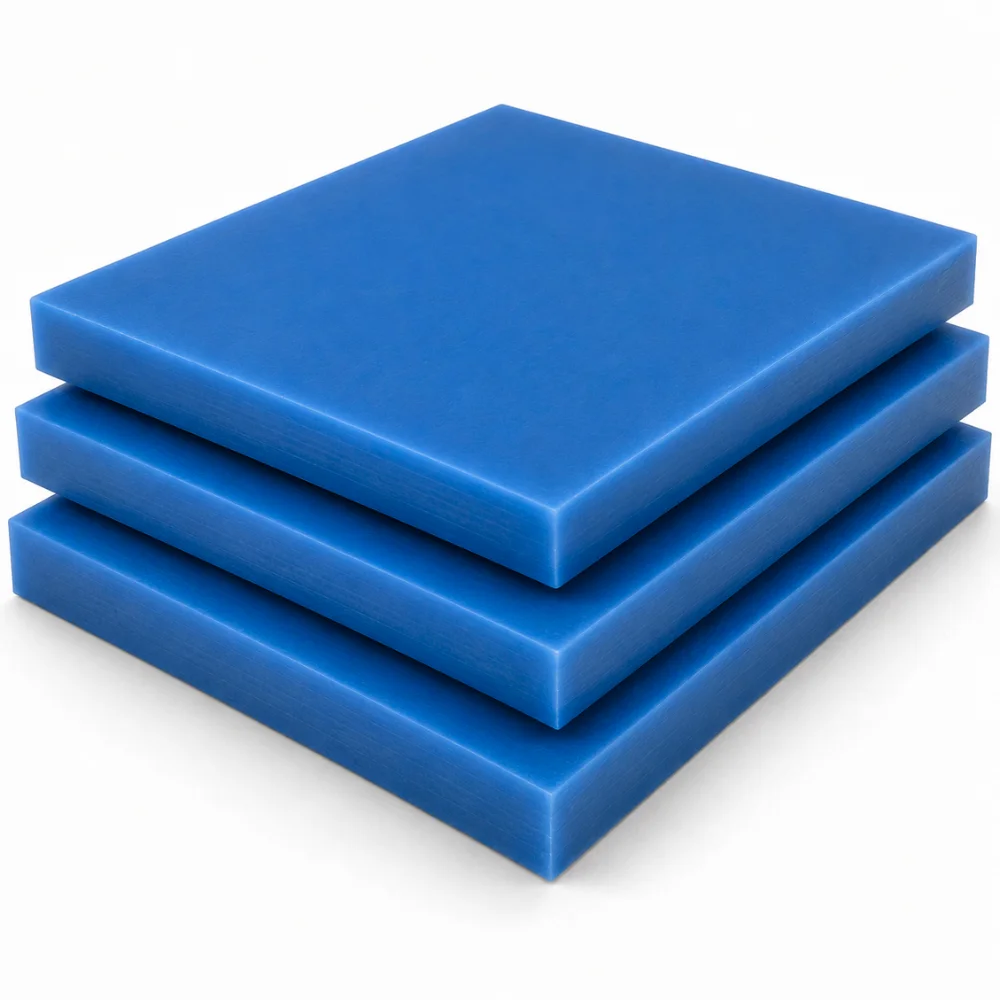
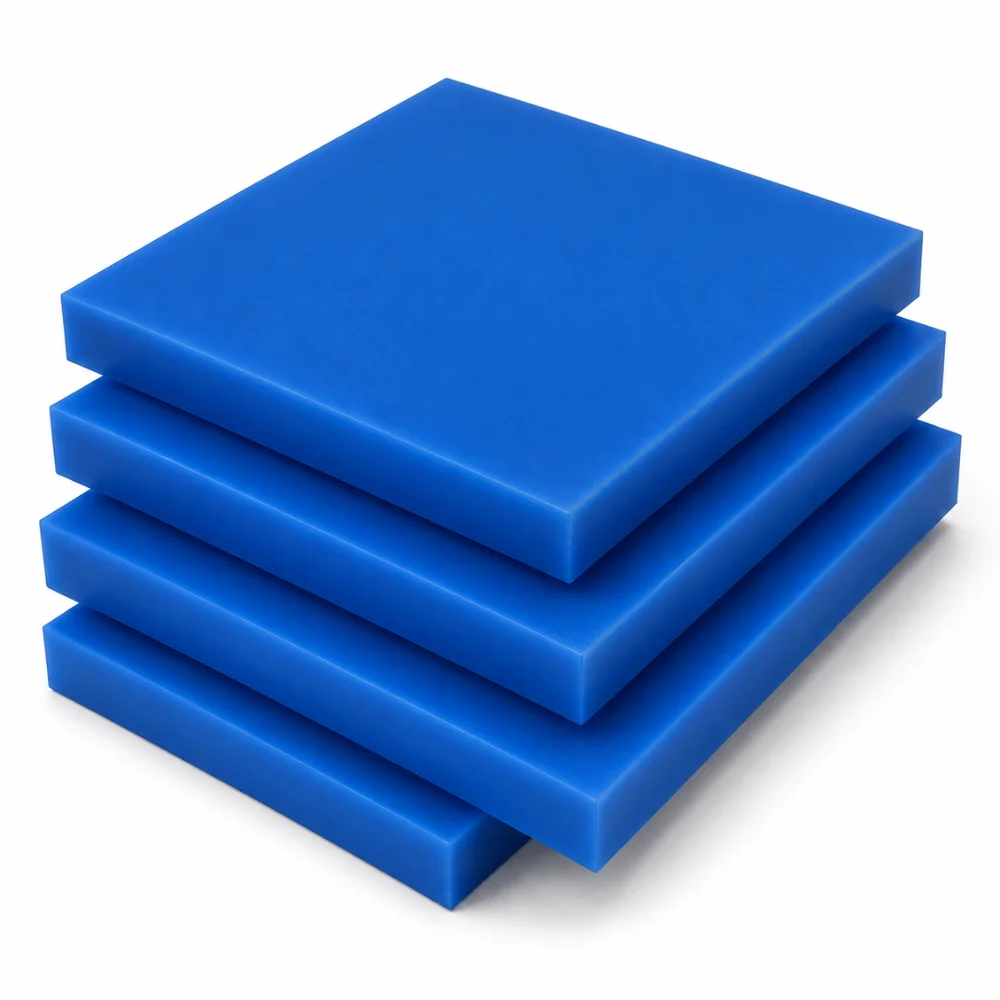
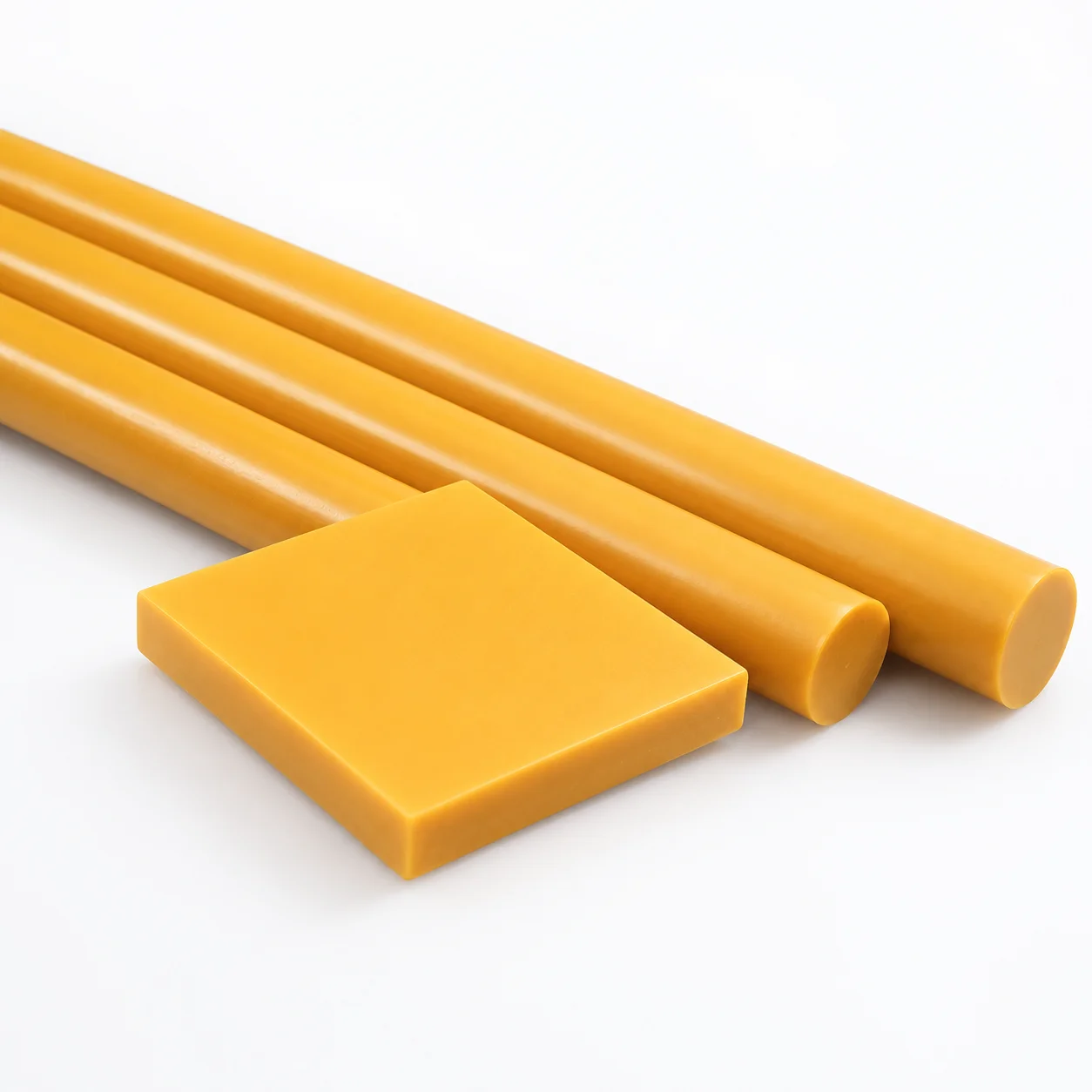
Natural or ivory, blue and black are common. Green, red, yellow and other custom colours may be manufactured, normally subject to a minimum quantity and lead time.
Yes. Cast nylon is particularly suitable for custom rings, tubes, discs, blocks and near-net cast shapes.
Standard stock may be cut as a single piece. Special cast dimensions, colours, stabilisers or compounds require a factory minimum order quantity based on mould size, casting weight and production schedule.