Frequently Asked Questions
UHMWPE stands for Ultra-High-Molecular-Weight Polyethylene. It is also identified as PE-UHMW, PE 1000 or PE-UHMW 1000.
Its exceptionally long molecular chains give it outstanding impact, abrasion and sliding performance.
UHMWPE is produced by polymerising ethylene into extremely long polymer chains. Because the resin has very high melt viscosity, it cannot be processed as easily as standard HDPE.
The powder is normally compression moulded, ram extruded and consolidated under heat and pressure to manufacture sheets, rods, profiles and blocks.
Compared with standard HDPE, UHMWPE generally provides:
- Significantly better abrasion resistance
- Higher impact strength
- Lower friction
- Improved sliding and release properties
- Better resistance to repeated impact
- Reduced noise in conveyor and handling systems
However, UHMWPE is less stiff, more difficult to weld and has greater creep and thermal movement than many rigid engineering plastics.
POLYSTONE® M is Röchling’s brand family for PE-UHMW material. It is available in several formulations for wear, sliding, food-processing, bulk-material handling and specialist applications.
SIMONA also manufactures PE 1000 products, while Ensinger supplies UHMWPE under its TECAFINE PE 1000 range. Exact molecular-weight figures and properties vary between manufacturers and grades.
Typical applications include:
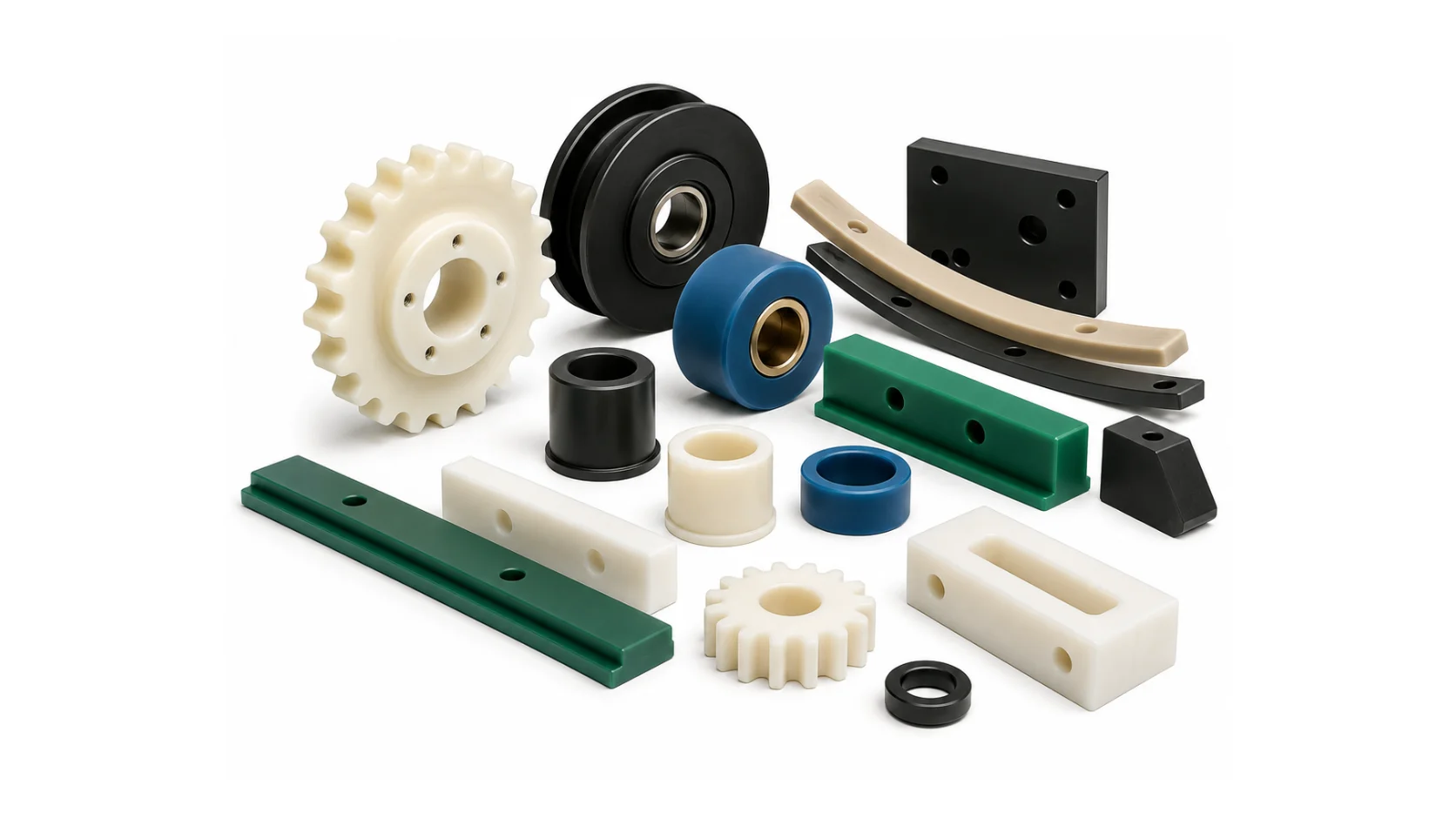
- Conveyor chain guides
- Wear strips and slide rails
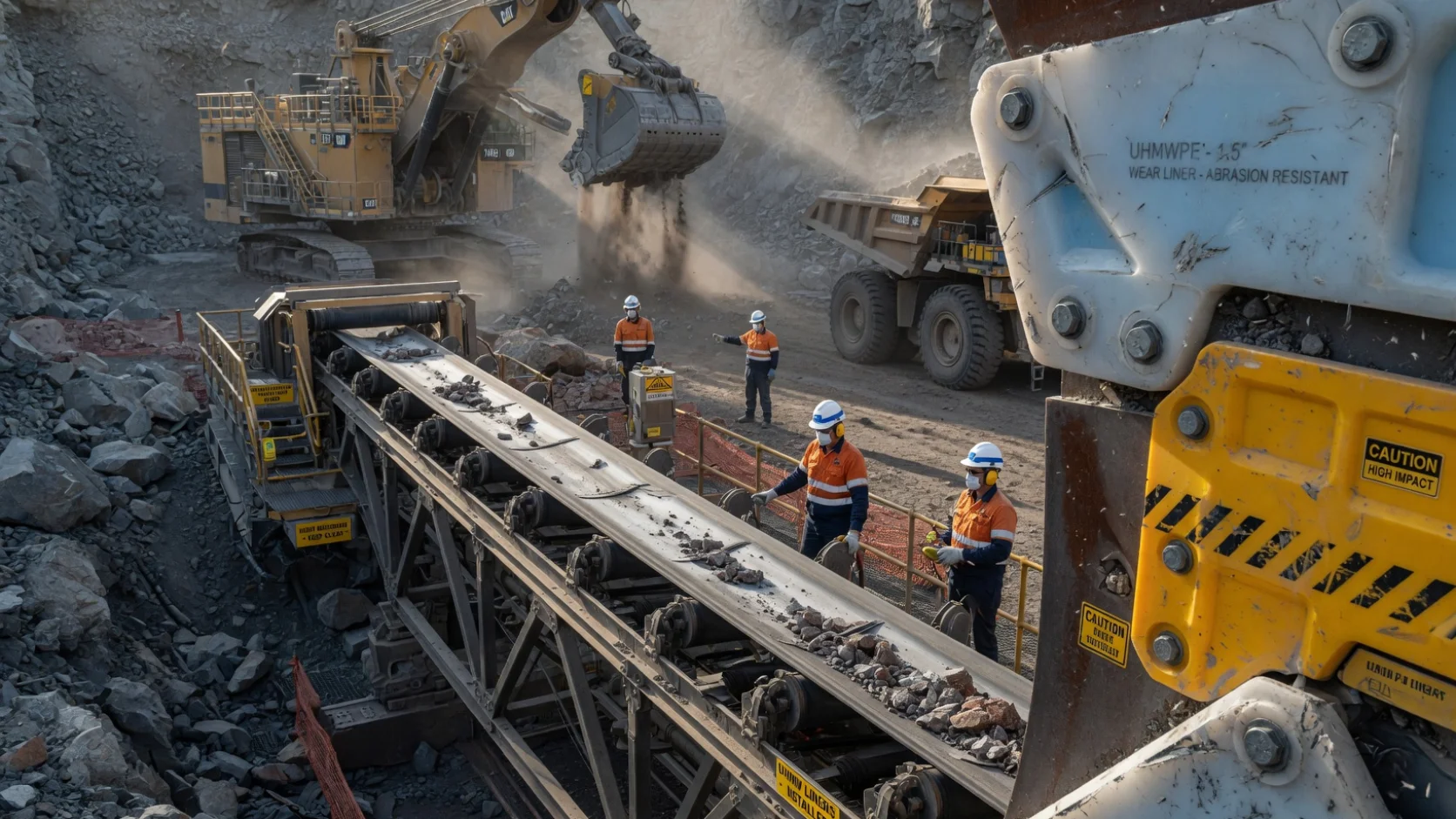
- Hopper and chute liners
- Truck and bin liners
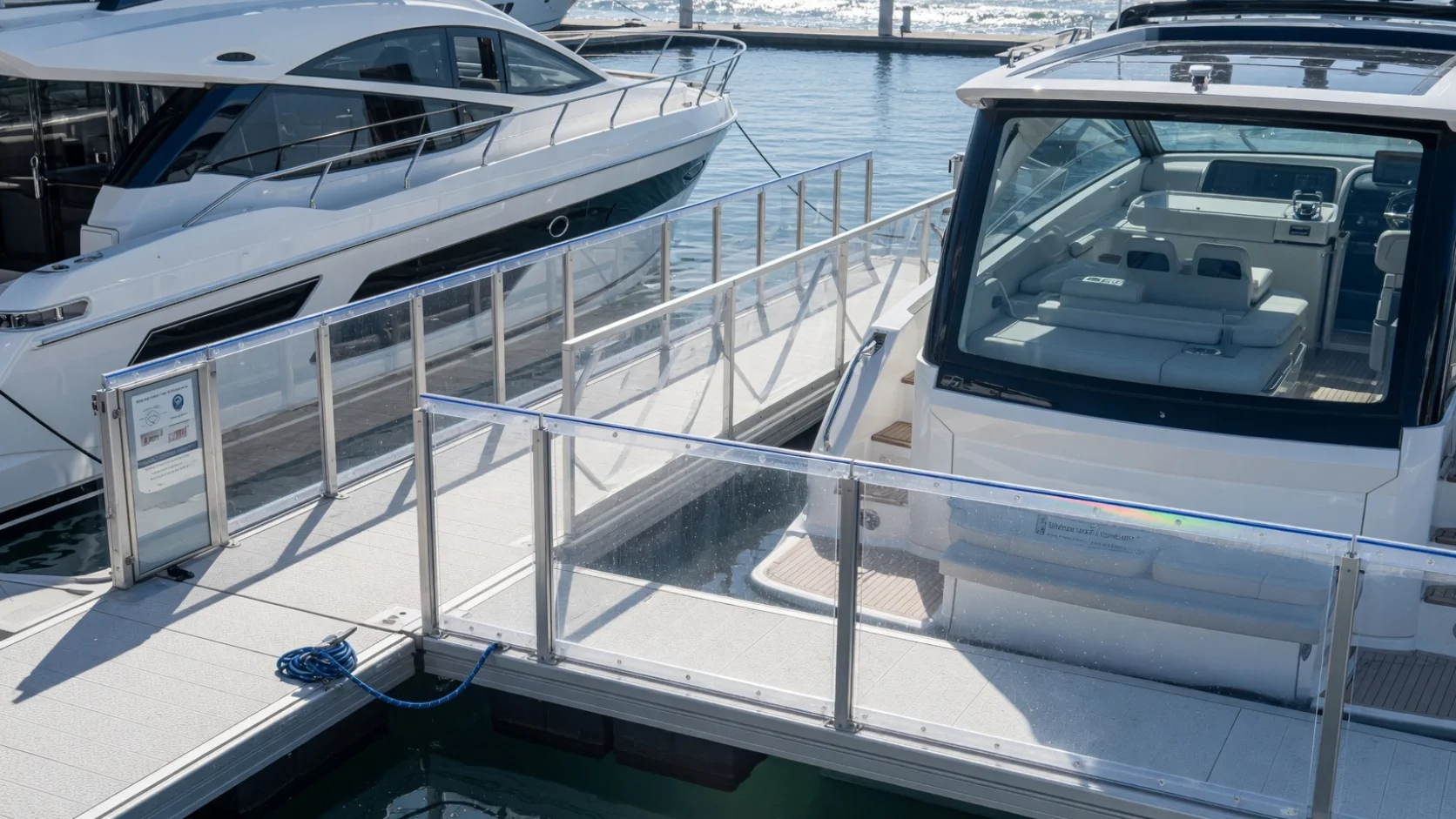
- Marine fenders and dock components
- Scraper blades
- Star wheels and change parts
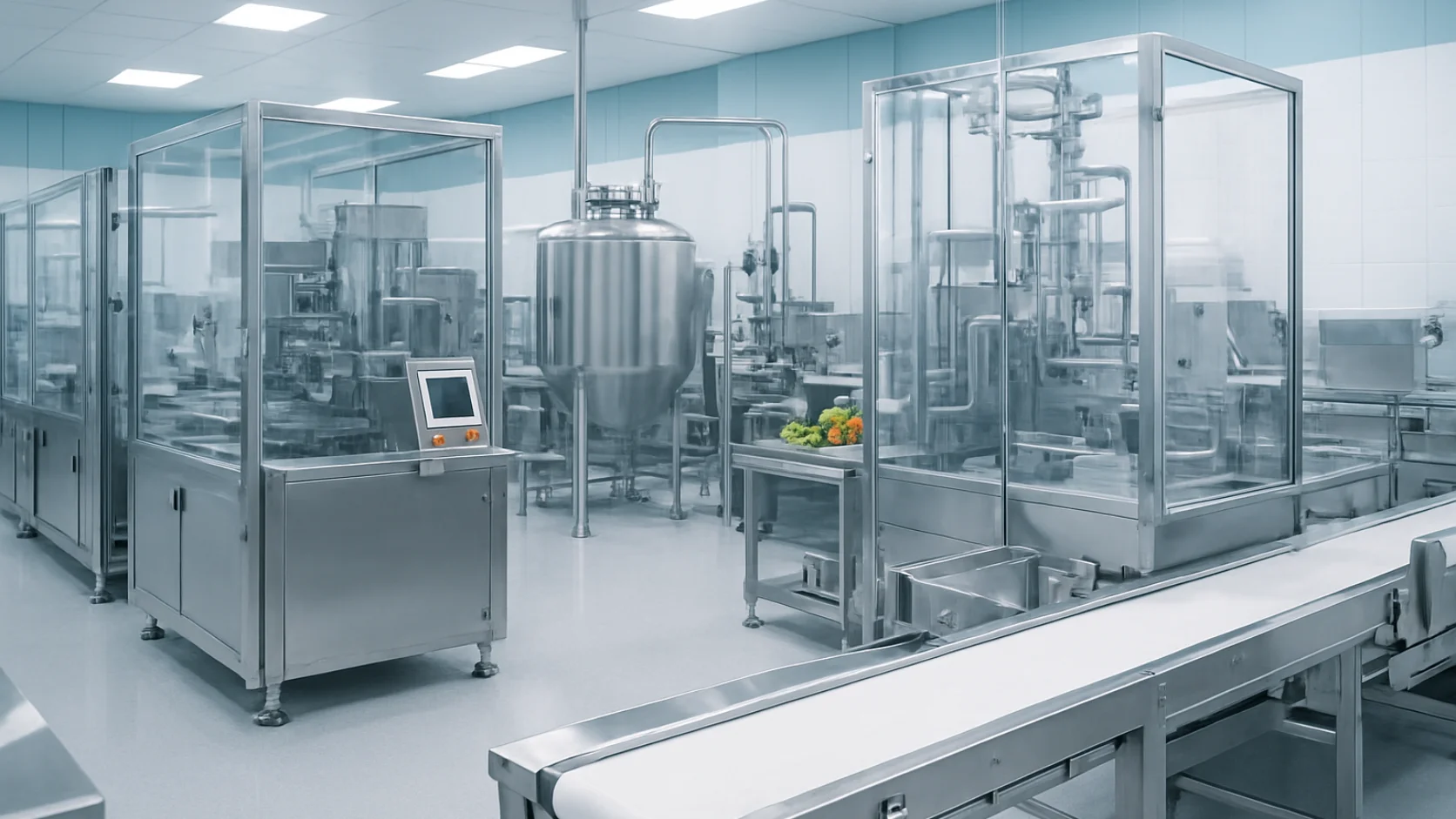
- Food-processing guides
- Mining and bulk-material handling
- High-impact wear components
- Cutting boards using an approved grade
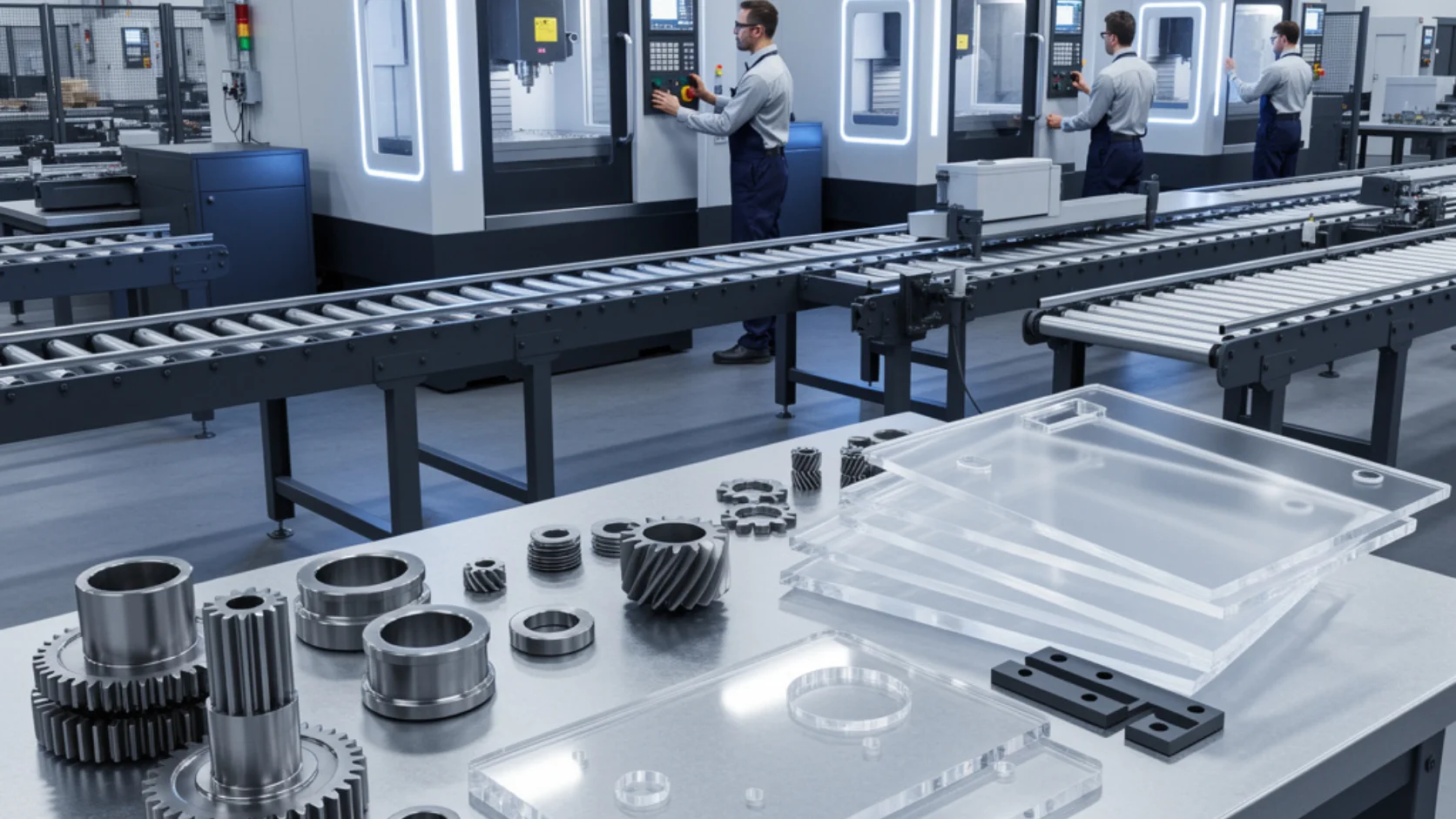
UHMWPE can be saw-cut, routed, drilled, turned and CNC machined. However, it is flexible and can produce long, stringy chips.
Sharp tools, positive cutting geometry and good work support are recommended. Close tolerances must allow for thermal movement and creep.
UHMWPE is not as easy to thermoform or weld as standard HDPE because of its extremely high melt viscosity. Specialist fusion, pressure-forming and welding processes are possible.
Cold bending normally produces spring-back rather than a permanent accurate fold. Thick components are generally machined.
Adhesive bonding is difficult because UHMWPE has very low surface energy. Mechanical fastening is usually preferred, although specialist surface treatment and adhesives can be evaluated.
Printing is possible only with appropriate surface preparation. Flame, corona or plasma treatment may be required, followed by a polyethylene-compatible ink.
Adhesion should be tested because abrasion, flexing and the low-energy surface can shorten the life of the printed image.
- Dimensional stability: Almost no moisture absorption, but relatively high thermal expansion and creep.
- Mechanical: Moderate stiffness but extremely high impact strength, even at low temperatures.
- Wear: Exceptional abrasion resistance and low friction.
- Chemical: Excellent resistance to many acids, alkalis and cleaning chemicals; oxidising agents and elevated temperatures require checking.
- Fire: Standard UHMWPE is combustible and typically classified around UL 94 HB. Flame-retardant grades must be specified separately.
- Electrical: Excellent electrical insulation; conductive and static-dissipative grades are also available.
- Temperature: Röchling lists approximately –250°C to 80°C for long-term service for one POLYSTONE M grade, subject to load and environment.
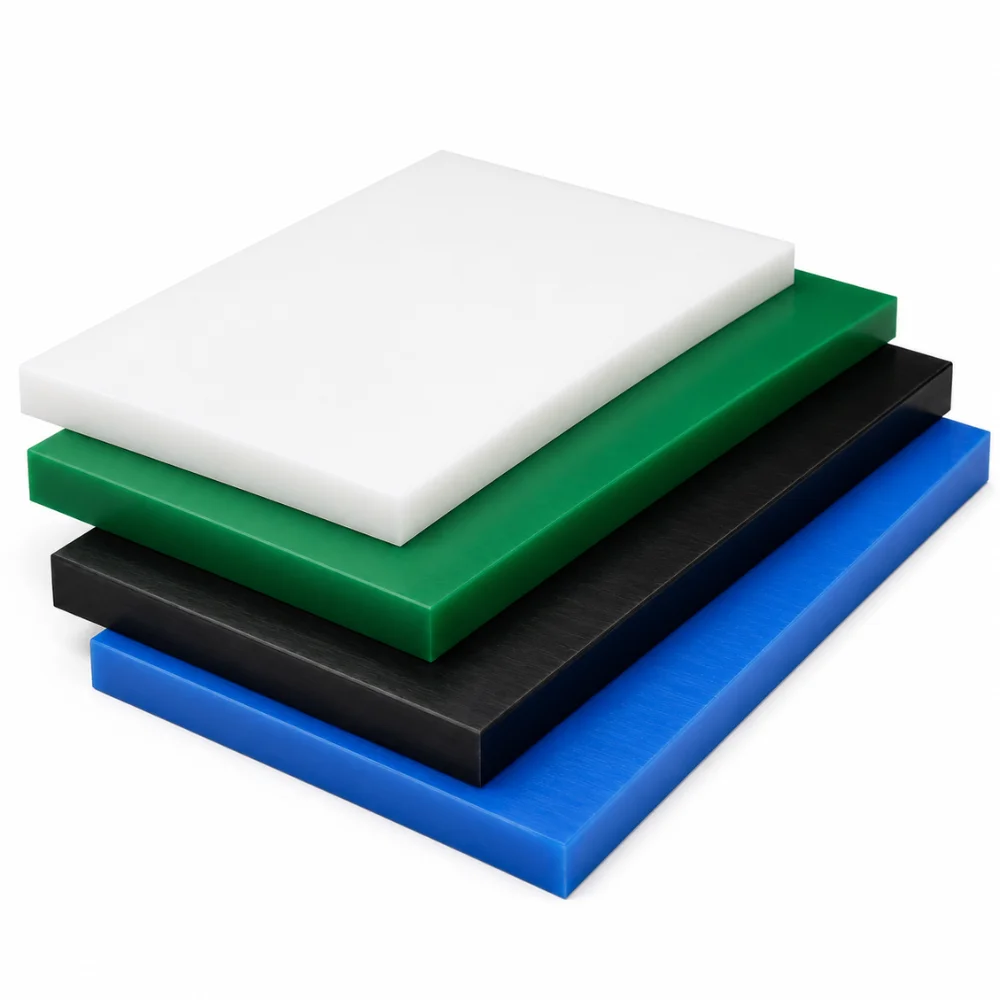
Natural, green, blue and black are common. Reprocessed, UV-stabilised, food-approved, metal-detectable, antistatic, conductive and other specialist grades may be available.
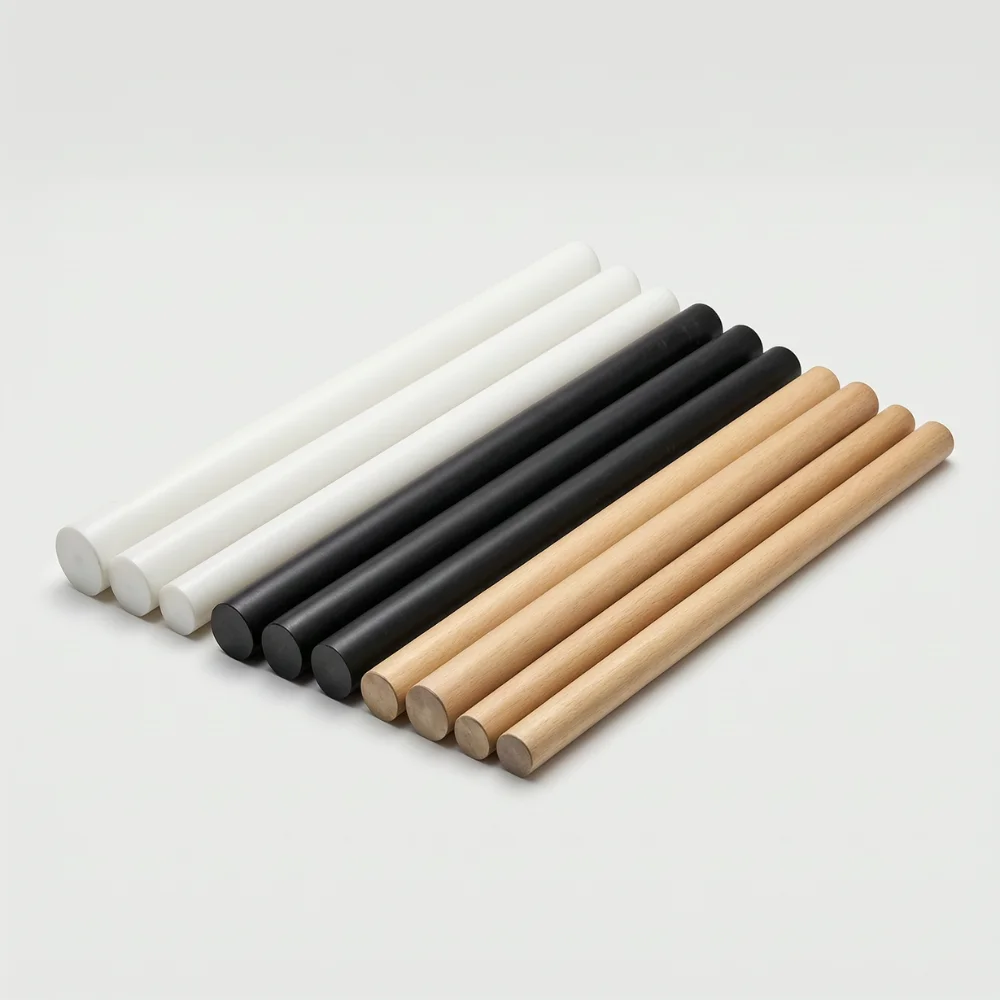
Yes. UHMWPE can be supplied as cut sheet, rod, profiles, liners, wear strips and machined components.
A single cut piece may be available from standard stock. Custom colours, profiles, thicknesses, planed sheet or specialist compounds generally require a manufacturing minimum and lead time.