Frequently Asked Questions
HDPE stands for High-Density Polyethylene. It is also identified as PE-HD and, in many European engineering-plastics ranges, PE 300.
HDPE is a semi-crystalline thermoplastic recognised for its excellent chemical resistance, toughness, low moisture absorption, electrical insulation and ease of welding. It is lightweight, does not corrode and can be manufactured into sheets, rods, pipes, profiles, tanks and finished components.
HDPE is manufactured by polymerising ethylene into long molecular chains. Compared with low-density polyethylene, HDPE has less molecular branching, allowing its polymer chains to pack more closely together. This gives the material its higher density, stiffness and strength.
The resin is generally produced as pellets and then processed through:
- Sheet and profile extrusion
- Compression pressing
- Pipe extrusion
- Injection moulding
- Blow moulding
- Rotational moulding
- Thermoforming
Additives can be incorporated to provide UV resistance, colour, flame retardancy, electrical conductivity or other application-specific properties.
HDPE’s principal advantage is its practical combination of:
- Excellent chemical and corrosion resistance
- Very low water absorption
- High impact strength and toughness
- Low density and easy handling
- Good electrical insulation
- Excellent weldability
- Easy cutting and machining
- Availability in large sheets and fabricated structures
- Relatively economical material cost
Strictly speaking, some manufacturers classify HDPE as an industrial plastic rather than a higher-temperature engineering plastic. However, it is widely used in engineered components, chemical tanks, water-treatment equipment, machine guards, liners and material-handling systems.
HDPE is selected where chemical resistance, impact strength and weldability are more important than very high stiffness or close dimensional tolerances.
These products belong to the polyethylene family but have different molecular weights and performance characteristics.
| Material | European designation | Distinguishing feature | Common applications |
| HDPE | PE-HD or PE 300 | Weldability, chemical resistance and economical fabrication | Tanks, guards, trays, piping and fabricated equipment |
| HMWPE | PE-HMW or PE 500 | Improved impact, wear, scratch and cut resistance | Cutting boards, guides and food-processing parts |
| UHMWPE | PE-UHMW or PE 1000 | Extremely high wear resistance and very low friction | Chutes, liners, chain guides and heavily worn components |
Increasing molecular weight normally improves wear and impact performance, but it also changes how the material can be processed and welded.
No. POLYSTONE® is a registered product family belonging to Röchling Industrial, another German plastics manufacturer. Röchling includes POLYSTONE® in its official industrial brand portfolio.
SIMONA is a separate German manufacturer that supplies HDPE under product names such as:
- SIMONA® PE-HD
- SIMONA® PE 100
- SIMONA® PE 100 RC
- SIMONA® PE-UV
- SIMONA® PE-TF
- SIMONA® PE-EL
- SIMONA® PE-FL
Both manufacturers supply high-quality polyethylene products, but their trade names should not be combined.
POLYSTONE® is Röchling Industrial’s family of thermoplastic sheet, rod, profile and welding products.
| Röchling product family | Material |
| POLYSTONE® G | HDPE or PE-HD/PE 300 |
| POLYSTONE® D | High-molecular-weight polyethylene or PE 500 |
| POLYSTONE® M | Ultra-high-molecular-weight polyethylene or PE 1000 |
| POLYSTONE® P | Polypropylene—not HDPE |
POLYSTONE® G HD is Röchling’s standard high-density polyethylene product. It is described as easy to process, chemically resistant and readily weldable, particularly for chemical equipment and container construction.
Special POLYSTONE® G formulations include UV-stabilised, electrically conductive, flame-retardant, backed, recycled-content and application-certified grades.
SIMONA is a German manufacturer of thermoplastic sheets, rods, pipes, profiles, welding rods and finished products.
Its polyethylene range includes:
- SIMONA® PE-HD: General-purpose natural or black HDPE.
- SIMONA® PE 100: A higher-strength polyethylene grade for tanks, pipes, water systems and long-term structural applications.
- SIMONA® PE 100 RC: Increased resistance to slow crack growth.
- SIMONA® PE-UV: UV-stabilised polyethylene for outdoor applications.
- SIMONA® PE-TF: A formulation developed for thermoforming.
- SIMONA® PE-EL: Electrically conductive polyethylene.
- SIMONA® PE-FL: Flame-retardant polyethylene.
- SIMONA® PE 500 and PE 1000: Higher-molecular-weight grades for wear and sliding applications.
For example, SIMONA® PE 100 black is UV-stabilised and offers high chemical resistance, strength, rigidity and long-term creep performance.
SIMONA and POLYSTONE products may serve similar applications, but they are not automatically interchangeable. Grade, welding compatibility, colour, approval and technical data must be checked before substitution.
HDPE is used across industries including:
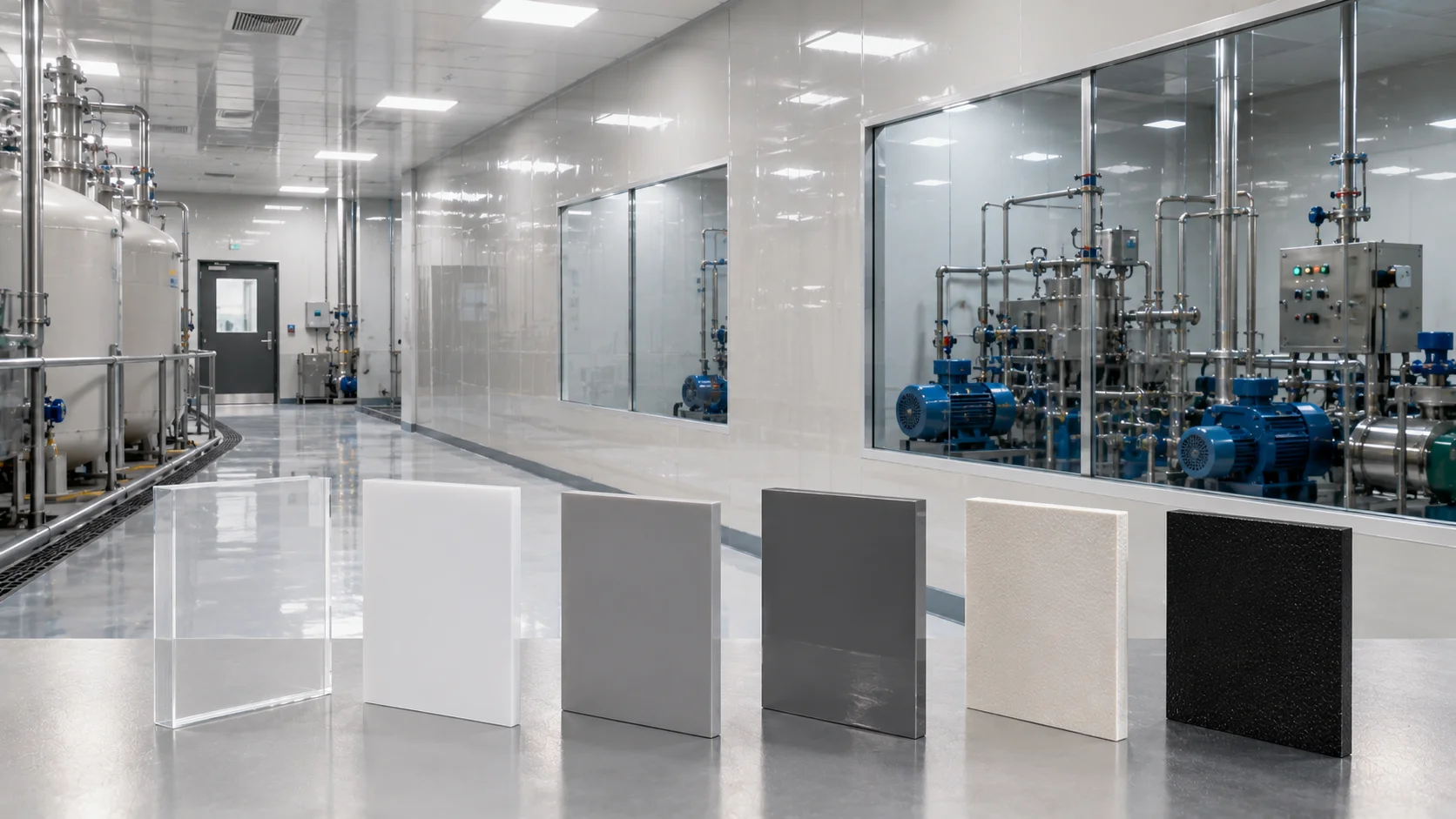
- Chemical processing
- Water and wastewater treatment
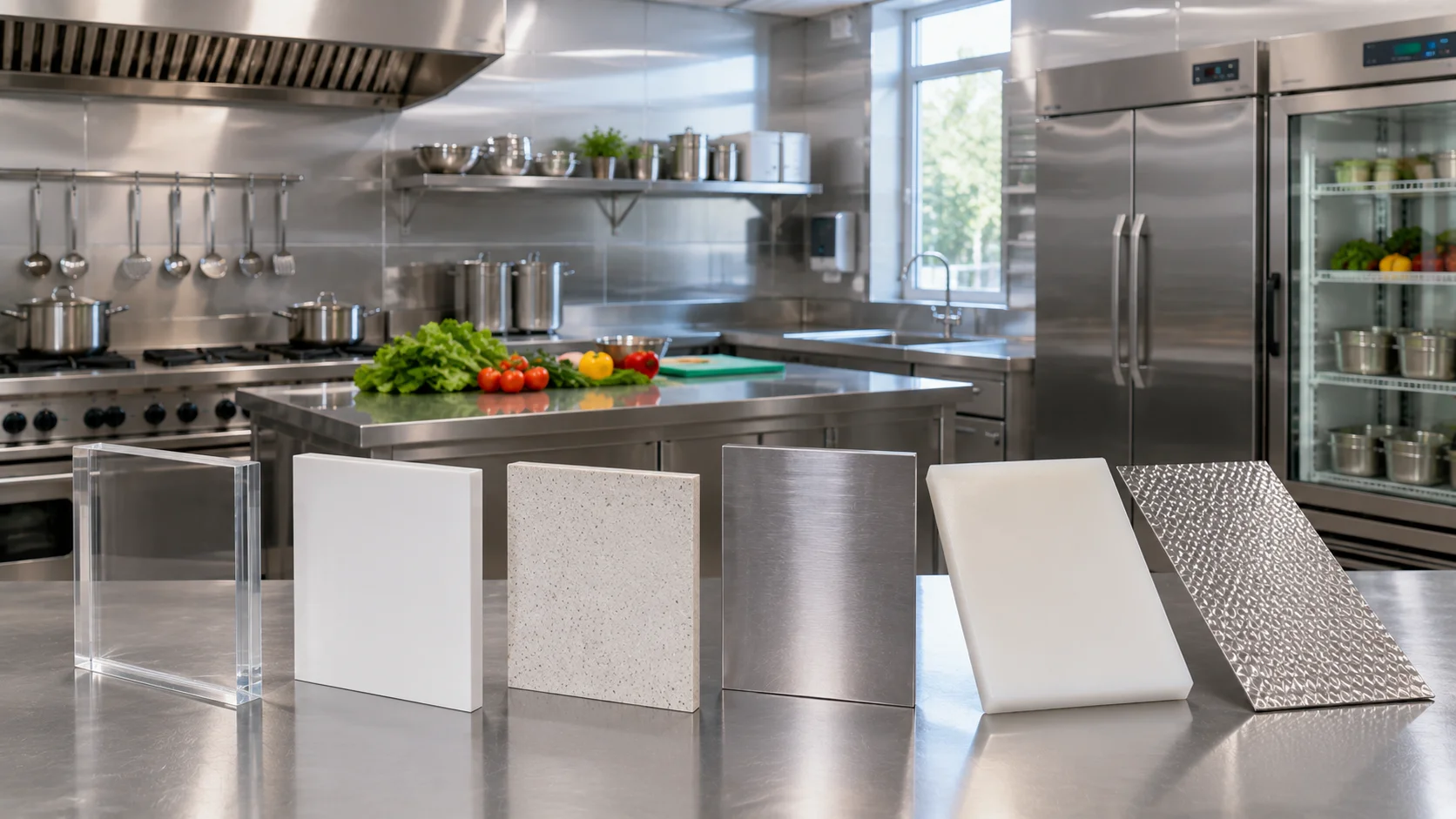
- Food and beverage manufacturing
- Mining and mineral processing
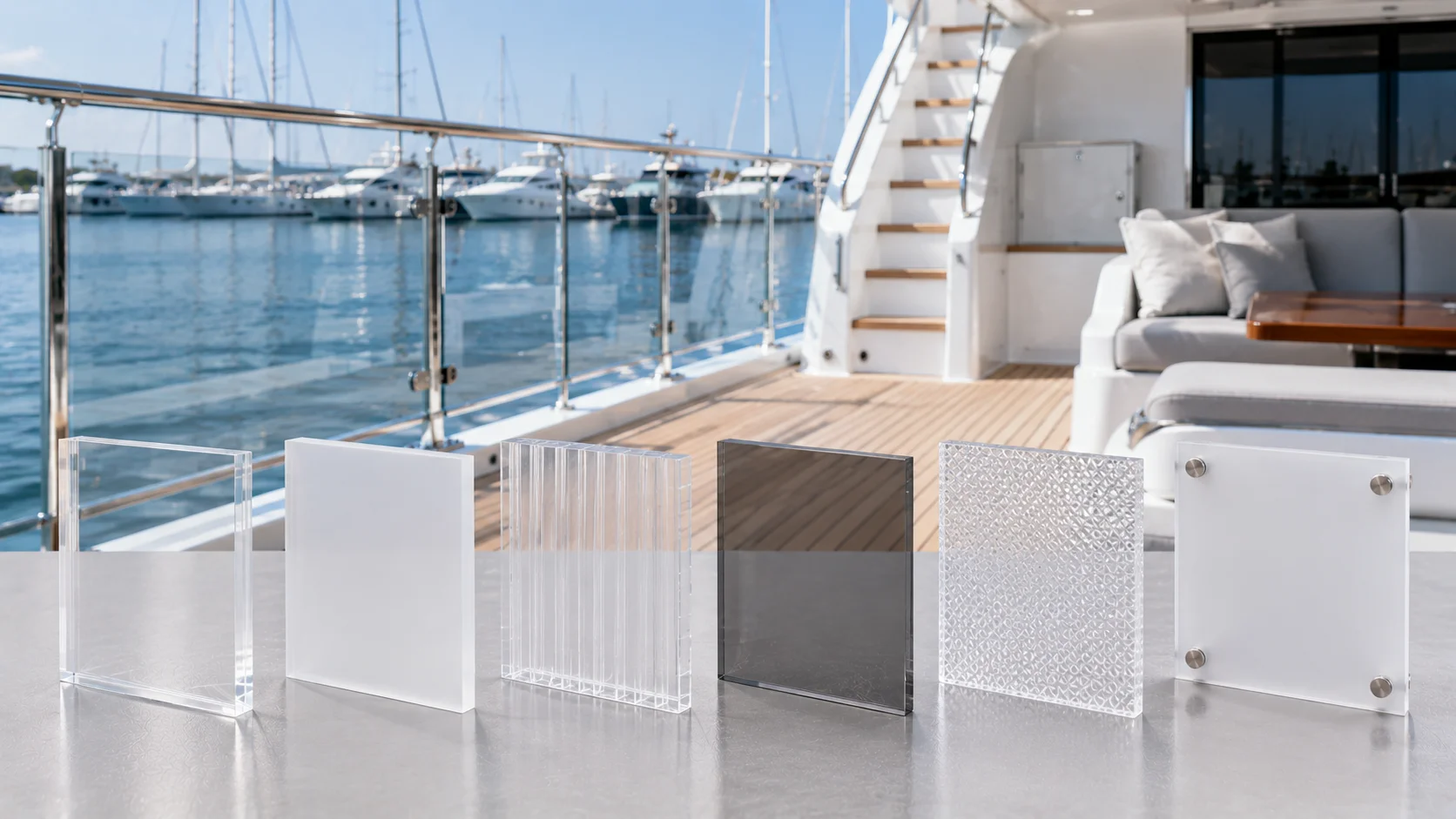
- Marine and aquaculture
- Agriculture
- Transport and materials handling
- Packaging machinery
- Electrical manufacturing
- Construction
- Playground and recreational equipment
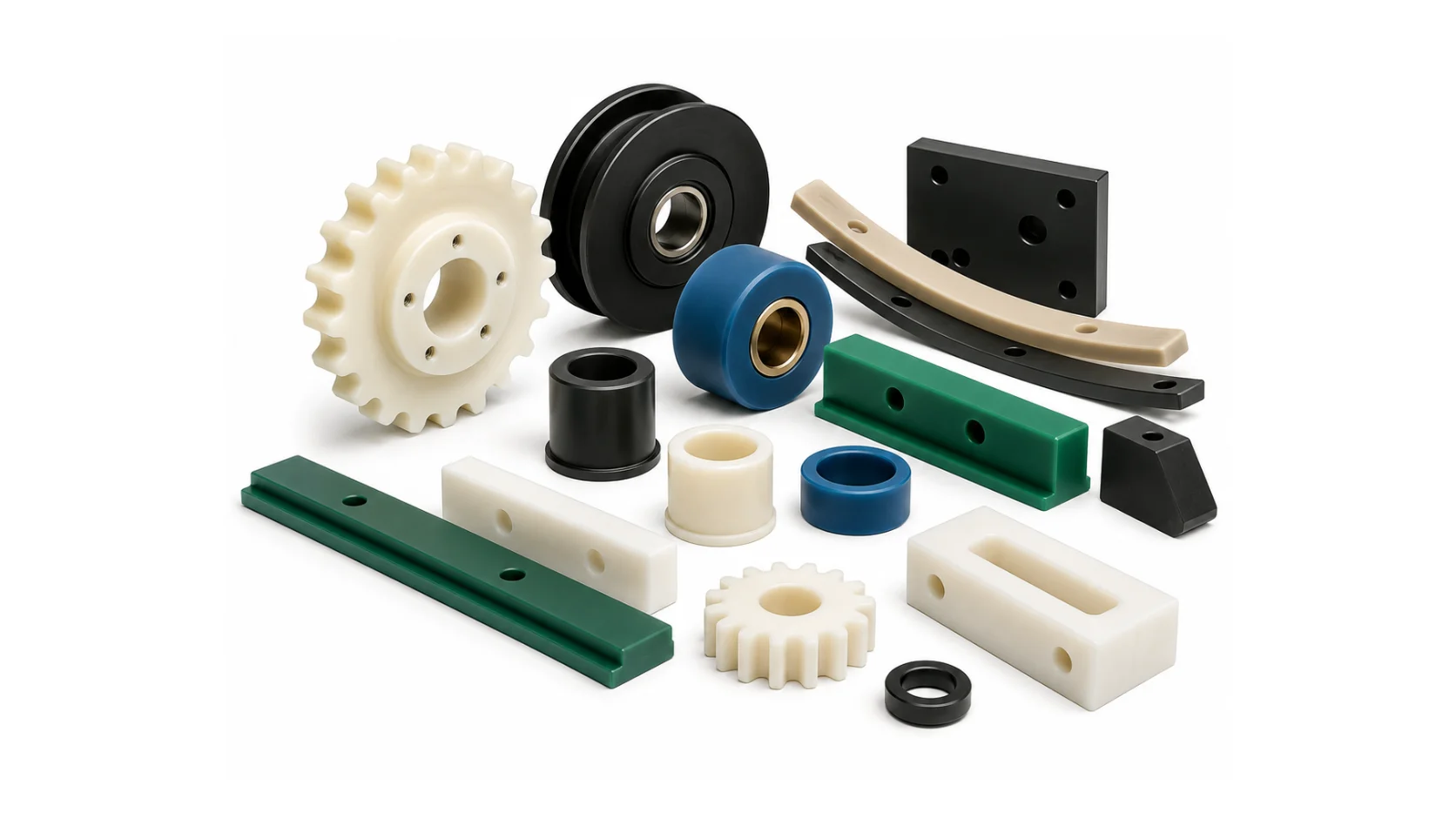
Typical products include tanks, bunds, trays, liners, guards, cutting boards, work surfaces, pipework, pontoons and fabricated equipment.
Common HDPE applications include:
- Chemical storage tanks
- Water and wastewater tanks
- Secondary-containment bunds
- Laboratory sinks and work surfaces
- Machine guards and protective panels
- Hoppers, bins and collection trays
- Marine fenders and boat components
- Aquaculture tanks and equipment
- Food-preparation and cutting surfaces
- Agricultural troughs and tanks
- Pipe flanges, manifolds and fittings
- Wear strips and light-duty guides
- Electrical insulation panels
- Playground panels
- CNC-machined spacers, blocks and components
Food-contact and drinking-water applications require a specifically approved grade.
Yes. HDPE is one of one of the most versatile plastics for general fabrication. It can be:
- Saw-cut and routed
- CNC-milled and turned
- Drilled and tapped
- Thermoformed using an appropriate grade
- Hot-gas or extrusion welded
- Butt-welded
- Mechanically fastened
Sharp cutting tools and correct feeds should be used because HDPE is softer and more flexible than Acetal. Heat build-up can cause the material to melt around cutting tools or produce a rough edge.
Its thermal expansion and tendency to creep should also be considered when designing holes, fasteners, tolerances and long unsupported sections.
Yes. Excellent weldability is one of HDPE’s main advantages.
Common joining methods include:
- Extrusion welding
- Hot-gas welding
- Heated-tool butt welding
- Socket fusion
- Electrofusion for compatible pipe systems
The welding rod and parent sheet should be compatible in resin type, melt-flow characteristics and grade. Surfaces must be clean, properly prepared and free from oxidation or contamination.
Certified welding procedures may be required for chemical tanks, pressure systems, potable-water equipment and safety-critical structures.
Thin HDPE sheet can be flexed or cold-curved over a generous radius because the material is tough and ductile. However, it has substantial spring-back and may gradually relax or creep under continuous stress.
Cold bending is therefore suitable for flexible covers, curved liners and lightly loaded panels, but it is not normally recommended for producing a sharp, dimensionally precise permanent fold.
Yes. HDPE can be hot-bent, vacuum-formed or thermoformed when the correct material grade, heating method and tooling are used.
Because HDPE is semi-crystalline, it undergoes considerable thermal expansion and shrinkage. Uneven heating can result in warping, thinning or loss of dimensional accuracy. The material should be heated uniformly, supported correctly and allowed to cool in a suitable fixture.
Special grades such as SIMONA® PE-TF are formulated for improved thermoforming. For thick chemical-tank sheets, welding separate panels is often more practical than attempting tight hot bends.
HDPE is considered very difficult to bond because it has low surface energy and strong chemical resistance. Ordinary construction adhesives, acrylic solvent cements and general-purpose glues will not provide a dependable structural bond.
Specialist bonding may be possible using:
- Plasma, corona or professionally controlled flame treatment
- A polyethylene-compatible primer
- A specialist structural adhesive
- Carefully controlled surface preparation
Every joint should be tested under its intended load, temperature, chemical and environmental conditions. For most structural HDPE assemblies, welding or correctly designed mechanical fastening is more reliable than adhesive bonding.
Yes. HDPE can be printed, but its low-energy surface must normally be treated before printing to achieve dependable ink adhesion.
Suitable processes can include:
- Pad printing
- Screen printing
- UV digital printing with a compatible primer
- Hot-foil marking
- Laser marking using an appropriate laser-markable grade
Industrial corona, plasma or controlled flame treatment increases the surface energy and helps the ink adhere. German printing-ink manufacturer Coates Screen specifies pre-treated polyethylene for several of its specialist printing systems.
A sample should be tested for adhesion, abrasion, cleaning chemicals, outdoor exposure and required compliance before production. Uncontrolled flame treatment should not be attempted.
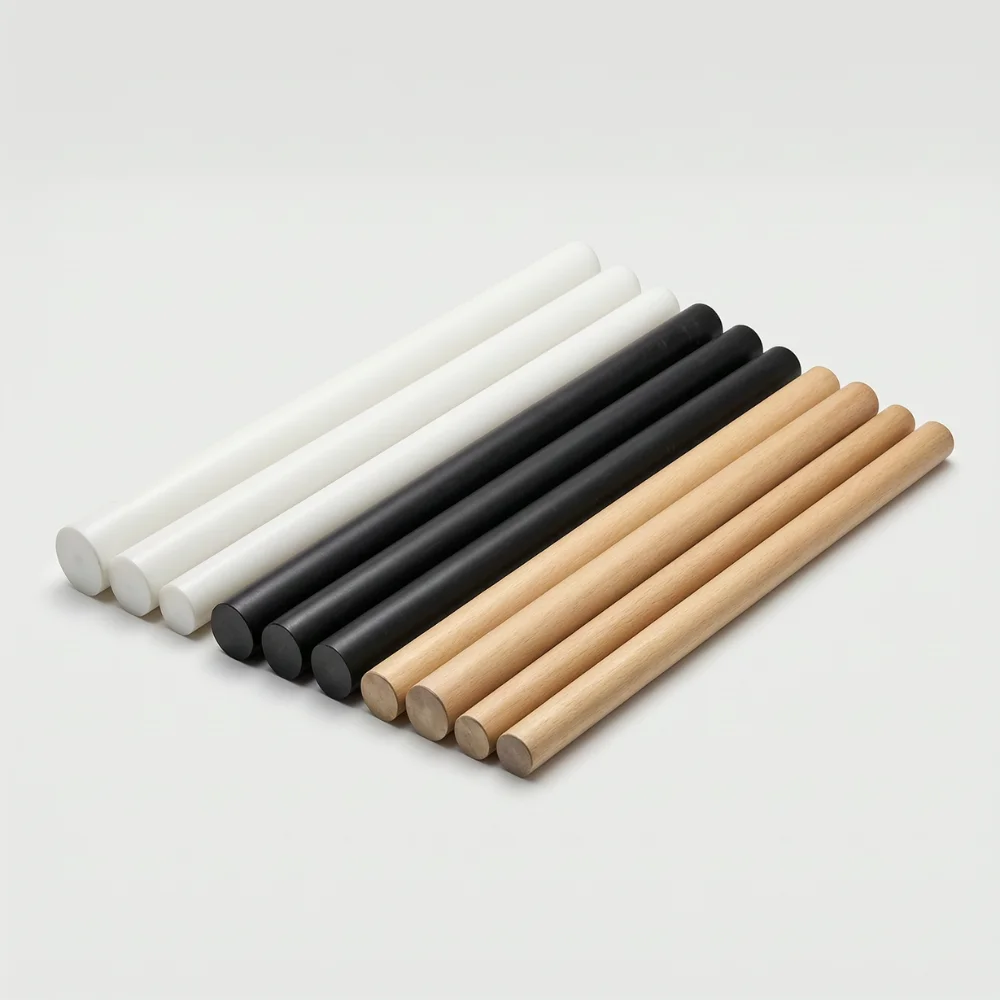
Natural or translucent, white and black are the most common HDPE colours. Depending on the manufacturer and grade, HDPE may also be supplied in:
- Blue
- Green
- Red
- Yellow
- Orange
- Grey
- Beige
- Two-colour or multi-layer combinations
- Project-specific colours
Black HDPE is commonly available in UV-stabilised formulations for outdoor use. A coloured sheet should not automatically be assumed to be UV-stabilised, food-approved, conductive or flame-retardant; these properties must be confirmed from the grade-specific documentation.
Special and custom colours are subject to production quantity, material grade, manufacturer MOQ and lead time.
Yes, provided a suitable UV-stabilised grade is selected.
Standard natural HDPE may deteriorate after prolonged ultraviolet exposure. Properly formulated black HDPE generally offers much better outdoor durability because carbon-black additives protect the polymer from UV radiation.
Röchling POLYSTONE® G HD black, for example, is promoted for permanent outdoor applications, marine structures and workboats because of its UV resilience and resistance to salt water.
Colour, UV additive package, thickness, temperature and exposure conditions should be confirmed for each outdoor application.
HDPE absorbs almost no water, so its dimensions remain relatively stable in wet and humid environments. A typical PE-HD manufacturer data sheet reports water absorption of approximately 0.01%.
However, HDPE has relatively high thermal expansion and is more susceptible to creep than Acetal. Its dimensions can change with temperature or prolonged mechanical loading.
HDPE is therefore excellent for tanks, liners and general fabricated equipment, but it may not be the best material for gears or components requiring extremely close tolerances.
Designs should allow for:
- Thermal expansion and contraction
- Creep under continuous load
- Welding shrinkage
- Long unsupported spans
- Fastener movement
- Operating temperature
| Property | Typical guideline value |
| Density | Above 0.95 g/cm³ |
| Tensile yield strength | Above 22 MPa |
| Tensile modulus | Above 1,000 MPa |
| Elongation at break | Above 50% |
| Shore hardness | Above D60 |
| Water absorption | Approximately 0.01% |
| Melting range | Approximately 130–135°C |
| Long-term service range | Approximately −50°C to +80°C |
| Short-term service temperature | Up to approximately 100°C |
| Linear thermal expansion | Approximately 150–230 × 10⁻⁶/K |
These values are based on typical Röchling POLYSTONE® G HD technical data. They are general guidance only. Actual values vary with grade, colour, additives, thickness and test method.
HDPE has excellent resistance to many:
- Diluted acids and alkalis
- Salt solutions
- Detergents
- Alcohols
- Oils and greases
- Water and wastewater chemicals
- Marine environments
Strong oxidising chemicals, certain hydrocarbons, elevated temperatures and prolonged exposure can affect the material. Chemical exposure may also cause swelling, environmental stress cracking or loss of mechanical properties without immediately dissolving the plastic.
Compatibility must be checked using the actual chemical, concentration, operating temperature, pressure, loading and exposure period.
Standard HDPE is combustible and should not be described as flame-retardant. A typical standard PE-HD grade is classified as UL 94 HB and DIN 4102 B2 at specified tested thicknesses.
HDPE softens and melts when heated and can continue burning after ignition. Combustion may produce carbon monoxide, carbon dioxide and smoke. Röchling provides additional handling information in its PE-HD product-handling document.
Special flame-retardant grades are available, including SIMONA® PE-FL and POLYSTONE® G HD + FR. Fire performance must always be confirmed for the exact material grade, thickness and applicable standard.
Natural, unfilled HDPE is an excellent electrical insulator. Typical PE-HD data includes:
- Dielectric constant: approximately 2.4
- Volume resistivity: above 10¹⁴ Ω·cm
- Surface resistivity: above 10¹⁴ Ω
- Comparative tracking index: approximately 600 V
- Dielectric strength: above 40 kV/mm
Because insulating HDPE can retain static electricity, it is not automatically suitable for ESD-sensitive, explosive or dust-generating areas.
Special conductive grades such as POLYSTONE® G EL and SIMONA® PE-EL are available. The required surface-resistance range and earthing arrangement must be specified.
Selected HDPE grades can be suitable for food-contact, potable-water and hygienic applications. However, not every HDPE sheet automatically carries these approvals.
For Australian projects, request grade-specific evidence for the relevant requirement, which may include:
- AS/NZS 4020 for drinking-water contact
- FDA food-contact compliance
- EU 10/2011 food-contact compliance
- NSF certification
- Manufacturer batch or material declarations
Colour pigments, recycled content, additives, welding rods and fabrication processes must also comply with the intended application.
HDPE may be preferred when chemical resistance, impact strength, weldability, low weight and cost are more important than precision or stiffness.
| Requirement | HDPE | Acetal/POM |
| Chemical tanks and welded structures | Generally preferred | Difficult to fabricate by welding |
| Weight | Lighter, around 0.95 g/cm³ | Denser, around 1.41 g/cm³ |
| Material cost | Generally lower | Generally higher |
| Impact and flexibility | Very good | More rigid |
| Precision machining | Suitable for general tolerances | Better for close tolerances |
| Stiffness and creep resistance | Lower | Significantly better |
| Gears and loaded moving parts | Limited suitability | Usually preferred |
| Large sheets and fabricated equipment | Excellent | Less economical |
HDPE can replace Acetal in lightly loaded parts, chemical-service components, spacers, guards and general fabricated equipment. It should not automatically replace Acetal in precision gears, bearings, threaded parts or components where creep and dimensional movement are critical.
For demanding wear applications, PE 500 or UHMWPE may be more appropriate than standard HDPE.
Yes. Altius Polymers can supply HDPE in standard or custom forms, including:
- Full sheets
- Cut-to-size sheet blanks
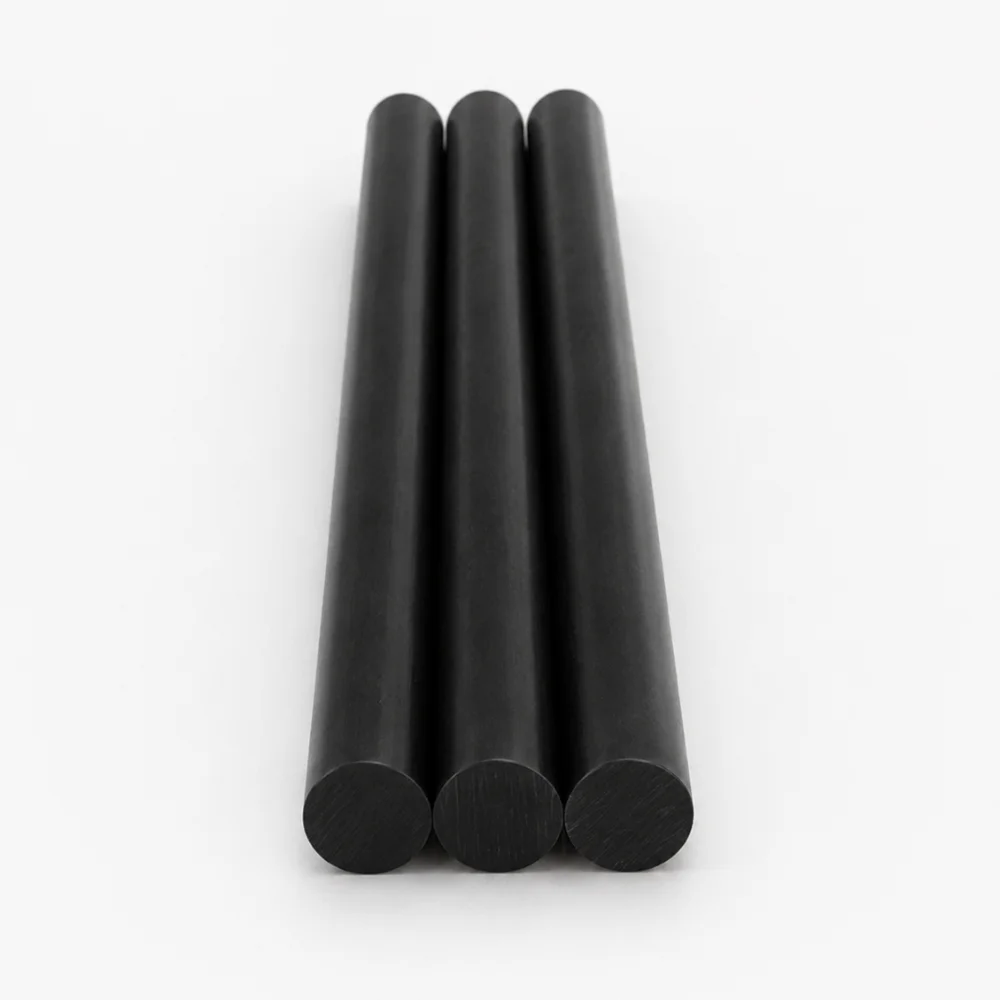
- Rods cut to length
- Welding rods
- CNC-machined components
- Fabricated tanks, trays and guards
- Special colours and grades
- Custom sheet dimensions and thicknesses
Standard stocked materials may be available as a single cut piece or small quantity. Special colours, non-standard dimensions, UV-stabilised products, conductive grades, flame-retardant materials and certified products may require a manufacturer’s minimum order quantity and additional lead time.
Custom extruded, pressed or moulded products may also require tooling and a minimum production run.
To confirm availability, MOQ, pricing and lead time, please provide the required material grade, colour, dimensions, thickness, quantity, tolerances and certification requirements.
If the HDPE product you require is not displayed on our website, contact Altius Polymers. With more than 15 years of plastics-industry experience, our team can help identify and source the right HDPE, SIMONA® or POLYSTONE® grade for your application.