Frequently Asked Questions
PEEK stands for Polyether Ether Ketone. It is a semi-crystalline, high-performance engineering thermoplastic designed for demanding applications involving high temperatures, mechanical loads, chemicals, wear or repeated sterilisation.
PEEK is frequently selected when conventional engineering plastics such as Acetal, Nylon or PETP cannot provide sufficient temperature resistance or long-term mechanical performance.
PEEK is produced by polymerising specialised aromatic raw materials into a high-purity thermoplastic resin. The resin is then converted into sheets, rods, tubes or finished components by extrusion, compression moulding or injection moulding.
Premium PEEK stock shapes are produced from controlled resin grades and processed under carefully regulated temperatures. Correct processing and annealing help minimise internal stress and improve dimensional consistency during machining.
PEEK combines several properties that are rarely found together:
- Continuous operating temperatures of approximately 250–260°C
- High strength and stiffness at elevated temperatures
- Excellent creep and fatigue resistance
- Very good chemical and hydrolysis resistance
- Low moisture absorption
- Good wear and sliding behaviour
- Inherent flame resistance
- Excellent electrical insulation
- Resistance to repeated steam sterilisation
PEEK is considerably more expensive than standard engineering plastics, so it is normally specified where its performance provides a meaningful operational or safety benefit.
Common grades include:
- Unfilled PEEK for balanced mechanical, chemical and electrical performance
- Glass-fibre-reinforced PEEK for increased stiffness and dimensional stability
- Carbon-fibre-reinforced PEEK for high stiffness, reduced thermal expansion and improved wear
- Bearing-grade PEEK containing PTFE, carbon or graphite
- Food-contact, medical, semiconductor and high-purity grades
- Electrically conductive or static-dissipative grades
Brand examples include Ensinger TECAPEEK and Röchling SustaPEEK. Certification and regulatory compliance must always be confirmed for the specific grade supplied.
Typical applications include:
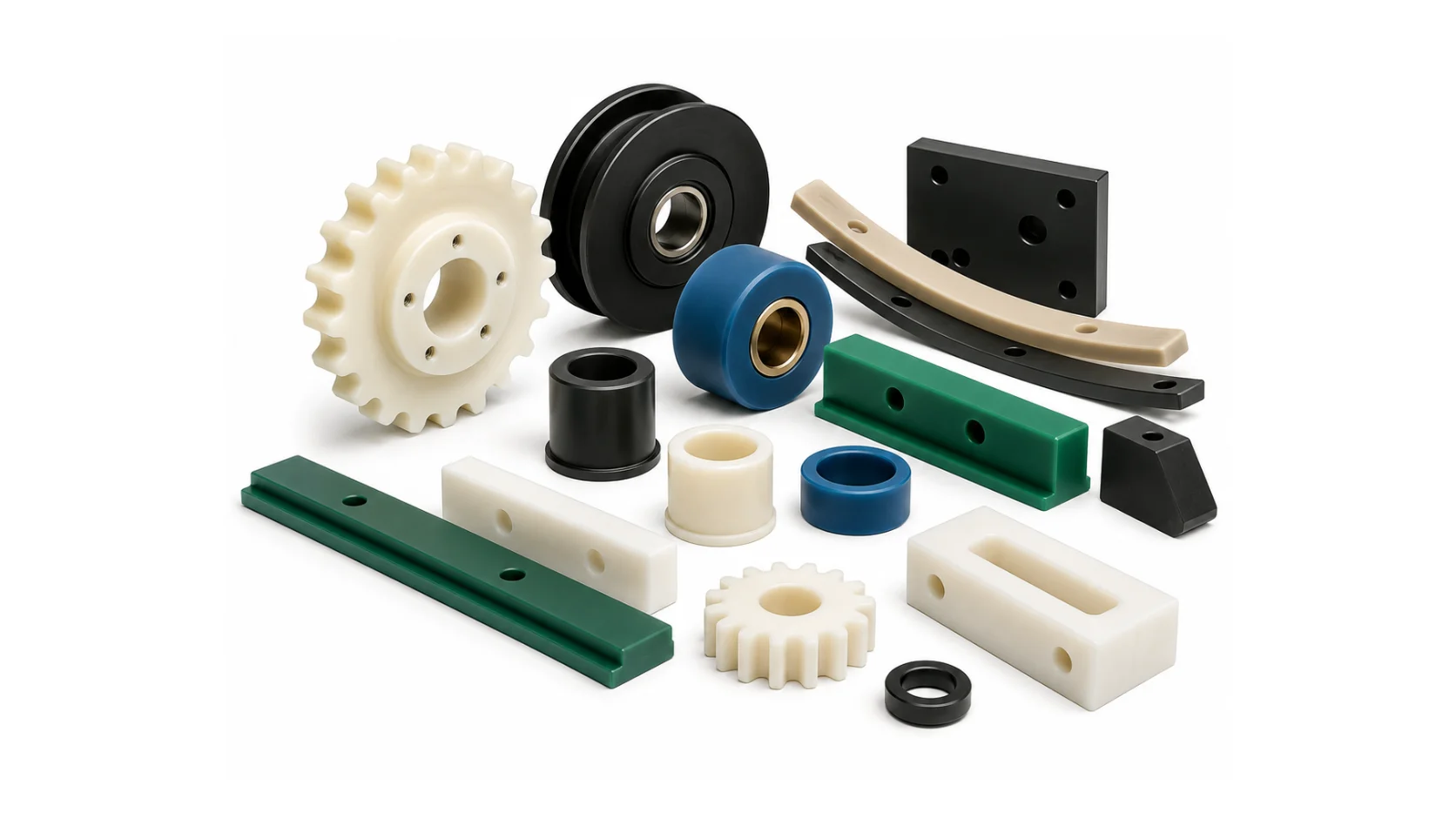
- High-temperature bearings and bushes
- Valve seats, seals and backup rings
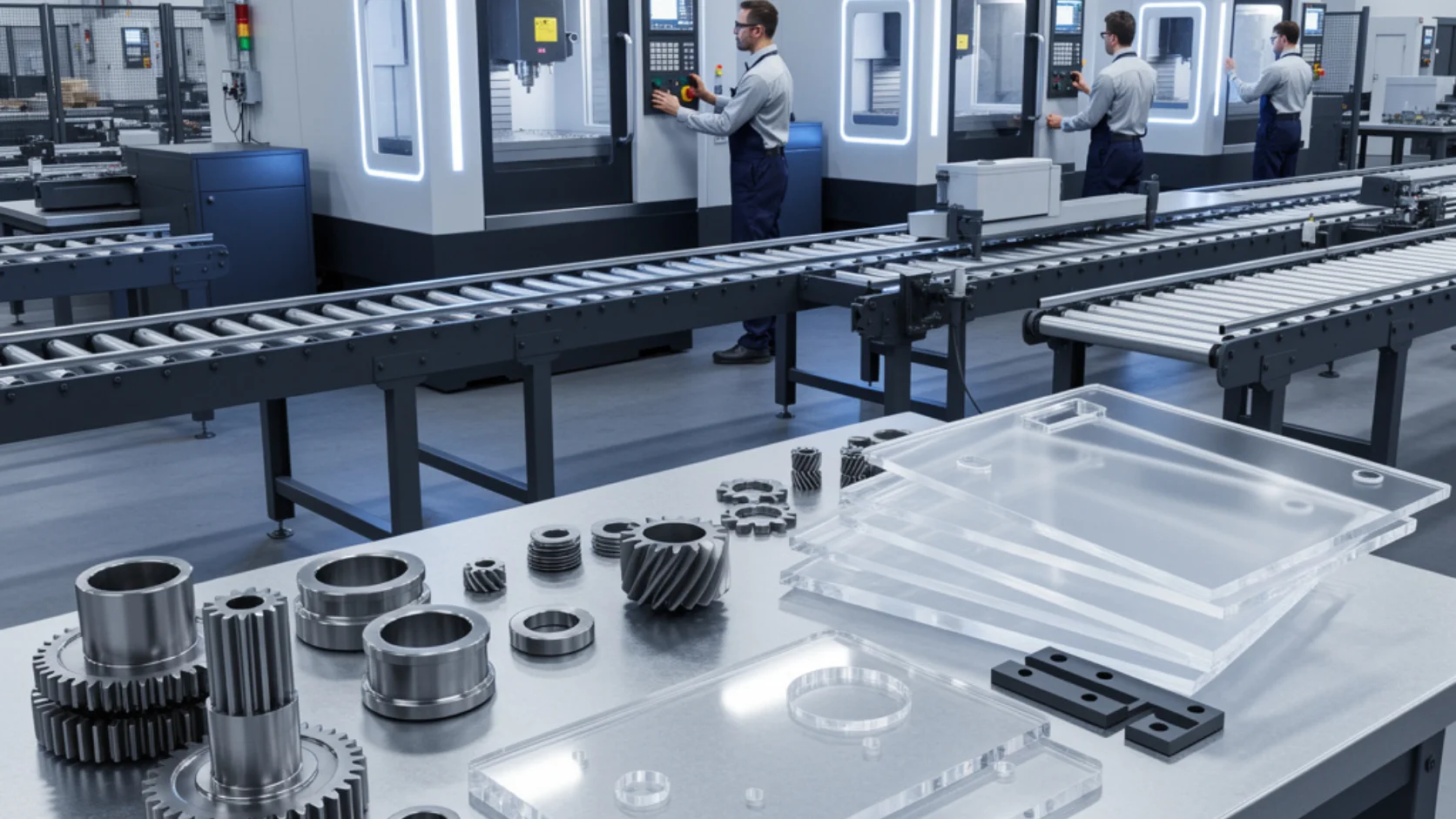
- Gears, rollers and wear components
- Electrical connectors and insulators
- Semiconductor handling components
- Chemical-processing equipment
- Oil and gas components
- Aerospace and transport components
- Medical and sterilisation equipment
- Food-processing components where an approved grade is required
PEEK machines very well using conventional CNC equipment and sharp carbide or suitable cutting tools. It can hold close tolerances, but heat generation and internal stress must be managed carefully.
Annealing may be recommended when producing thin sections, highly accurate components or parts requiring substantial material removal. Fibre-reinforced grades are more abrasive and increase tool wear.
PEEK is not normally cold bent because it is stiff and may retain stress or crack at an unsuitable radius.
Specialist thermoforming and heat-forming processes are possible, but they require temperatures and equipment appropriate for a high-temperature polymer. Machining or moulding is generally preferred for accurate shapes.
PEEK can be welded or adhesively bonded using specialised procedures. Surface preparation, plasma treatment, compatible high-temperature adhesives and carefully controlled welding conditions may be required. Ordinary acrylic or PVC solvent cement is unsuitable.
Yes, but untreated PEEK is not considered an easy printing surface. Plasma, corona or other surface treatment may be required, followed by a compatible industrial ink.
Laser marking can also be used on appropriate grades. A production trial is recommended because adhesion depends on the surface finish, colour, resin grade and printing system.
- Dimensional stability: Very good, with low moisture absorption and good creep resistance. Reinforced grades provide even lower thermal movement.
- Mechanical: Unfilled TECAPEEK natural has representative tensile strength of approximately 116 MPa and tensile modulus of approximately 4,200 MPa.
- Chemical: Resistant to a broad range of chemicals and performs well in hot water and steam. Concentrated acids and application-specific chemicals must still be checked.
- Fire: PEEK is inherently flame resistant. Ensinger lists UL 94 V-0 at 1.5 mm for its unfilled TECAPEEK natural grade.
- Electrical: Excellent insulation, with representative volume and surface resistivity around Ω·cm and Ω respectively.
These figures are representative of one unfilled grade, not every PEEK product.
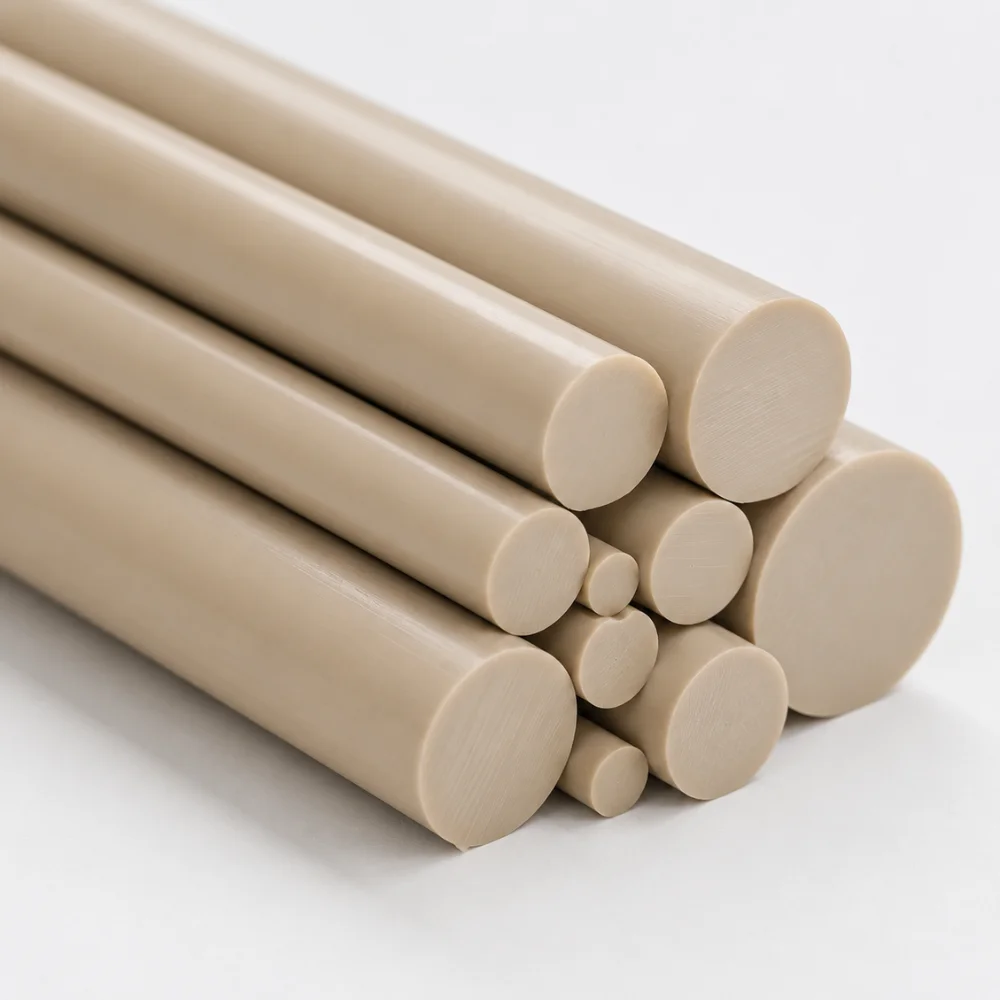
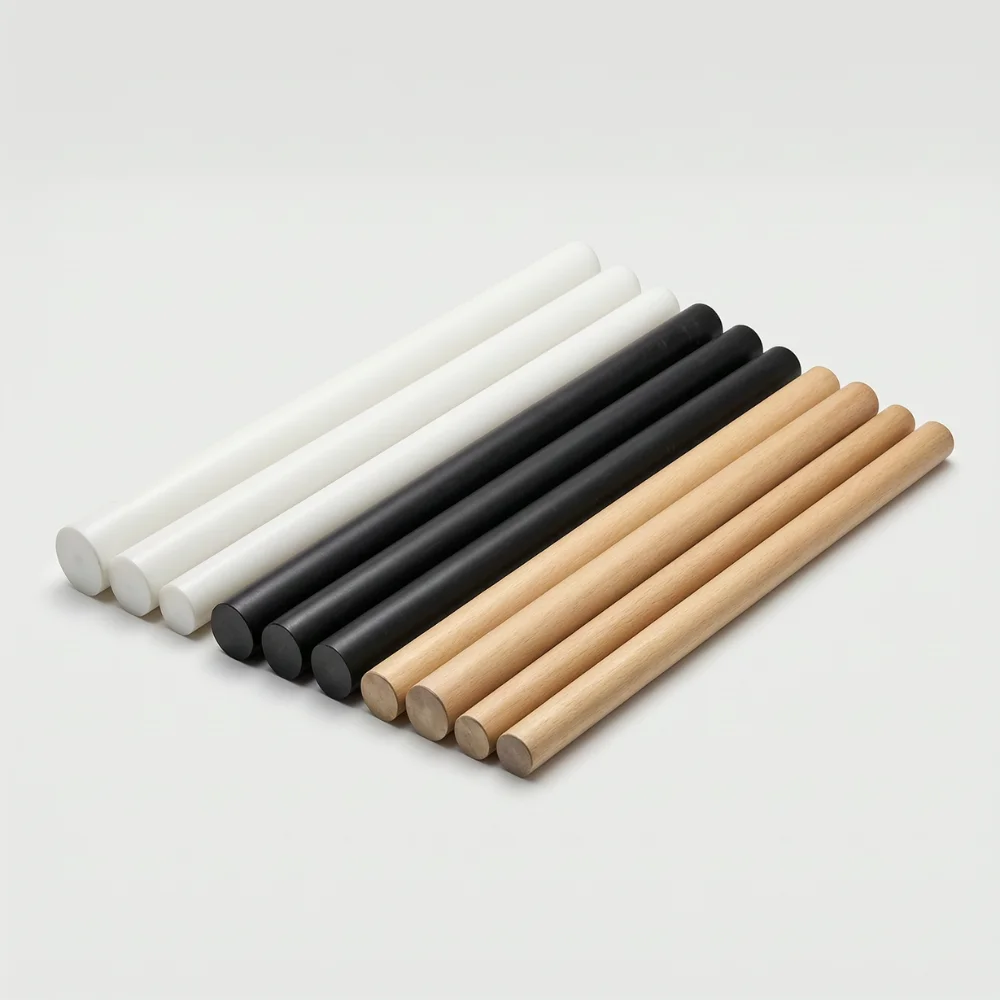
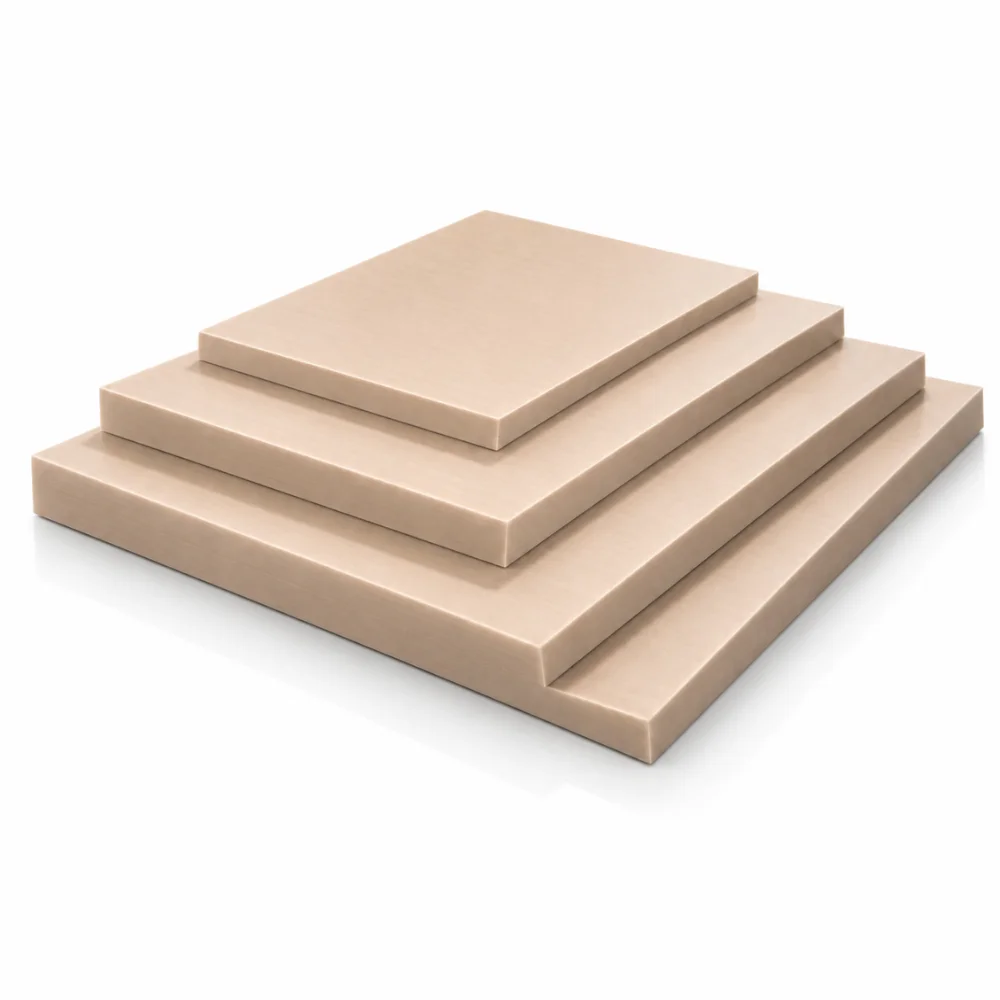
Natural PEEK is normally beige or light brown. Black, blue and other colours may be available in particular food, medical, conductive or application-specific grades. Special colours normally require a manufacturing minimum and additional lead time.
Yes. Altius Polymers can provide cut-to-size sheet, rod, tube, blanks and CNC-machined components, subject to stock availability.
A single cut piece may be possible when the required grade and thickness are held in stock. Custom-manufactured dimensions, colours, tubes or special compounds will normally have a factory minimum order quantity and an extended lead time. Please provide the dimensions, grade, quantity and application for confirmation.