Dimension
Frequently Asked Questions
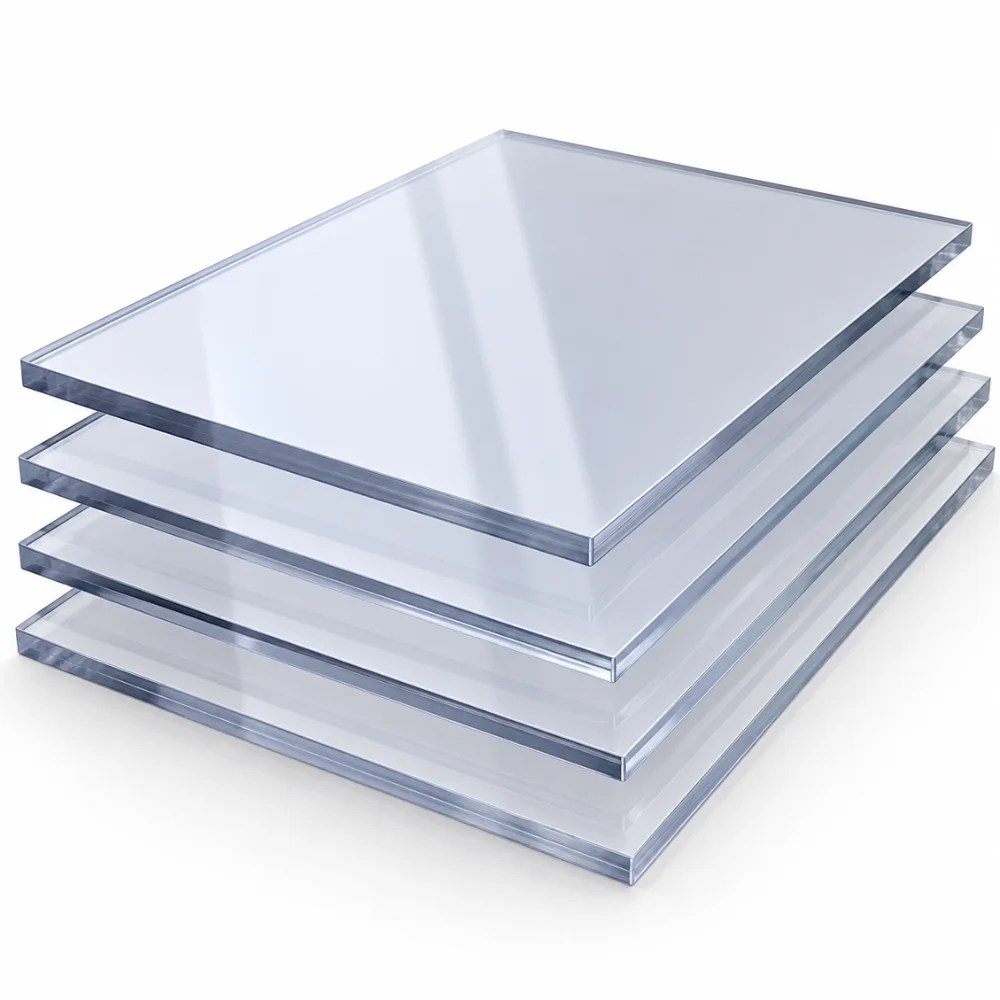
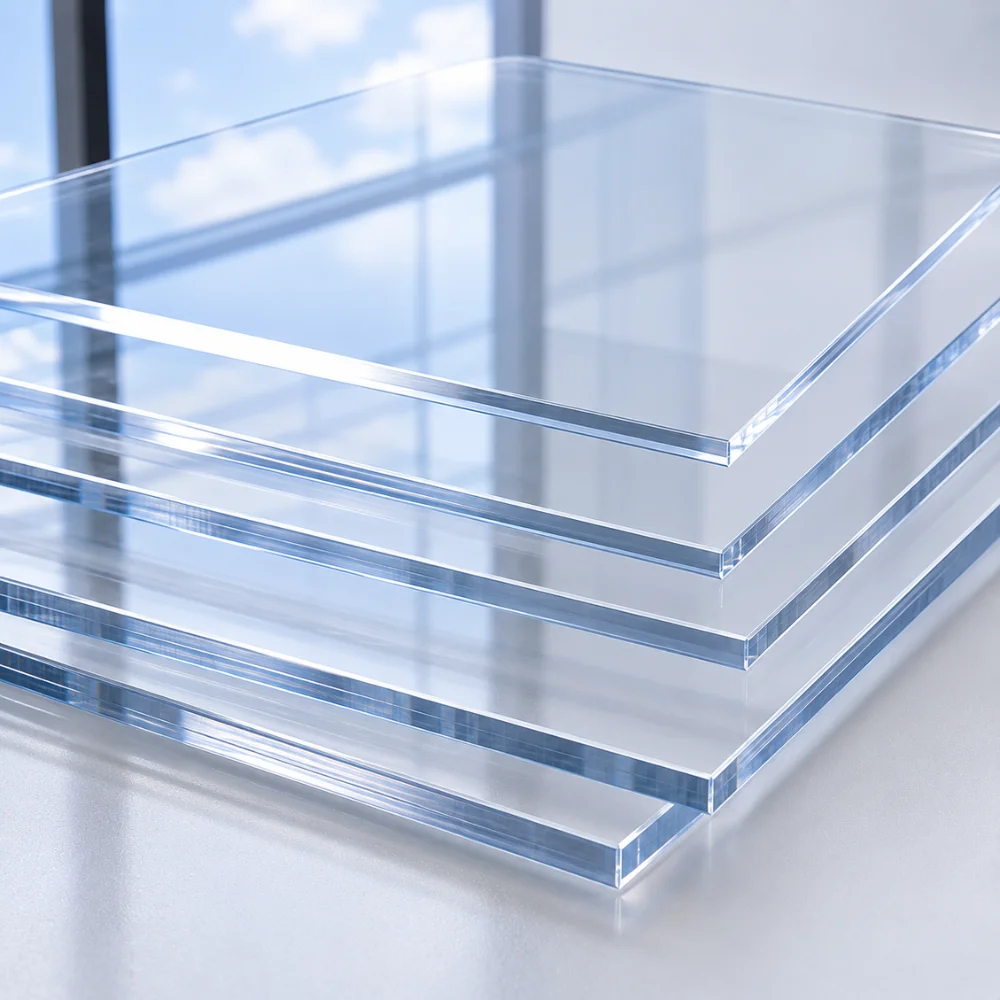
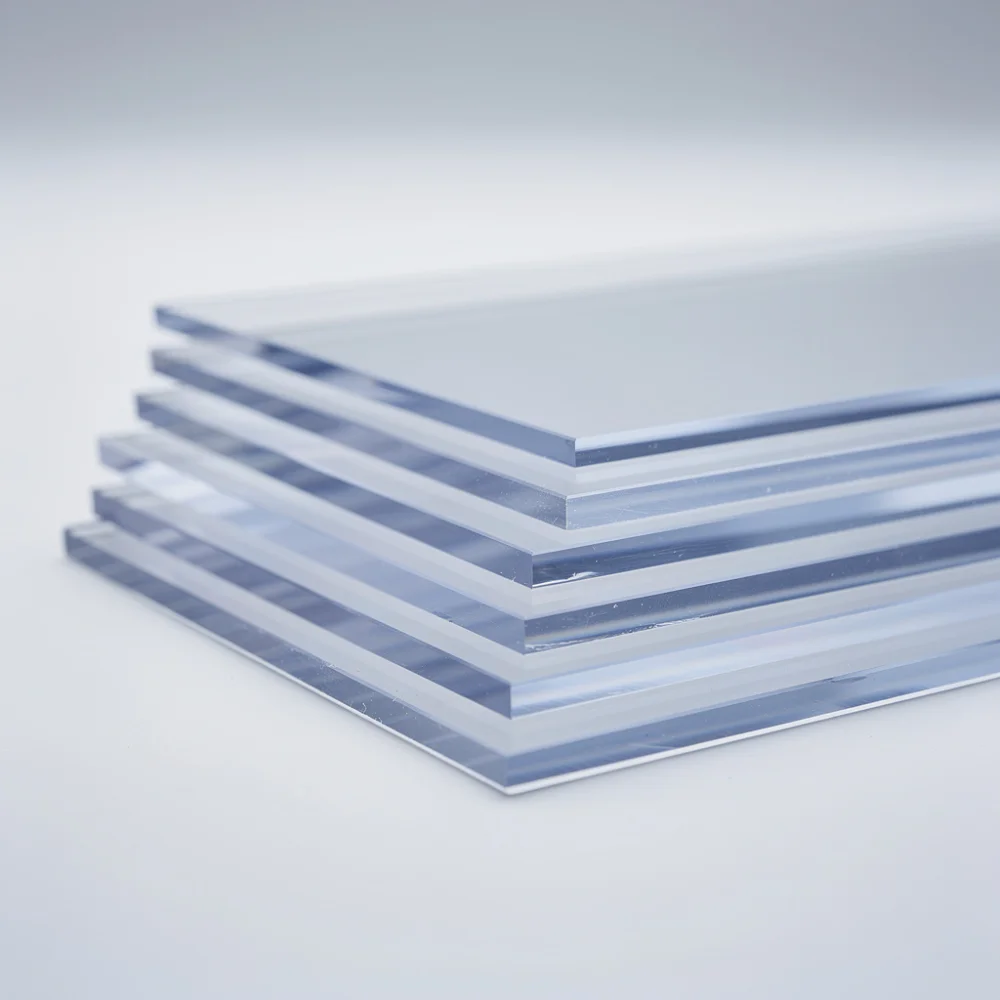
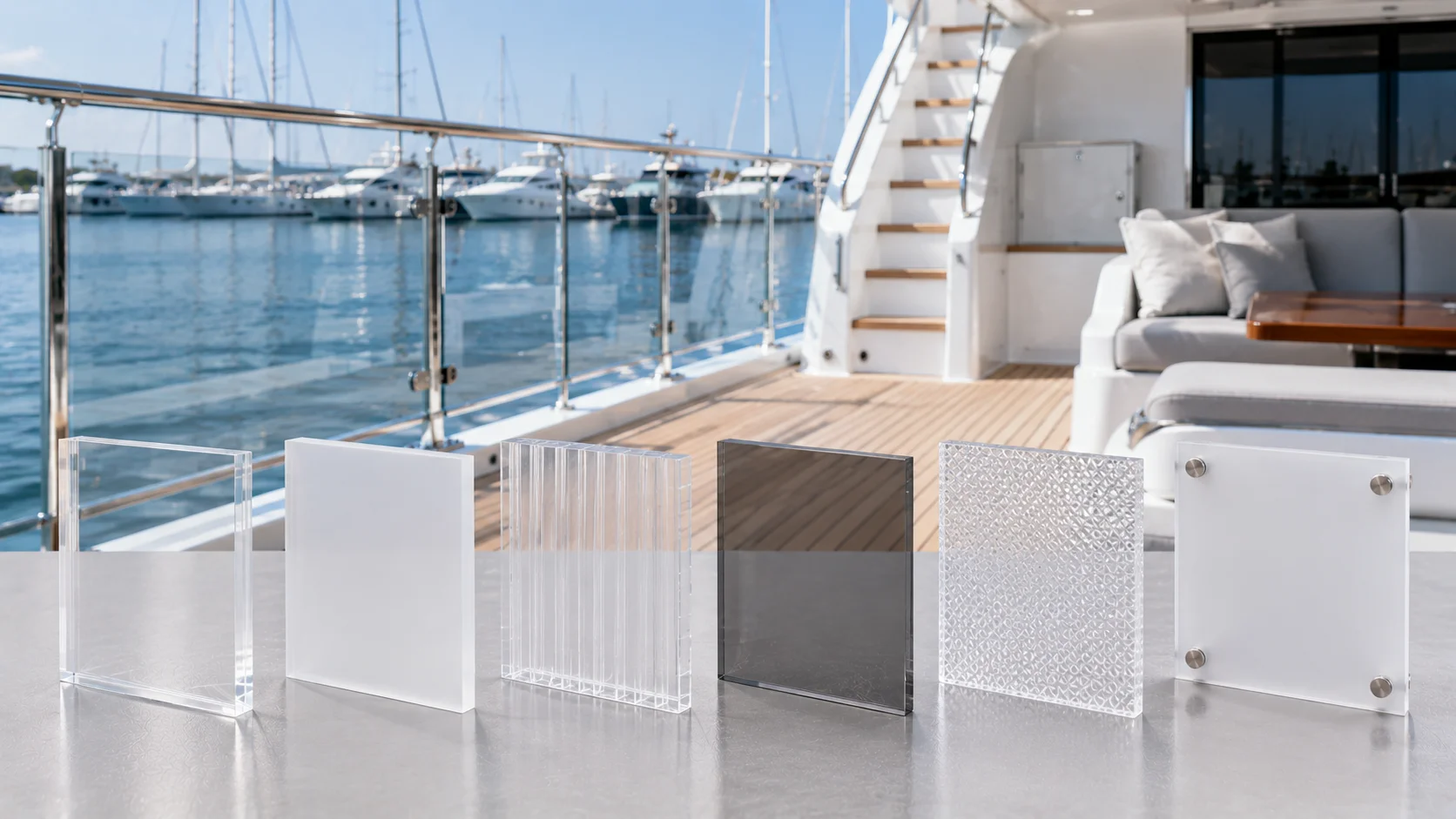
Polycarbonate is a strong, lightweight engineering thermoplastic. It can be transparent like glass while offering much higher impact resistance and greater design flexibility. Polycarbonate sheet is available in clear, tinted, opaque, textured, coated and specialty performance grades.
It is commonly selected when safety, durability and visibility are more important than achieving the lowest initial material cost.
Polycarbonate is used across construction, manufacturing, transport, mining, electronics, security and public infrastructure. Common applications include:
- Machine guards and inspection windows
• Safety screens and protective barriers
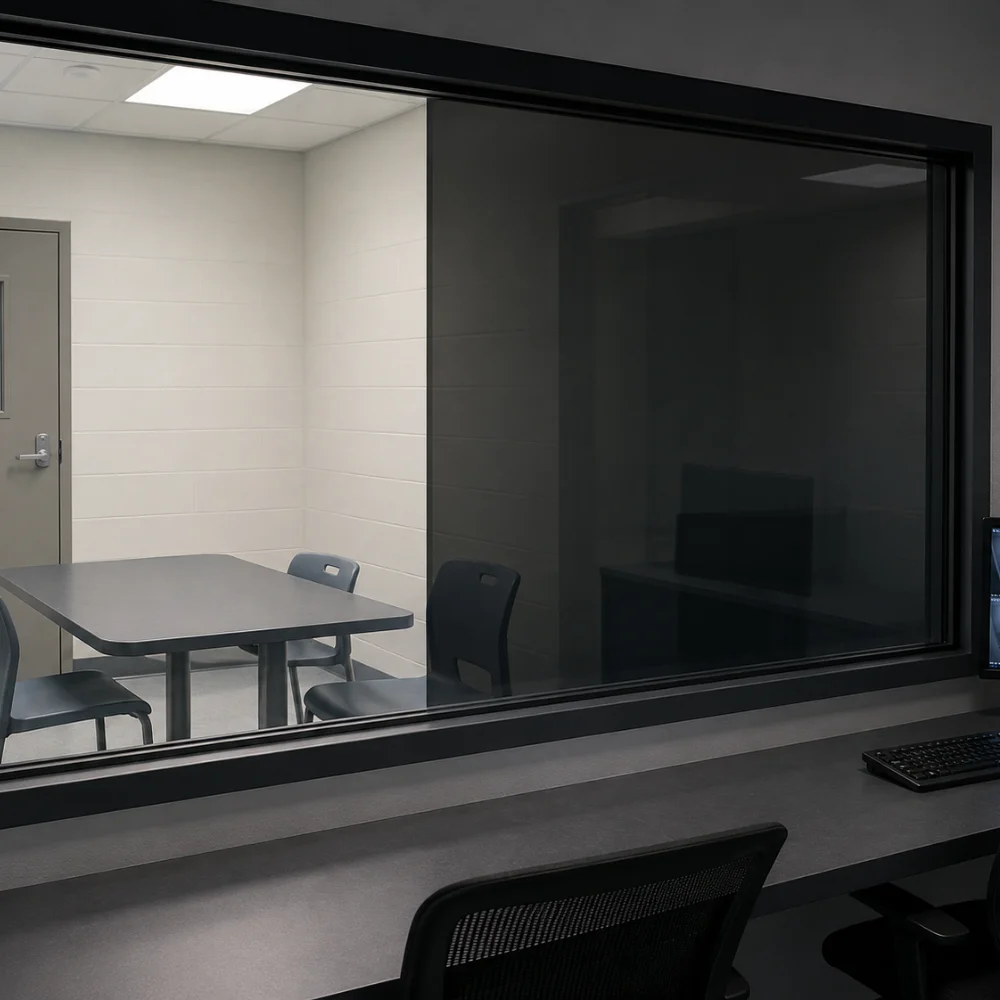
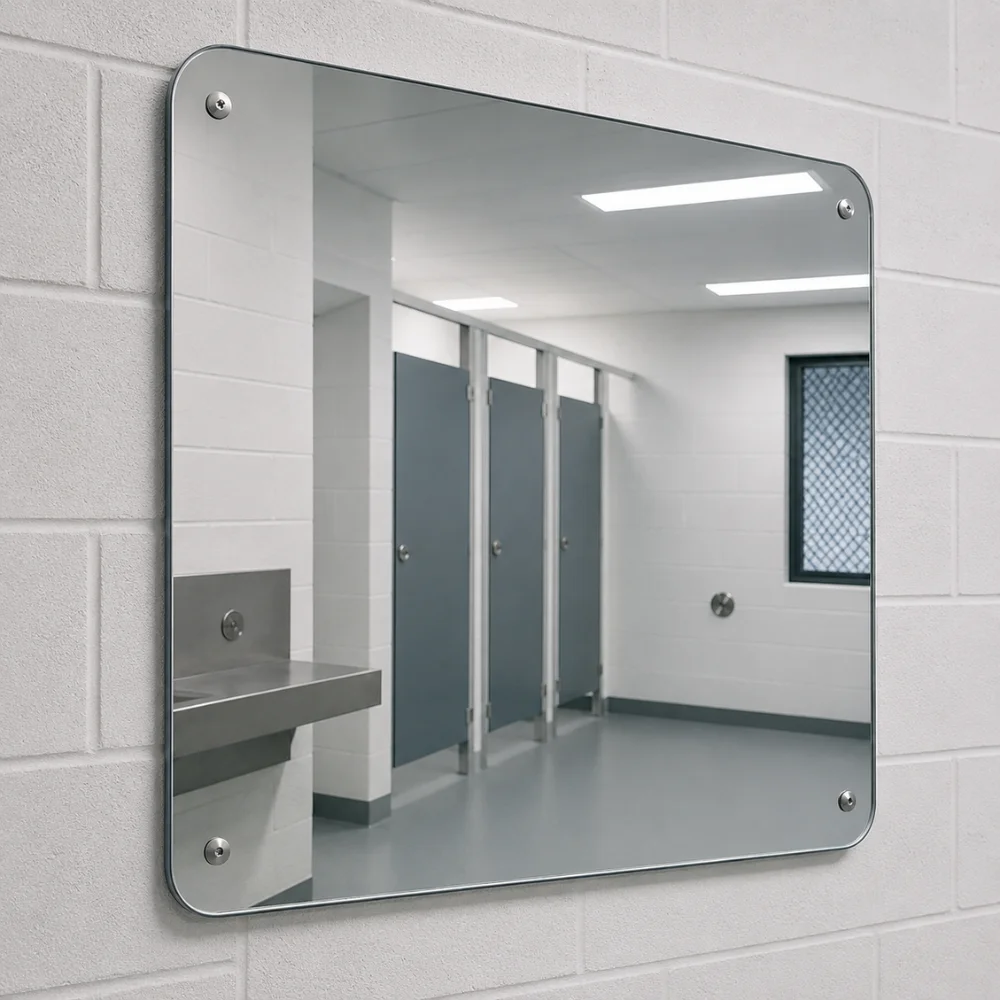
• Security glazing and vandal-resistant windows
• Roofing, awnings and skylights
• Electrical and electronic equipment covers
• Automation and packaging-machine enclosures
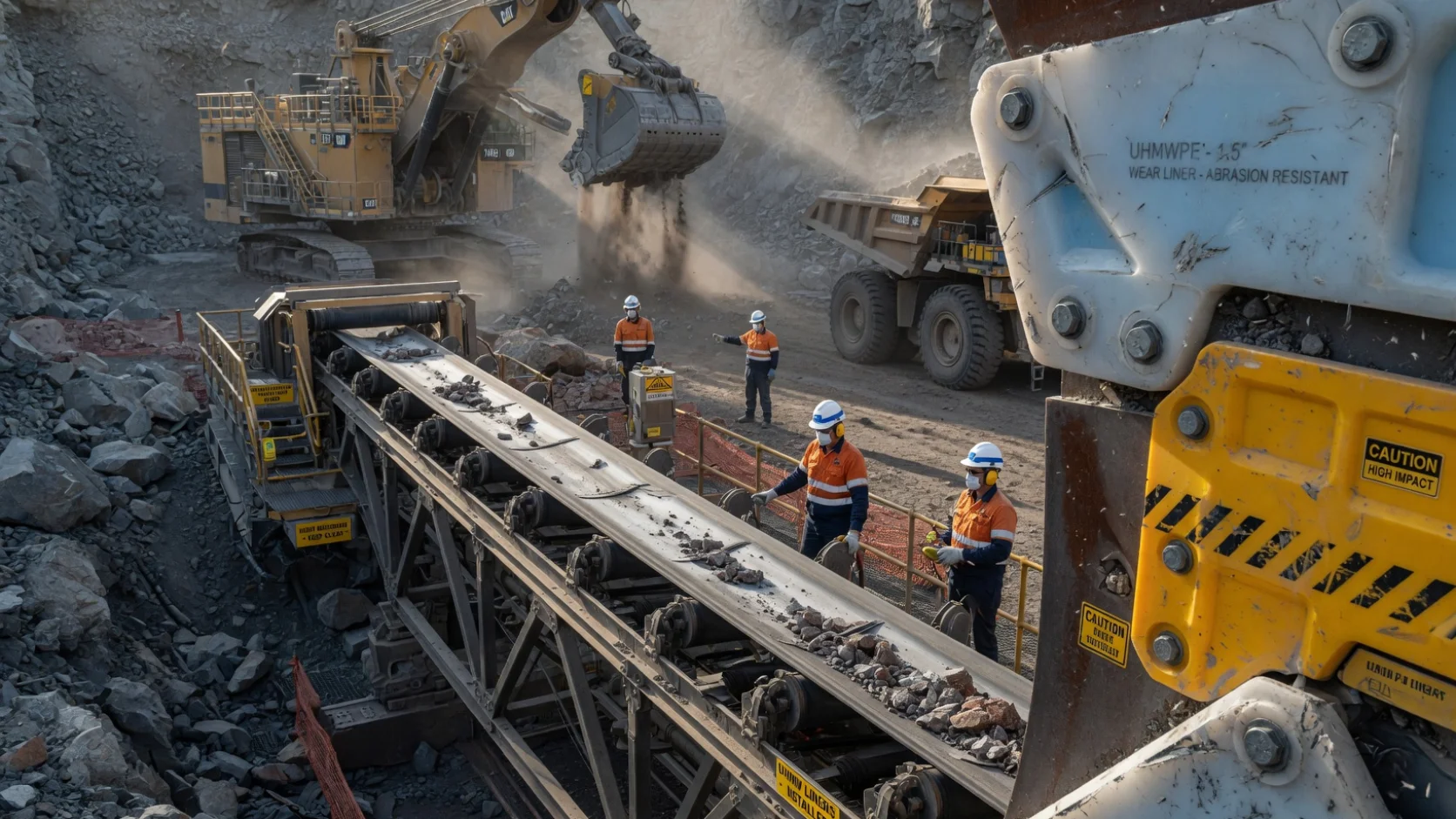
• Mining and industrial equipment guards
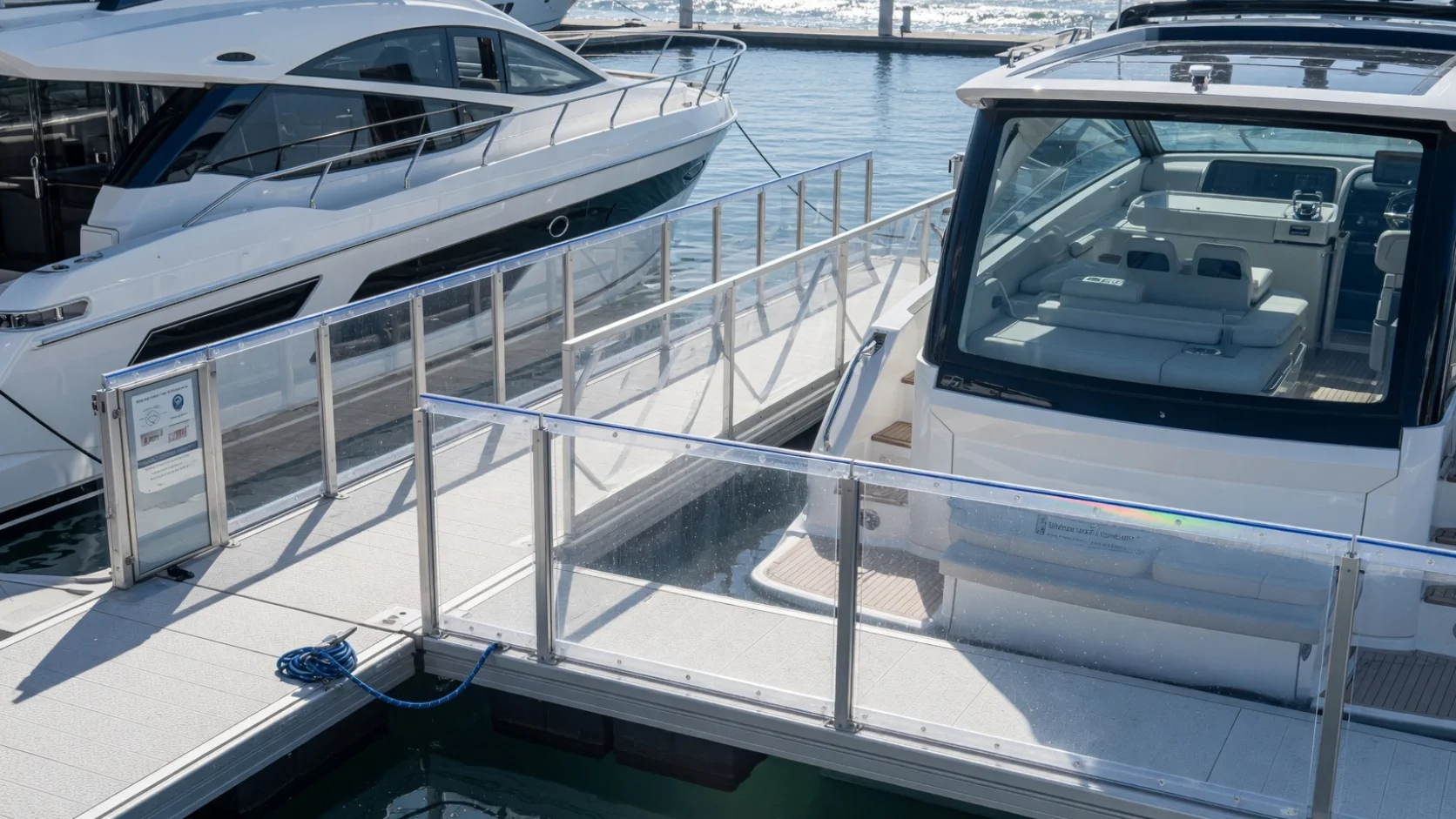
• Bus, marine and vehicle glazing
• Signs, displays and lighting components
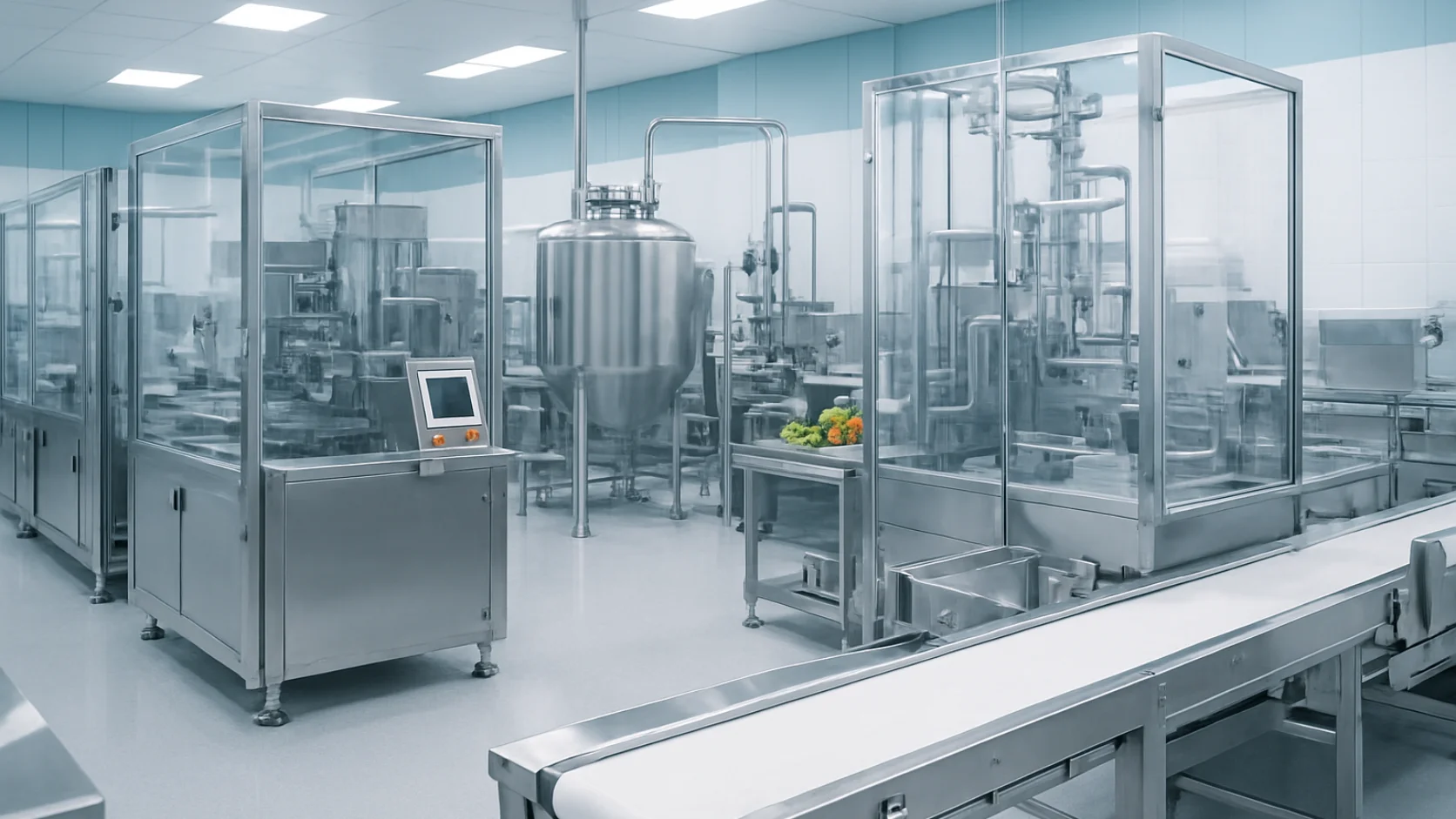
• Cleanrooms, laboratories and medical equipment
The correct grade depends on the expected impact, outdoor exposure, chemicals, cleaning process, fire requirements and required certifications.
Choose polycarbonate when your application needs a clear material that is lightweight, difficult to shatter and easy to fabricate. It can be cut, drilled, routed, cold-curved and thermoformed into custom components.
Polycarbonate is especially useful in areas exposed to accidental impact, vandalism, moving machinery or frequent handling. UV-resistant, abrasion-resistant, flame-retardant and anti-static grades are also available for more demanding environments.
Polycarbonate is roughly half the weight of glass and far more resistant to impact. It is also easier to cut, drill, shape and install on site. Unlike ordinary glass, it does not normally break into sharp fragments when struck.
Glass has a harder surface, better natural scratch resistance and lower thermal expansion. Polycarbonate requires allowance for movement during installation and may need a hard coating where frequent cleaning or abrasion is expected.
Polycarbonate provides much greater impact resistance and generally performs better where toughness, flexibility and heat resistance are priorities. Acrylic normally offers slightly better optical clarity, a harder uncoated surface, easier polishing and excellent natural outdoor weathering.
Choose acrylic for premium displays, polished presentation pieces and applications where appearance is the main priority. Choose polycarbonate for guards, barriers, safety glazing and applications where impact is the greater risk.
Lexan®, TUFFAK® and Makrolon® are trade names associated with particular polycarbonate product ranges. They are not separate generic materials.
Performance can still vary significantly between brands and grades. Always compare the actual product data sheet, coating, UV protection, fire classification, warranty and certification rather than selecting a product by brand name alone.
No material is completely unbreakable. Polycarbonate is sometimes described as “virtually unbreakable” because of its exceptional impact resistance, but it can still fail under sufficient force, incorrect installation, prolonged chemical exposure or unsuitable service temperatures.
For safety-critical applications, the sheet thickness, frame, fixings, edge engagement and complete installed system must be properly assessed.
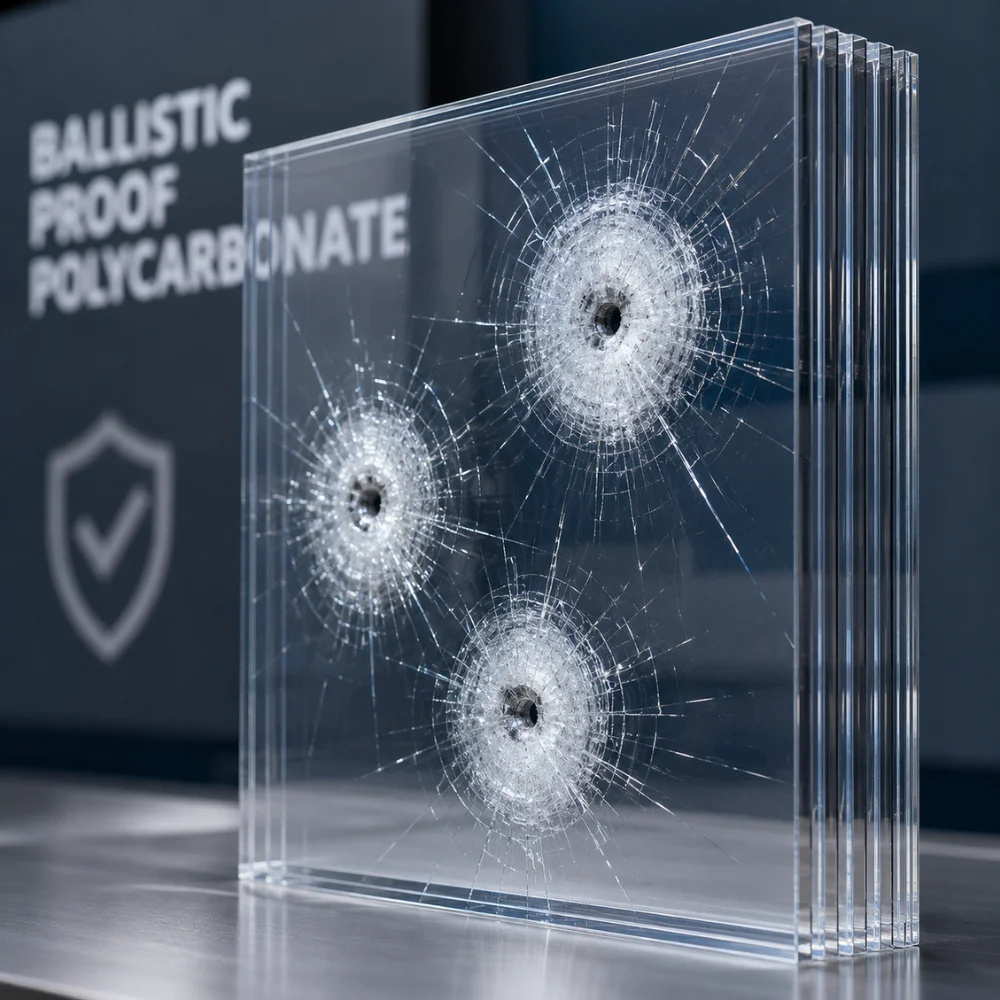
No. Standard solid polycarbonate sheet should not be described or used as bulletproof simply because it has high impact strength.
Ballistic protection requires a purpose-designed, multi-layer security glazing system tested and certified to a stated threat level. The complete assembly—including the panel, frame, fixings and installation—must meet the required project specification.
Solid polycarbonate is a continuous sheet that resembles glass. It is commonly used for machine guards, security glazing, protective screens, signs and fabricated components.
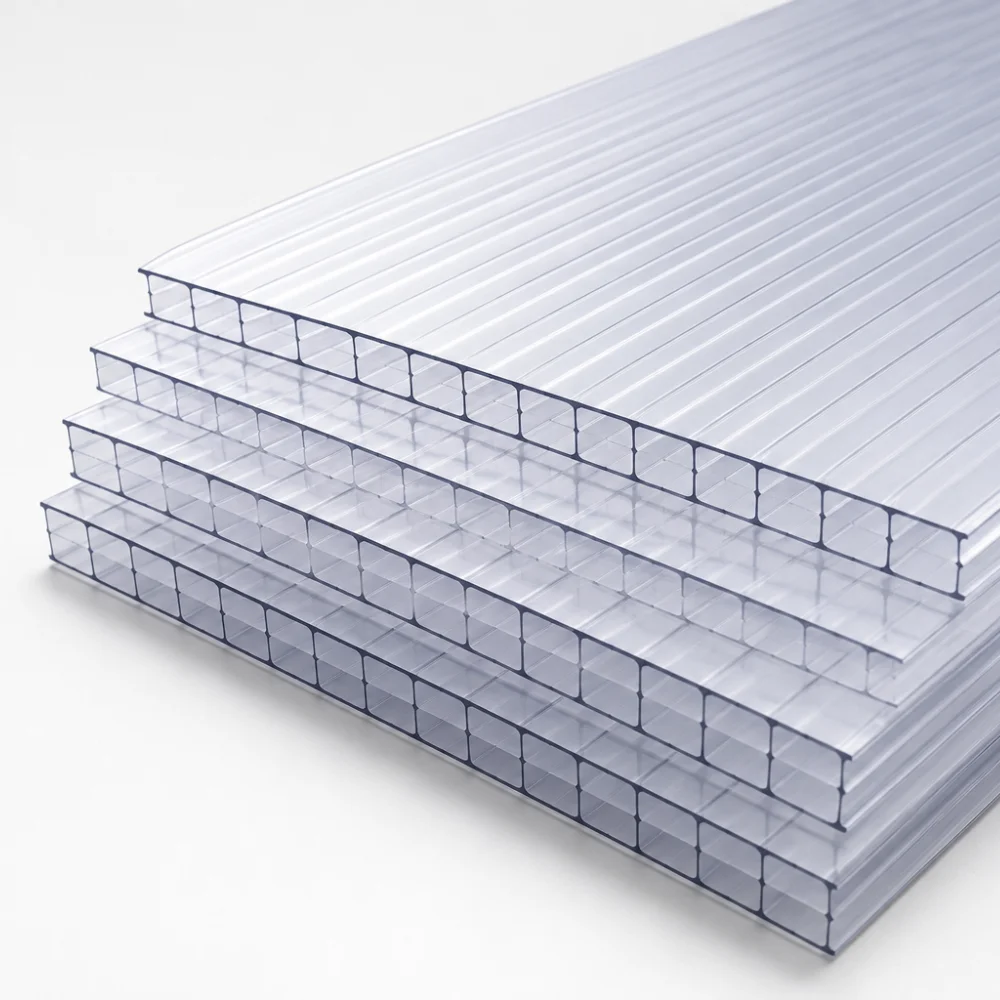
Multiwall polycarbonate contains internal ribs and hollow channels. These air spaces improve thermal insulation while reducing weight, making multiwall sheet popular for greenhouses, patio covers, awnings, roofing and skylights.
The two products are not interchangeable. Structural requirements, appearance, insulation and installation details determine which one is suitable.
Yes, provided the correct outdoor or UV-protected grade is selected. UV-protected polycarbonate is commonly used for roofing, skylights, shelters, signs, barriers and outdoor glazing.
Unprotected grades may yellow, haze or lose impact performance after prolonged sunlight exposure. Check whether the UV protection is on one side or both sides and install the sheet in the orientation specified by the manufacturer.
Many polycarbonate glazing products reduce UV transmission, but the level and wavelength range vary by product. A UV-protected surface may also be designed primarily to protect the sheet itself from weathering.
If UV screening is important for people, products, artwork or equipment, request the manufacturer’s light-transmission and UV-transmission data for the exact grade.
Uncoated polycarbonate is more scratch-sensitive than glass and generally more scratch-sensitive than acrylic. Careful cleaning and handling are therefore important.
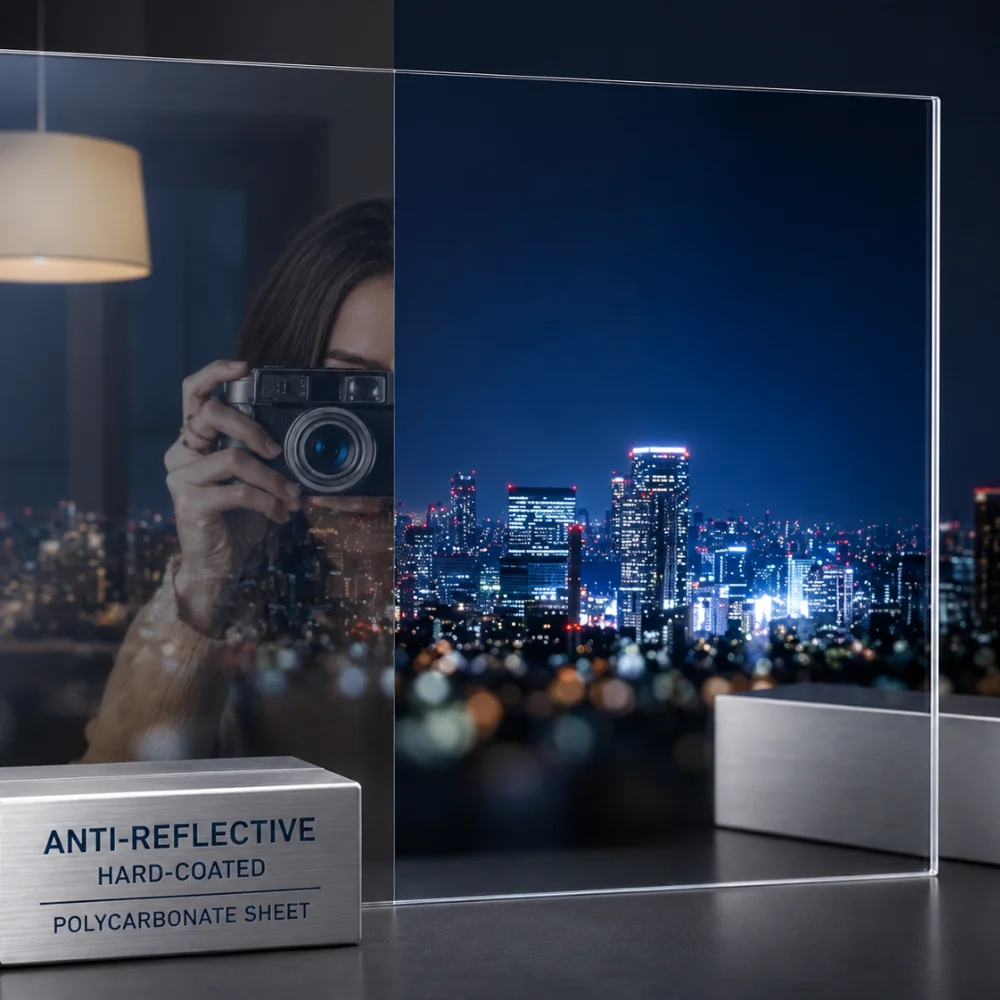
For public areas, vehicle glazing, service counters and frequently cleaned barriers, consider an abrasion-resistant or hard-coated polycarbonate grade. A hard coating can also improve resistance to chemicals, graffiti and long-term weathering, depending on the product.
Polycarbonate is available in many different grades, including:
- General-purpose clear polycarbonate
• UV-resistant outdoor polycarbonate
• Abrasion-resistant or hard-coated sheet
• Flame-retardant and low-flammability grades
• Anti-static and static-dissipative sheet
• Anti-fog sheet
• Optical and low-distortion grades
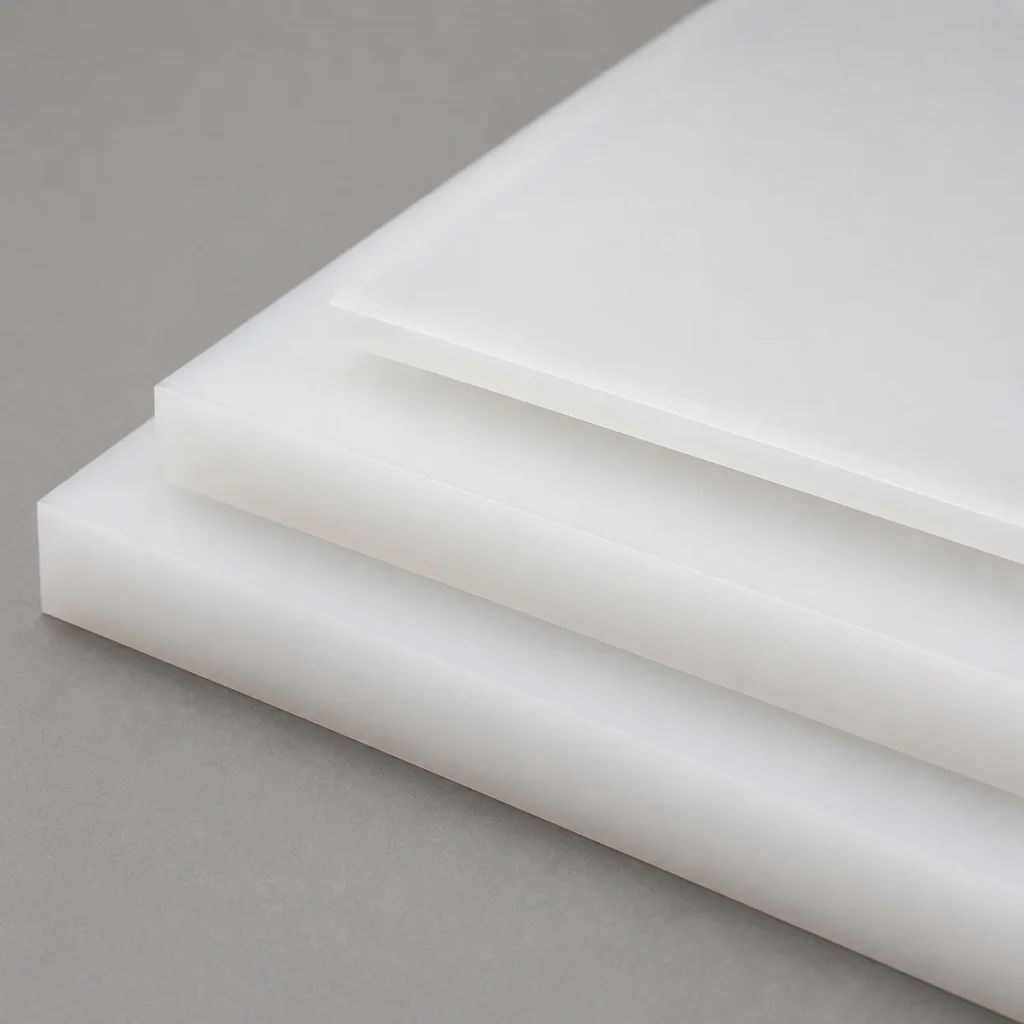
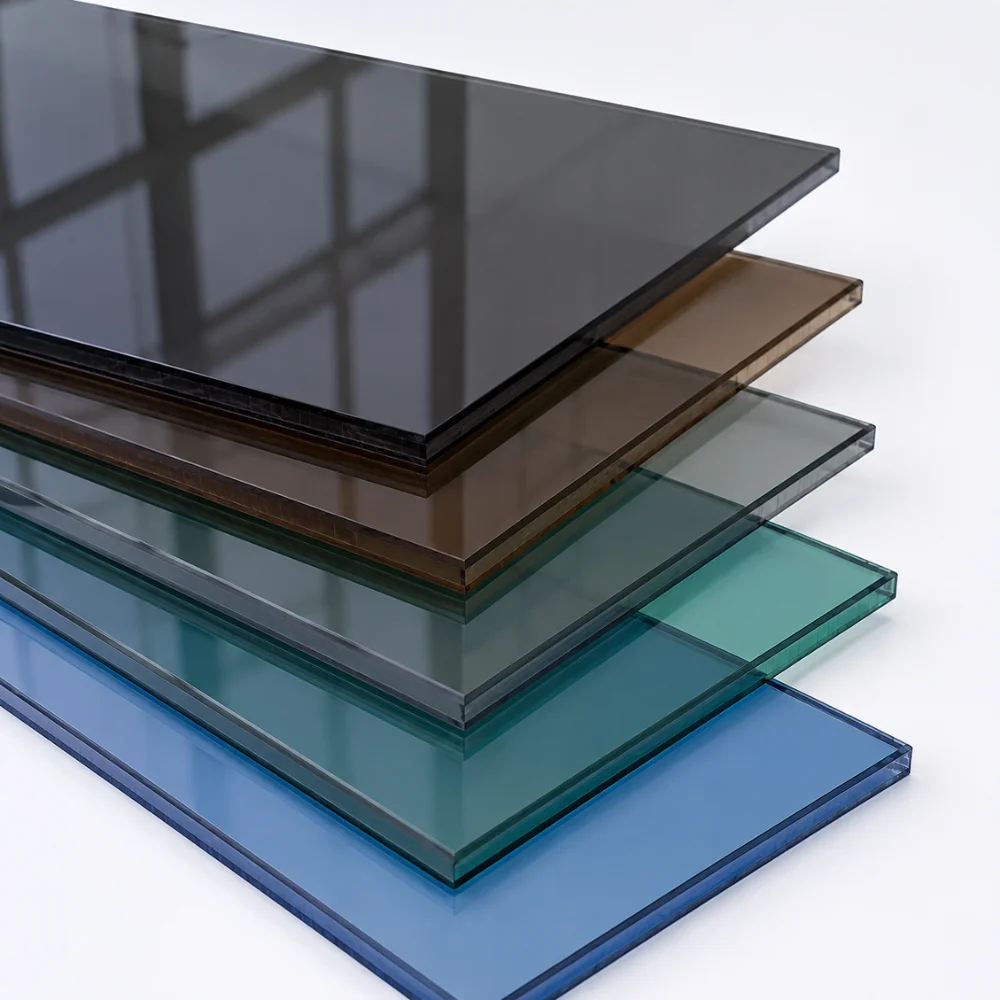
• Tinted, coloured, opal and textured sheet
• Multiwall and corrugated roofing sheet
• Containment and certified ballistic laminates
• Food-contact, medical and transportation grades
Not every grade is interchangeable. Tell us how the material will be used so we can help identify the right product.
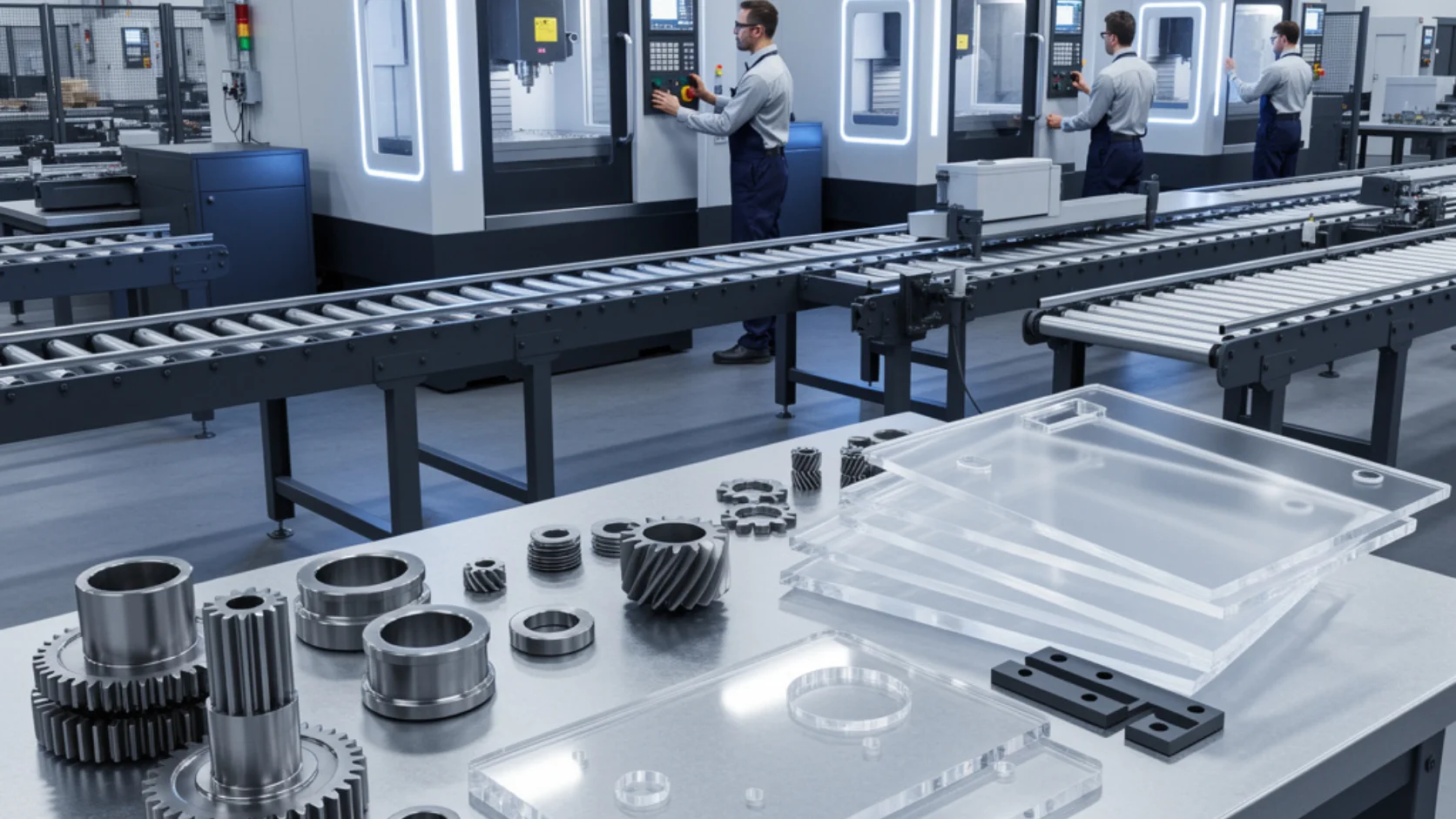
Polycarbonate can be fabricated using saw cutting, CNC routing, milling, drilling, bending, thermoforming, bonding, mechanical fastening, printing and specialised welding processes.
Sharp tools, proper sheet support and controlled speeds are important because excessive friction can generate heat, melt the edge or introduce internal stress. The protective film should normally remain in place during cutting and drilling but must be removed before heating unless it is approved for that process.
Polycarbonate can be cut with a panel saw, circular saw, table saw, band saw, jigsaw or CNC router, depending on the thickness and required shape. Fine-tooth or triple-chip carbide tooling is commonly used for clean cuts.
Keep the sheet supported, use a steady feed and avoid excessive heat. The best cutting method and tooling should be confirmed for the exact grade, thickness and surface coating.
Laser cutting is generally not recommended for polycarbonate sheet, particularly for thicker material. Laser heat can produce discolouration, rough or burnt edges, fumes and residual stress that may later lead to cracking.
Saw cutting, CNC routing or milling normally produces a cleaner and more reliable result. Any proposed laser process should be assessed using the exact sheet grade and suitable extraction and safety controls.
Yes. Use sharp, suitable drill bits, support the exit side and reduce feed pressure as the drill breaks through. Holes should be positioned an appropriate distance from sheet edges.
Provide sufficient clearance around fasteners for thermal expansion and do not overtighten screws. Gasketed washers can distribute pressure and help protect the sheet. Installation requirements vary with panel size, thickness, temperature range and supporting frame.
Yes. Many solid polycarbonate grades can be cold-curved to a gentle radius without heating. The minimum safe radius depends on sheet thickness, extrusion direction, coating and grade.
Forcing the sheet into a radius that is too tight can create excessive stress, optical distortion or coating damage. Always follow the manufacturer’s minimum-radius guidance, especially for hard-coated products.
Yes. Polycarbonate can be line-bent, drape-formed, vacuum-formed and pressure-formed into complex shapes. This makes it suitable for machine covers, guards, housings, windscreens and custom enclosures.
Heating must be uniform and carefully controlled. Poor temperature control can cause bubbles, haze, distortion or excessive internal stress.
Usually, yes. Polycarbonate absorbs a small amount of moisture from the atmosphere. When a moist sheet is heated, that moisture can turn into vapour and create bubbles or surface defects.
Predrying time and temperature depend on the grade and thickness. Follow the manufacturer’s fabrication guide rather than using a single setting for every polycarbonate product.
Polycarbonate can be joined using compatible adhesives, solvent-based bonding systems, mechanical fixings or specialised welding methods. The correct method depends on the load, appearance, chemical exposure and whether the joint must be removable.
Only products confirmed as compatible with polycarbonate should be used. An unsuitable adhesive can cause whitening, crazing or stress cracking. Test the complete bonding system on an offcut before production, and use trained fabrication methods for structural or safety-critical joints.
Yes. Edges can be deburred, progressively wet-sanded and mechanically buffed using products suitable for polycarbonate. Machining or scraping can also create a clean finished edge.
Flame polishing is generally not recommended because concentrated heat can introduce stress and contribute to later crazing. A clear edge on polycarbonate may also look different from a polished acrylic edge.
First rinse the surface with clean lukewarm water to remove loose dirt and grit. Wash gently using mild diluted soap and a soft microfibre cloth or non-abrasive sponge, then rinse and dry with a clean soft cloth.
Avoid dry wiping, abrasive pads and unapproved cleaners. Acetone, thinners, strong solvents and ammonia-based products can damage some grades or coatings. Always check the cleaning instructions for the exact product.
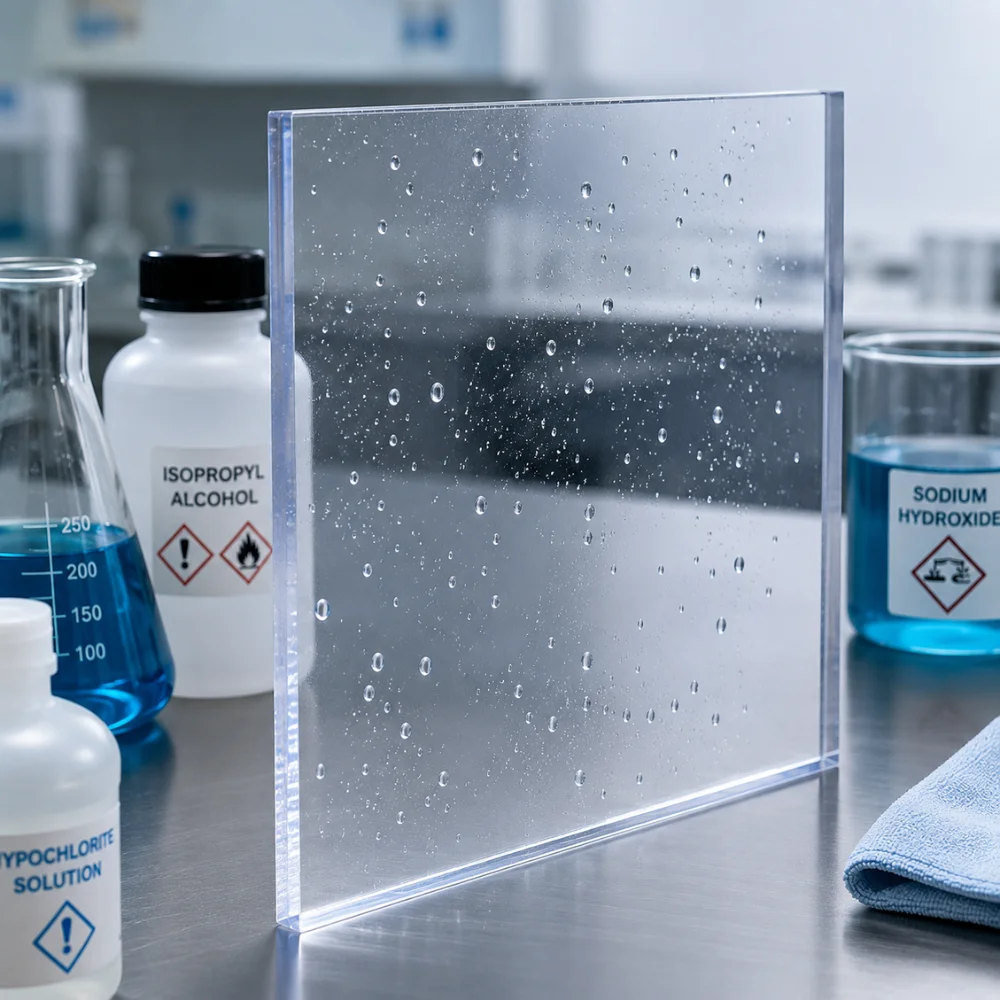
Polycarbonate resists many everyday substances, but it can be attacked by certain solvents, fuels, alkaline cleaners, sealants and industrial chemicals. Chemical exposure combined with mechanical stress can cause crazing or environmental stress cracking.
Compatibility depends on concentration, temperature, contact time, applied stress and the sheet’s coating. Request a chemical-resistance assessment when the application involves regular chemical contact or specialised cleaning agents.
No. Polycarbonate is not fireproof. Its fire behaviour depends on the formulation, thickness and test method.
Special flame-retardant polycarbonate grades are available with defined fire-test classifications. A rating applying to one grade or thickness must not be assumed for another. For regulated building, transport, mining or electrical applications, request certification matching the project requirements.
Polycarbonate generally tolerates higher service temperatures than acrylic, but it will soften when exposed to sufficient heat. Its allowable continuous and short-term temperatures vary by grade, loading and environment.
Check the product data sheet when the panel will be located near lighting, machinery, ovens, hot pipes or direct heat sources. Flame exposure should never be assessed from service-temperature data alone.
Some polycarbonate grades are manufactured for food-contact applications, but standard sheet should not automatically be assumed to be food-safe.
Confirm that the exact grade, colour and surface treatment has the required food-contact declaration for the intended conditions, including temperature, cleaning chemicals and type of food contact.
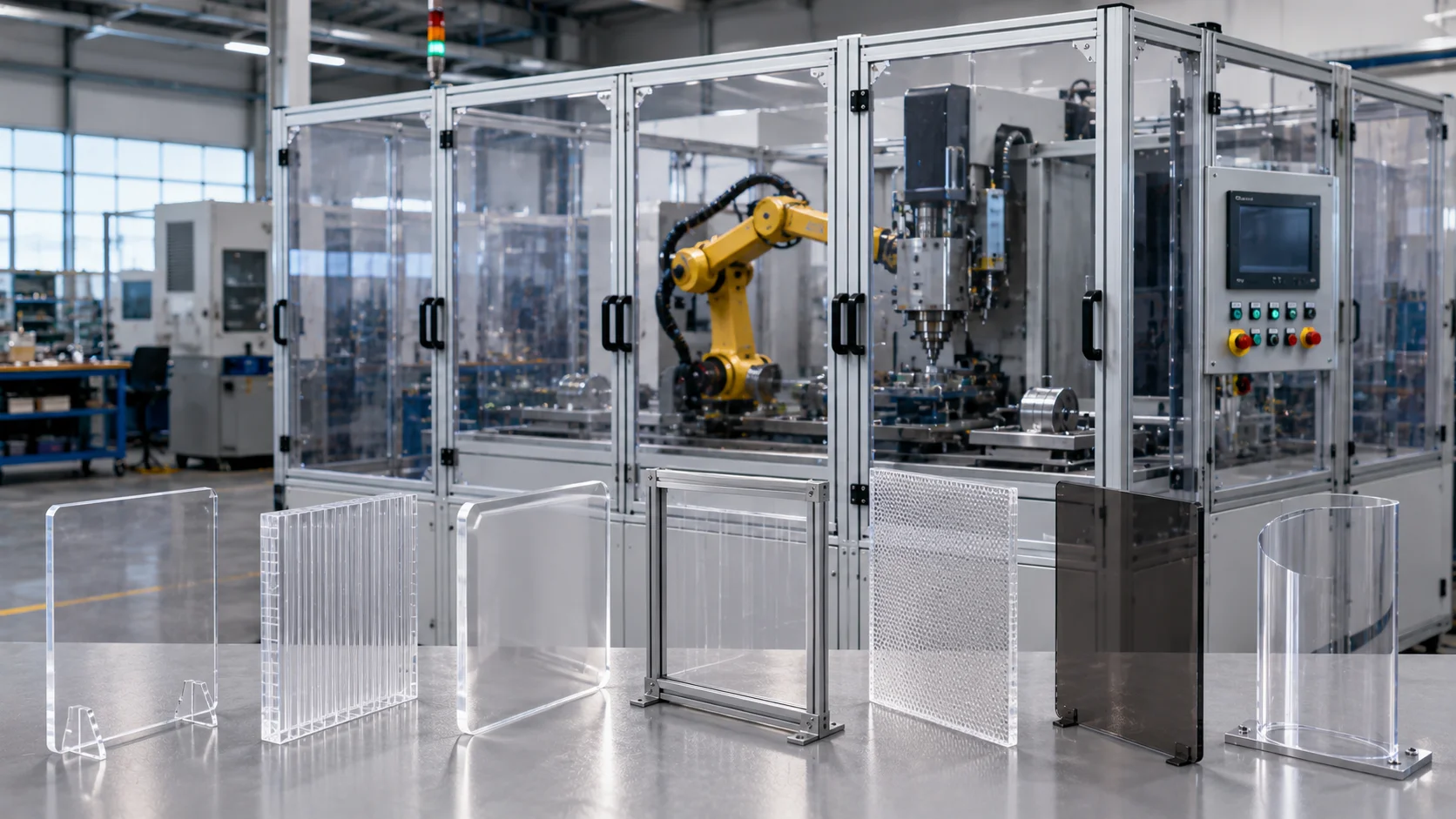
Yes. High impact resistance and transparency make polycarbonate a popular material for machine guards, robotic cells, packaging equipment, safety screens and protective barriers.
The material alone does not make a guard compliant. Thickness, stand-off distance, frame design, fixings, access control and the energy of the potential impact must all be considered by the equipment designer.
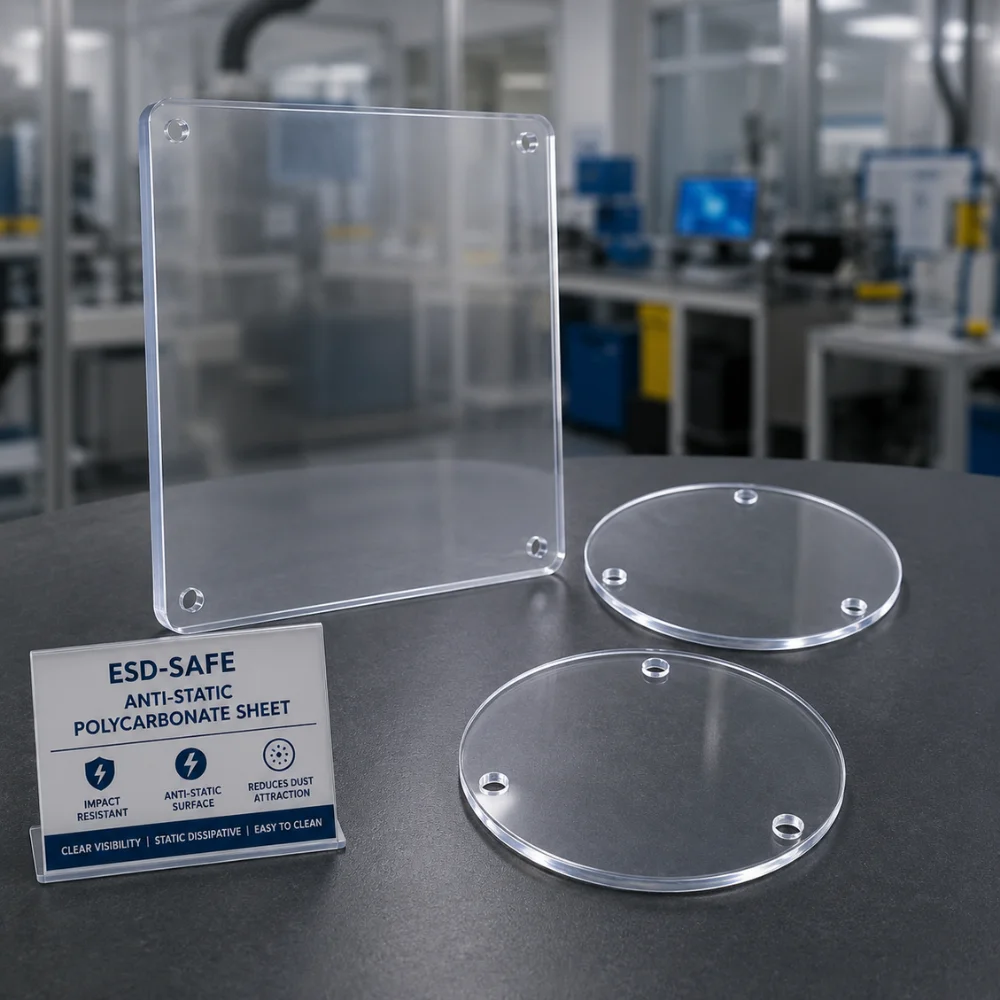
Standard polycarbonate is electrically insulating and can accumulate static charge. Anti-static or static-dissipative grades use specialised formulations or surface coatings to control charge and reduce dust attraction.
They are commonly used in electronics manufacturing, automation, cleanrooms, laboratories and sensitive industrial enclosures. Required surface resistance, grounding, chemical resistance and environmental compliance should be confirmed for the complete installation. An anti-static sheet alone does not make an entire system explosion safe.
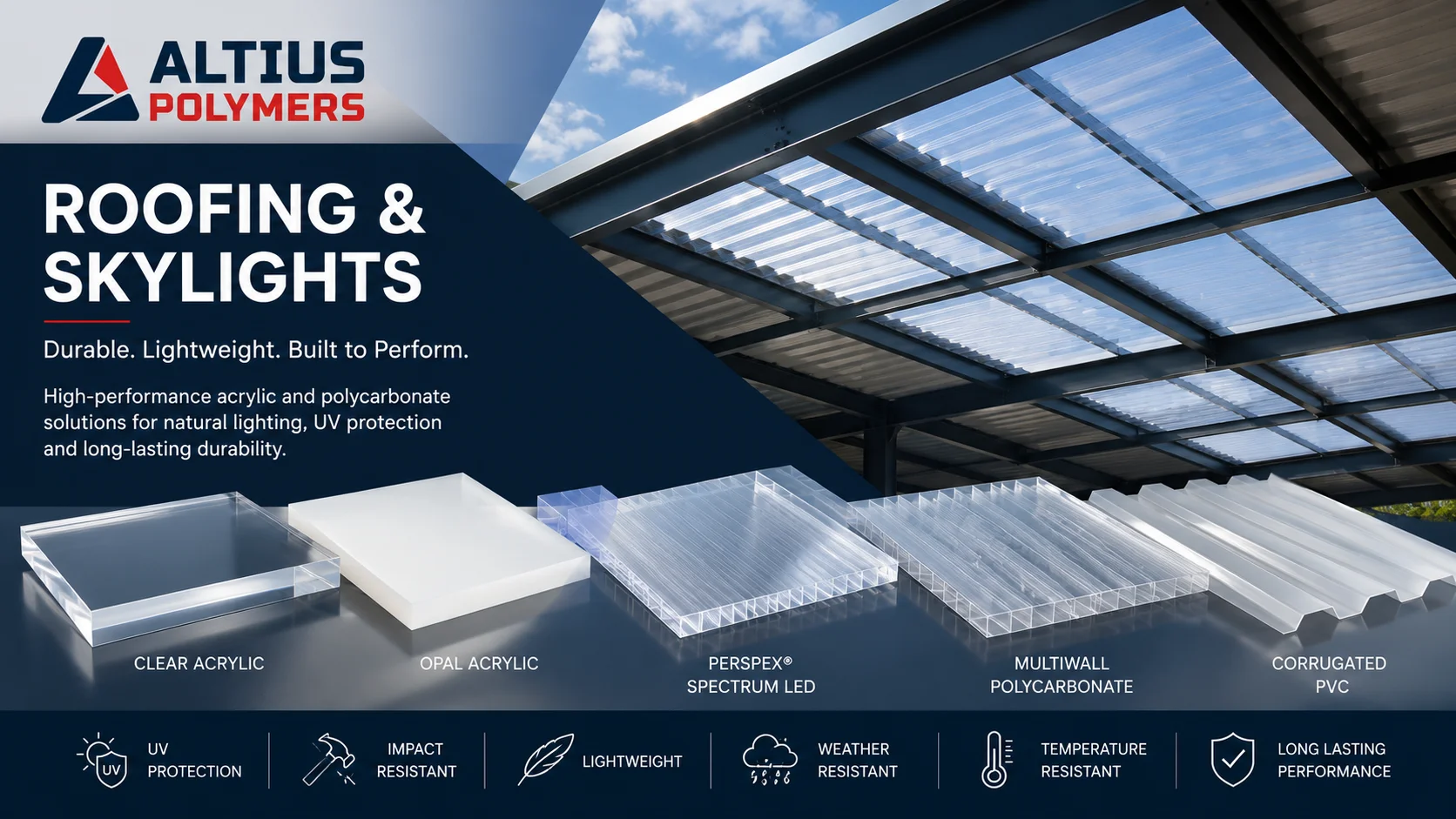
Yes. UV-protected solid, corrugated and multiwall polycarbonate products are widely used for awnings, patios, walkways, rooflights, skylights and greenhouses.
The product must be selected for the required span, wind load, hail exposure, insulation, light transmission and building requirements. Multiwall channels should normally run in the direction of the roof slope so condensation can drain, and the specified tapes, closures and glazing components should be used.
Yes. Polycarbonate moves noticeably as temperature changes—more than glass or metal. Glazing channels, fixing holes and edge clearances must allow the sheet to expand and contract without being tightly restrained.
Insufficient allowance can cause bowing, buckling, stress cracking or fastener damage. Expansion requirements should be calculated from the panel dimensions, expected temperature range and manufacturer’s data.
The correct thickness depends on the panel dimensions, support spacing, expected impact, wind pressure, deflection limit, temperature and application.
A small display cover may need only thin sheet, while a large machine guard, security window or unsupported panel may require considerably greater thickness. For safety, structural or regulated applications, thickness should be determined through appropriate design calculations rather than guesswork.
Store sheets flat on a clean, supported surface in a dry, shaded location. Protect them from sharp objects, dirt and excessive heat. Support the full sheet during transport and secure it without placing concentrated pressure on the surface.
Do not leave masked sheets in direct sunlight for prolonged periods, as heat can bake the protective film onto the surface and make it difficult to remove.
Polycarbonate is a thermoplastic and can be reprocessed through suitable specialist recycling streams. However, local acceptance varies, particularly for coated, laminated, printed or contaminated sheets.
Keep clean offcuts separated by material and grade, and check with an appropriate plastics recycler before disposal.
Yes. Altius Polymers can assist with full sheets, cut-to-size panels, CNC routing, drilling, machining, bending, thermoforming, bonding and custom-fabricated components.
Send us your dimensions, thickness, quantity, drawings, edge-finish requirements and intended application. We can help identify a suitable material and fabrication method.
You can browse and purchase available polycarbonate products through our website. However, not every size, thickness, colour, coating or specialty grade is displayed online.
If you cannot find the product you need, call our customer service team. Backed by more than 15 years of plastics industry experience, Altius Polymers can help you select the right product for your application.
Polycarbonate can be bonded successfully, but producing a completely invisible, bubble-free joint is more difficult than with acrylic. Polycarbonate is sensitive to aggressive solvents and fabrication stress, while the bonding product must flow evenly through the joint without trapping air or solvent vapour.
Bubbles or visible marks can be caused by:
- Rough or poorly matched bonding edges
- Microscopic machining grooves
- Dust, moisture or surface contamination
- Air introduced during adhesive mixing or dispensing
- Excessive solvent or an adhesive layer that is too thick
- Rapid solvent evaporation
- Uneven clamping or movement during curing
- Internal stress that produces whitening or crazing
The best results require accurately machined, clean, dry and low-stress surfaces, a controlled amount of polycarbonate-compatible adhesive and correct fixturing and curing. Even with professional fabrication, a bubble-free or optically invisible joint should be treated as a quality objective rather than an automatic guarantee.
Where an almost invisible bonded seam is more important than extreme impact resistance, acrylic may be the better material.